ClearCook parent guide

Visual Recipes for Kids: Picture-Led Recipe Cards Children Can Follow

Quick answer: Visual recipes are recipes that use pictures, simple words and clear step-by-step sequencing to help children understand what to do next. Instead of giving a child a long recipe written for adults, a visual recipe breaks cooking into small actions the child can look at, do, check and move on from.

Parents search for visual recipes, picture recipes for kids, recipes with pictures for children, non-reader recipes, kids cooking cards and step-by-step recipe cards for the same reason: they need a recipe format that makes cooking feel possible for a child who cannot yet manage a traditional cookbook page.

ClearCook starter set visual recipe cards for children
Visual Recipes for Kids: Picture-Led Recipe Cards Children Can Follow guide illustrated with ClearCook visual recipe card imagery.

A good visual recipe does not just make a recipe prettier. It changes the task. It shows the ingredients, tools and actions in the order they happen, so the child can look, do, check and move on.

Visual recipes can support early readers, non-readers, children who lose their place in written instructions, practical learners, autistic children who benefit from visual structure, children with attention or processing differences, and confident children who simply want more independence in the kitchen.

Why visual recipes help children cook more independently

Cooking is full of hidden instructions. Adults automatically understand phrases like combine the wet ingredients, stir until smooth or cook until golden. Children often do not.

A picture-led recipe makes those hidden steps visible. A normal recipe says make the batter. A visual recipe shows: put flour in the bowl, add milk, crack in the egg, whisk, pour into the pan, flip and eat.

That kind of sequencing supports children because they can see the task before they do it. They do not have to hold a long list of instructions in their head. They can focus on one step at a time.
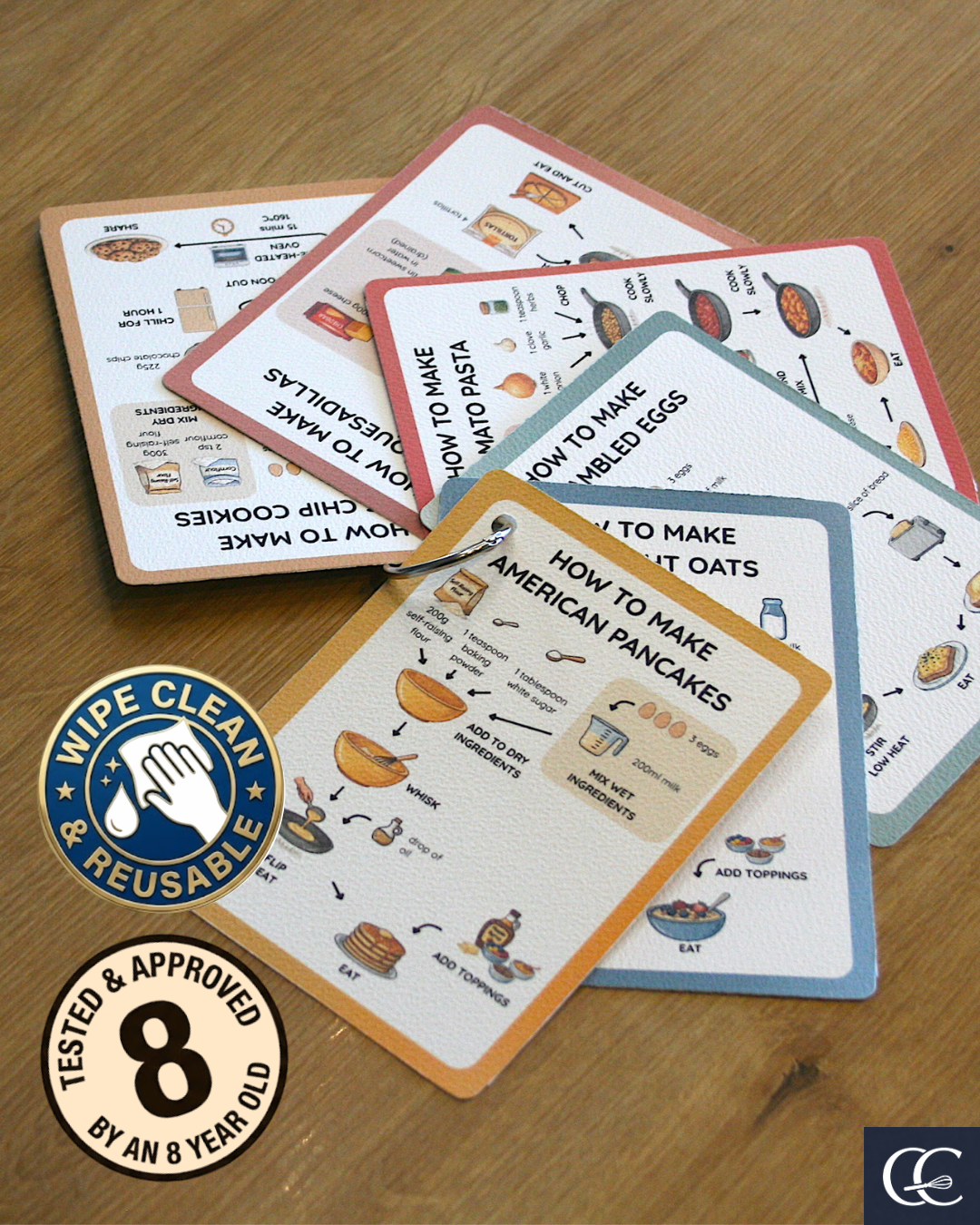
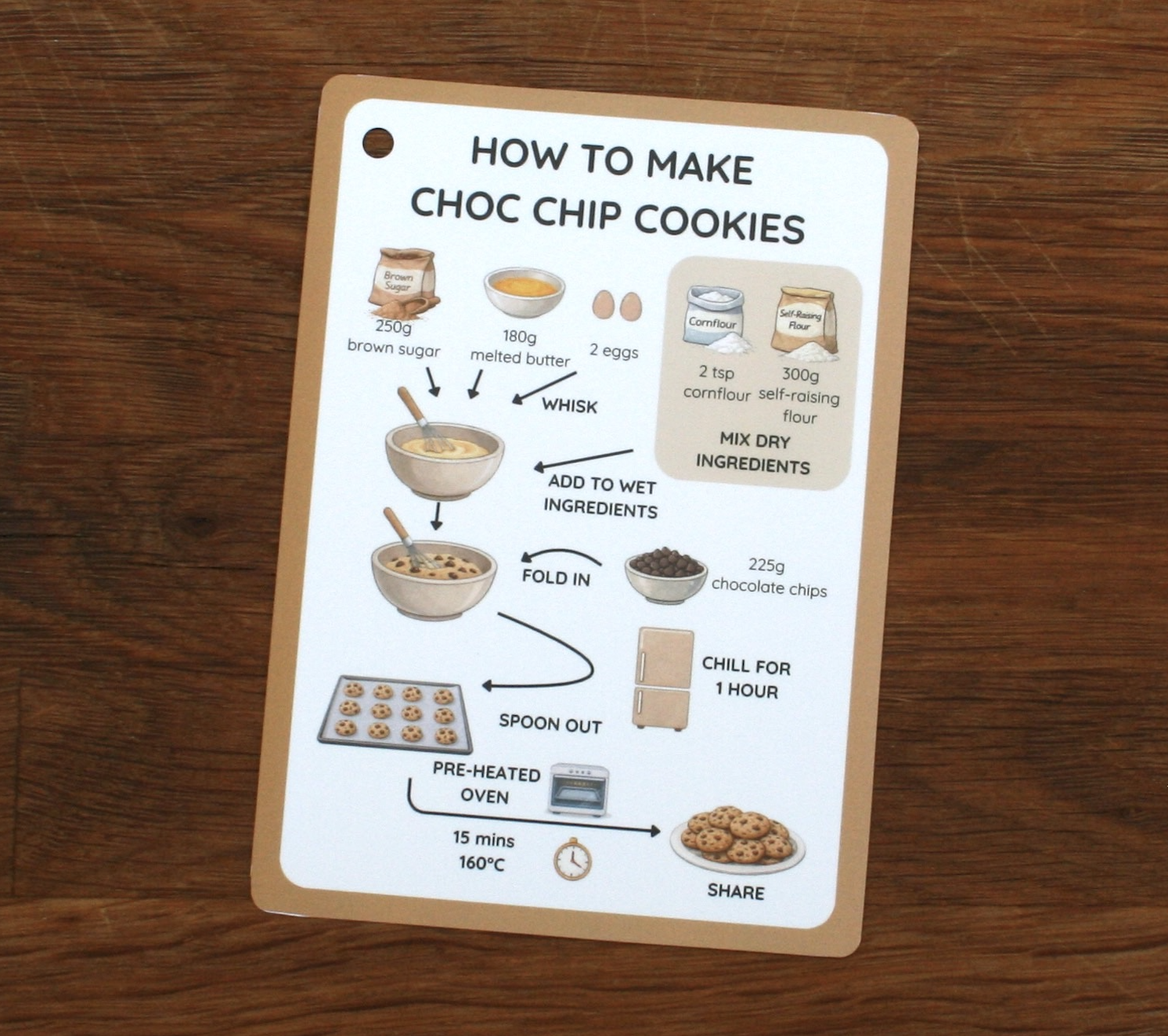
ClearCook Starter Set visual recipe cards on a ring for children
ClearCook visual recipe cards keep the recipe visible so children and adults can share the same sequence.

What makes a good picture recipe card?

The best picture recipes for children are not mini adult recipes. They are designed around how children actually cook.

Each step should show one clear action. Add oats is easier than add the oats, milk, yoghurt and fruit to a jar. Children are more likely to follow a recipe successfully when the task is broken down into small, visible actions.

A good card shows the ingredients, tools and actions. The picture does the heavy lifting; the words support the picture. Simple language such as pour, stir, mix, spread, crack, whisk, cook, flip and serve builds cooking vocabulary without overwhelming the child.

Feature
Why it helps children
One action per step
The child can complete one small task before moving on, instead of trying to remember a long instruction.
Pictures of ingredients, tools and actions
Children can recognise what they need and what to do with it before reading every word.
Simple, consistent language
Repeated cooking words build confidence without making the card feel like a school worksheet.
Clear numbering
Recipes are sequences. Numbers help children understand that order matters.
Kitchen-friendly format
A card that can sit on the counter and be wiped clean is easier to use during real cooking.

Examples of visual sequencing in real recipes

The easiest way to understand visual recipes is to look at food children recognise. Pancakes are familiar, fast and rewarding. Children can see batter become breakfast, which makes the sequence feel meaningful.

An overnight oats visual recipe is a calmer starter option because it has no heat, simple measuring and a clear before-and-after result. Tomato pasta is a useful step up because it introduces hot water and a hob while still using a familiar meal.

The point is not that every child should start with the same recipe. The point is that a visual card makes the recipe visible enough for the child to understand what is happening next.

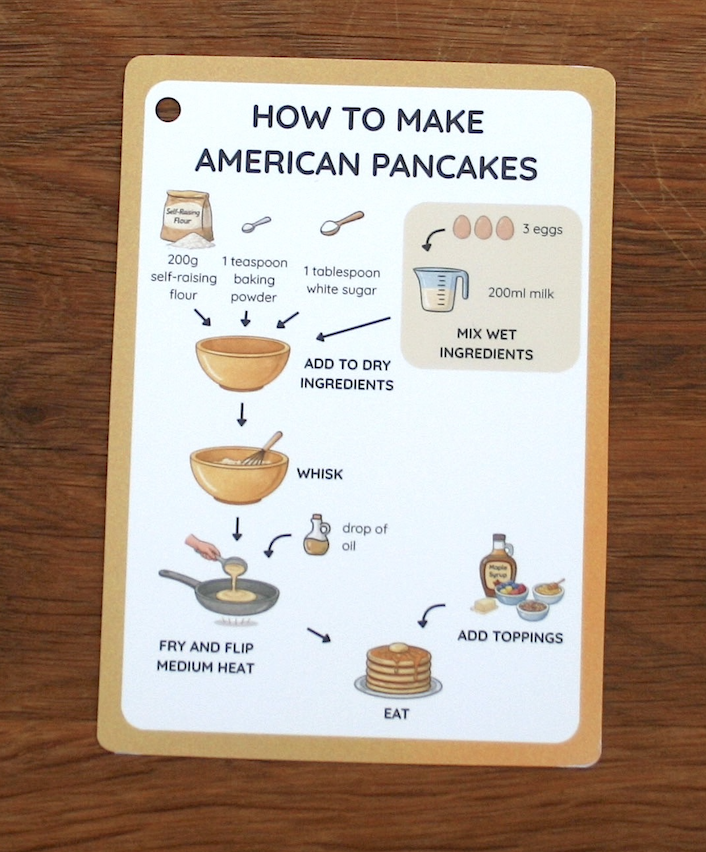
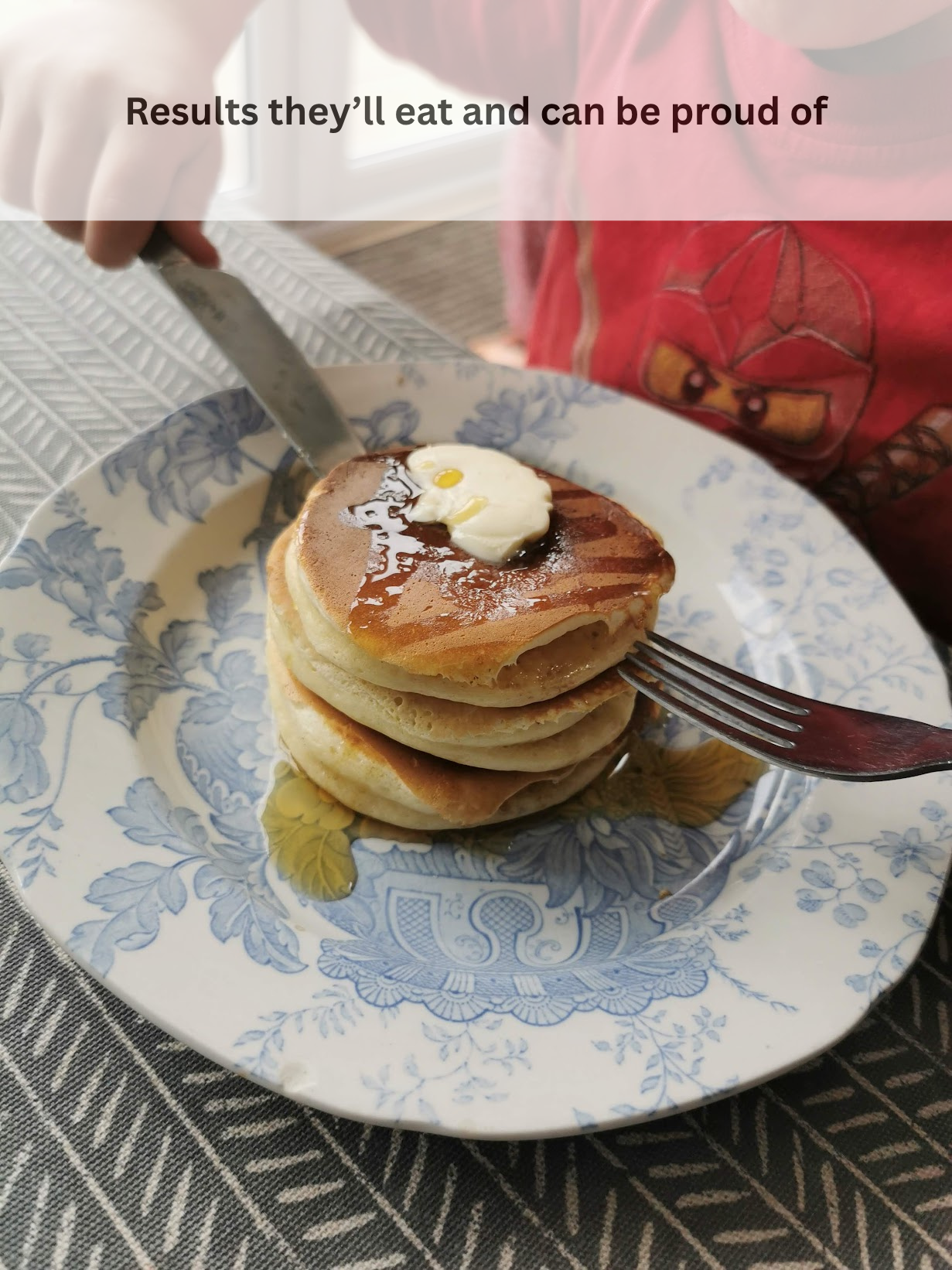
Pancakes made using a ClearCook visual recipe card
Pancakes work well as a first visual recipe because children can see the mixture change and enjoy a quick finished result.
Recipe
Visual sequence
Why it works
Pancakes
Bowl, flour, milk, egg, whisk, pour, flip, toppings.
Familiar, fast and rewarding, with adult support for the hot pan.
Overnight oats
Jar, oats, milk or yoghurt, stir, fruit, fridge, breakfast.
No heat, simple measuring and a clear result the next morning.
Tomato pasta
Pasta, boiling water with adult help, sauce, drain with adult help, mix and serve.
A familiar meal that introduces adult-help heat and water moments.

Are visual recipes only for non-readers?

No. Visual recipes are often described as non-reader recipes because they help children who cannot yet read a full recipe. But they are not only for non-readers.

Many older children still benefit from picture-led instructions because cooking is a practical task. Even a child who can read well may find it easier to follow a visual sequence while standing at the counter.

The goal is not to avoid reading. The goal is to make the recipe usable in a real kitchen. A child might start by following the pictures, gradually notice the words, and then begin reading the steps aloud.

Use the age guide to match picture-led recipes to your child's readiness and supervision level.

Choose recipes by age

Screen recipes vs physical wipe-clean recipe cards

Recipe videos, apps and websites can be useful, especially for finding ideas. But they are not always the easiest format once a child is actually cooking.

For young children, physical cards have practical advantages: no scrolling, no adverts, no notifications, no battery, no screen-time negotiation, easy to hold or place beside the bowl, simple to wipe clean, and visible to parent and child at the same time.

A screen can show a recipe. A wipe-clean card can become part of the cooking routine.

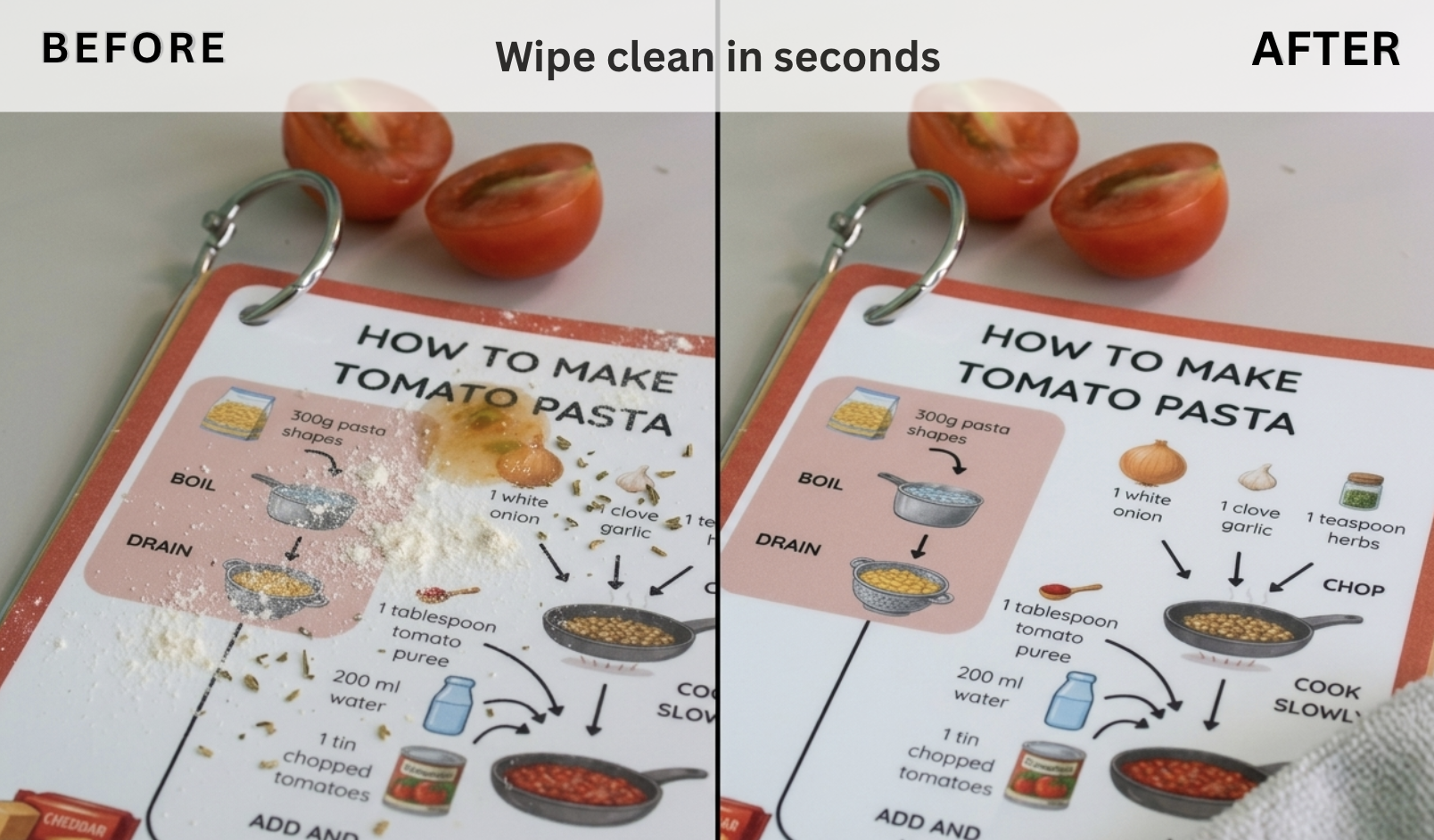
Wipe-clean ClearCook recipe cards for children used in a real kitchen
Wipe-clean cards are designed for floury hands, splashes and repeat use.
Format
Benefits
Drawbacks
Recipe videos
Shows the method clearly and can be engaging for children.
Hard to pause with messy hands; children may copy without understanding the sequence.
Recipe apps
Lots of choice and easy searching.
Screen distractions, device locking and mess around the counter.
Printed recipes
Cheap and easy to access.
Can tear, stain, scroll poorly or get lost.
Laminated pages
Reusable and practical.
Often homemade and may be bulky to store.
Wipe-clean recipe cards
Durable, tactile, child-sized and reusable.
You need a good set of recipes to get started.

Common worries before trying visual recipes

Will my child actually follow the card? Not perfectly at first, and that is fine. The first few times, visual recipes work best when the adult models how to use the card: first we look at step one, now we do step one, now we check it off, what comes next?

Will picture recipes feel too babyish? They do not have to. The design matters. A toddler card might use very simple images and fewer steps. A visual recipe for an older child can look more grown-up, with clean photography, simple icons and proper cooking vocabulary.

What about safety? Visual recipes do not replace adult supervision. They make supervision easier by making adult-help moments obvious, especially for knives, boiling water, hot pans, ovens, draining pasta and electrical appliances.

Will cooking with children make more mess? Probably at first. But structure reduces chaos. When the child can see the next step, there is less guessing, less grabbing and less what-now energy.

The aim is independence, not babying

A strong visual recipe gives children more ownership while still making adult safety support clear.

How to start using visual recipes at home

Start small. Choose one recipe your child already likes and one moment when you are not in a rush. Breakfast or weekend snacks work well because the pressure is lower.

Show the child the recipe card before starting. Look through the pictures together. Get out the ingredients and tools. Let the child lead step one. Point to the next step rather than saying too much. Help with safety moments. Celebrate the finished food. Wipe the card clean and put it back.

The important thing is not perfection. It is giving the child a repeatable way to understand the cooking process. Over time, children can move from helping to leading. That is the real value of visual recipes.

A simple first routine

  • Choose one familiar recipe.
  • Look through the pictures before starting.
  • Set out ingredients and tools.
  • Let the child lead one clear step.
  • Point to the card when they ask what comes next.
  • Keep adult-help moments adult-led.
  • Wipe the card clean and store it for next time.

What recipes work best as first visual recipes?

The best first visual recipes are familiar, quick and forgiving. Good starter recipes include pancakes, overnight oats, scrambled eggs, cheese quesadillas, wraps, yoghurt bowls, fruit skewers, simple pasta, jacket potato toppings, banana bread and cookies.

Look for recipes with clear steps and a visible result. Children are more motivated when they can see the food changing. A pancake turns from batter into breakfast. Oats turn into a jar they can eat the next morning. Pasta becomes a meal they already recognise.

That sense of I made this is powerful.

Pancakes are a strong first visual recipe because the steps are clear and the finished result feels exciting.

Try the pancake recipe

Why ClearCook uses physical recipe cards

ClearCook was designed for children who want to cook more independently and parents who want less constant instruction.

Each recipe is broken into simple picture-led steps, printed on durable wipe-clean cards and kept together on a metal binder ring. The cards can hang in the kitchen, sit beside the ingredients and be wiped clean after use.

The format is deliberately practical: picture-led steps, simple child-friendly wording, wipe-clean surface, sturdy cards, a metal ring to keep recipes together, fridge-friendly storage and recipes children can actually make.

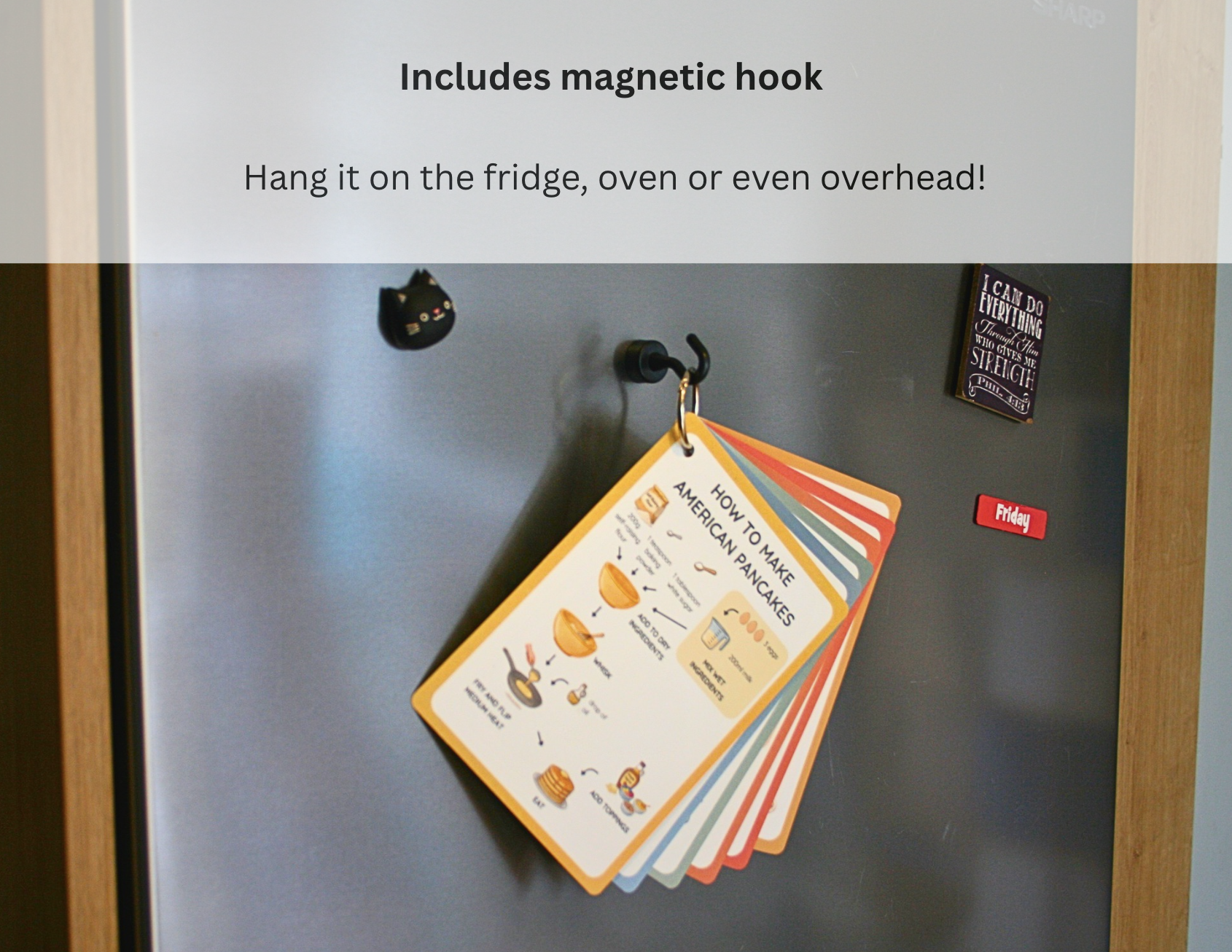
ClearCook wipe-clean kids recipe cards hanging from a magnetic fridge hook
Cards can hang in the kitchen, sit beside the ingredients and be wiped clean after use.

Start with picture-led recipe cards designed to help children follow steps with less adult reading and prompting.

Shop the Starter Set

Try a recipe first

If you are new to visual recipes, start with one recipe your child already wants to make. Pancakes are a great first choice because the steps are clear, the ingredients are familiar and the result feels like a treat.

Overnight oats are ideal if you want a no-heat recipe. Tomato pasta is a good next step for children ready to practise a simple family meal with adult help.

You can also use the Cooking Passport to turn each recipe into a small achievement. As children try new cards, they can collect recipes, build confidence and see their progress over time.

Track recipes cooked, skills practised and the next recipe your child wants to try.

Open the Cooking Passport

Help your child cook their first picture-led recipe with durable wipe-clean cards made for real kitchens.

Explore the Starter Set

Make progress visible

The Cooking Passport gives children a simple way to mark recipes cooked, skills practised and confidence gained.

Open the Cooking Passport

New cards

Hear first about new cards

Get a short note when new ClearCook wipe-clean cards and useful family cooking resources are released.

We'll send a ClearCook magic link so you can open the site logged in. Extra ClearCook emails are only sent if you tick the box below.

FAQs

Common questions

What is a visual recipe?

A visual recipe is a recipe that uses pictures, simple words and numbered steps to show a child what to do. Visual recipes are also called picture recipes, picture-led recipes, step-by-step recipe cards or non-reader recipes.

What age are visual recipes for?

Visual recipes can work for preschool children, early primary children and older children who benefit from clear visual instructions. Younger children need more adult help; older children may use cards more independently.

Are picture recipes good for children who cannot read yet?

Yes. Picture recipes are especially useful for non-readers because a child can follow the sequence using images instead of relying only on written instructions.

Are visual recipes only for children with additional needs?

No. Visual recipes can help many children. They are often useful for autistic children, children with attention differences and children who process visual information well, but they are also useful for any child learning to cook.

Do children still need supervision?

Yes. Children still need adult supervision, especially around knives, ovens, hobs, boiling water and electrical appliances. Visual recipes help children understand the sequence, but adults still manage safety.

Are wipe-clean recipe cards better than recipe apps?

For cooking at the counter, wipe-clean cards can be easier because they do not need scrolling, charging or unlocking and can be wiped clean after spills. Apps are useful for finding ideas, but physical cards are often more practical for young children during cooking itself.

What is the best first visual recipe for children?

Pancakes, overnight oats and simple pasta are good first visual recipes. They are familiar, easy to sequence and give children a clear finished result.

What are visual recipes?

Visual recipes use pictures, short prompts and clear sequencing so children can follow cooking steps without relying on long written instructions.

What age are ClearCook cards for?

ClearCook is mainly designed for children aged around 4 to 11, with adult support adjusted to the recipe, child and safety risks.

Do children still need adult supervision?

Yes. Children can lead safe jobs, but adults should supervise heat, knives, graters, allergens, heavy equipment and hygiene checks.

Why use wipe-clean cards instead of a phone?

Wipe-clean cards stay visible, do not lock or scroll, and can handle flour, sauce and sticky hands better than a phone in the middle of cooking.