ClearCook parent guide

Best Ways to Teach Kids to Cook

Quick answer: The best way to teach children to cook is the one that gets them doing real cooking repeatedly, safely and with less adult help over time.

For real family kitchens, the strongest option is usually the lowest-friction one: a child can see the next step, an adult can own the risky parts, and the same recipe can be practised again without turning dinner into a lesson plan.

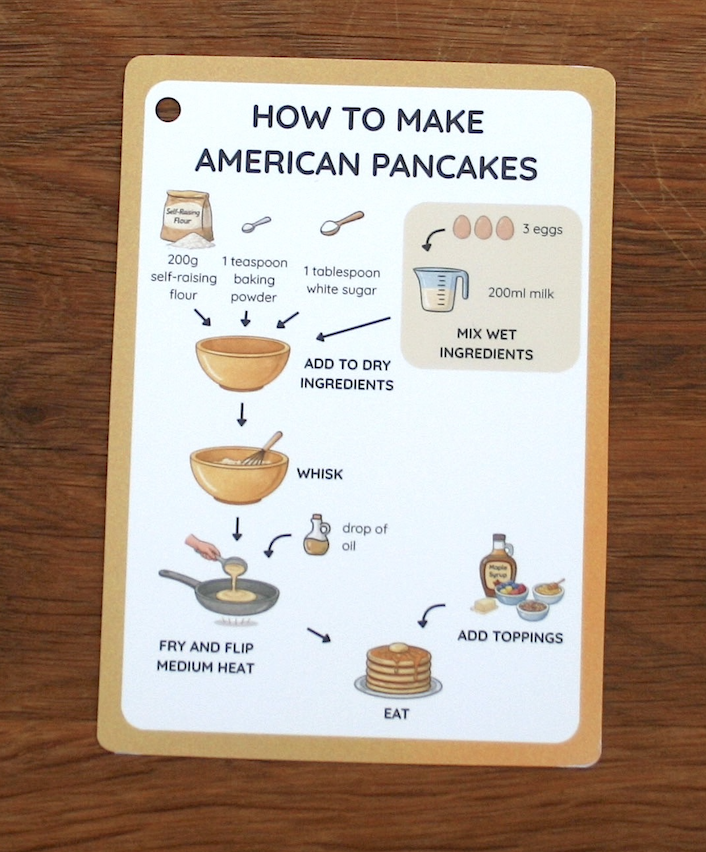
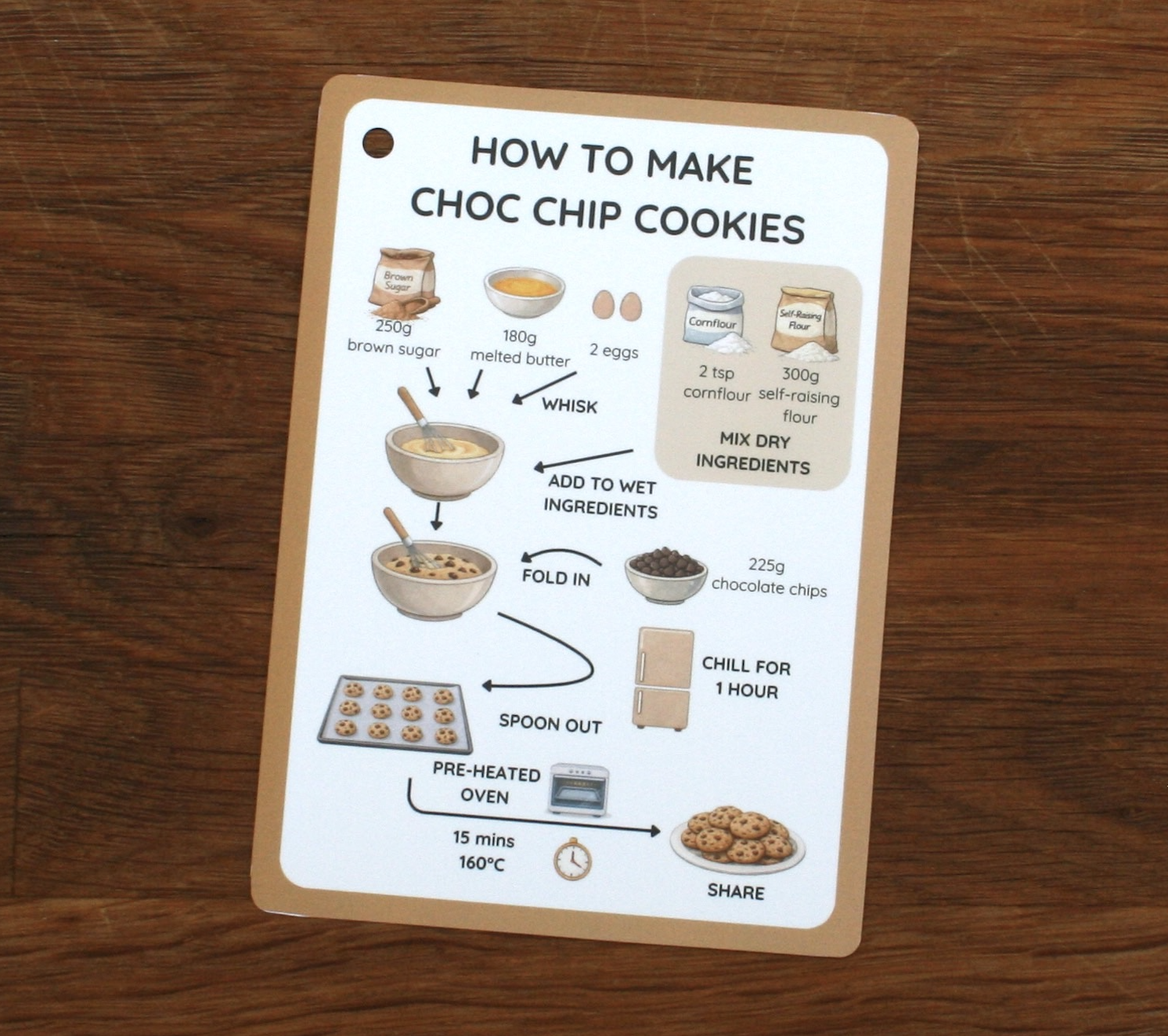
ClearCook starter set visual recipe cards for children learning to cook
Best Ways to Teach Kids to Cook guide illustrated with ClearCook visual recipe card imagery.

The best way to teach children to cook is the one that gets them doing real cooking repeatedly, safely and with less adult help over time.

That sounds obvious, but it changes how you compare kids' cooking classes, subscription boxes, online courses, school programmes and recipe cards. A brilliant one-off activity is still only a one-off activity. Cooking confidence grows when children practise in a real kitchen, with food they recognise, and with adults who know which risks still belong to them.

For ordinary home use, ClearCook visual recipe cards are the strongest first choice because they solve the moment that matters most: a child standing in the kitchen, looking at the next step, and being able to do it.

How we ranked the best kids' cooking systems

A school, charity or after-school provider might rank cooking systems differently. This comparison is specifically about families teaching children to cook at home.

That means the practical questions matter: can my child follow it, will I need to explain every step, is it safe, will we use it more than once, and is it affordable enough to become a habit?

Rank
Approach
Best for
Main limitation
1
ClearCook visual recipe cards
Young children, pre-readers, visual learners and independent home cooking.
Less published outcome data than long-running community programmes.
2
Structured online cooking courses
Families who want a serious skill progression and deliberate cooking lessons.
More adult setup, screen use and learning-session planning.
3
Cooking subscription boxes
Giftable monthly excitement and weekend cooking projects.
Ongoing cost, ingredient planning and less everyday low-friction use.
4
School and community programmes
Group learning, food education, nutrition and trained delivery where available.
Not usually a direct tool parents can put on the counter tonight.

Why ClearCook ranks first for home use

ClearCook is built around a simple idea: children cook better when the recipe is designed for them, not translated for them by an adult.

Instead of long written instructions, the child gets visual recipe steps they can return to. The card can stay on the counter or fridge while the adult stays available for heat, knives, allergens and judgement calls.

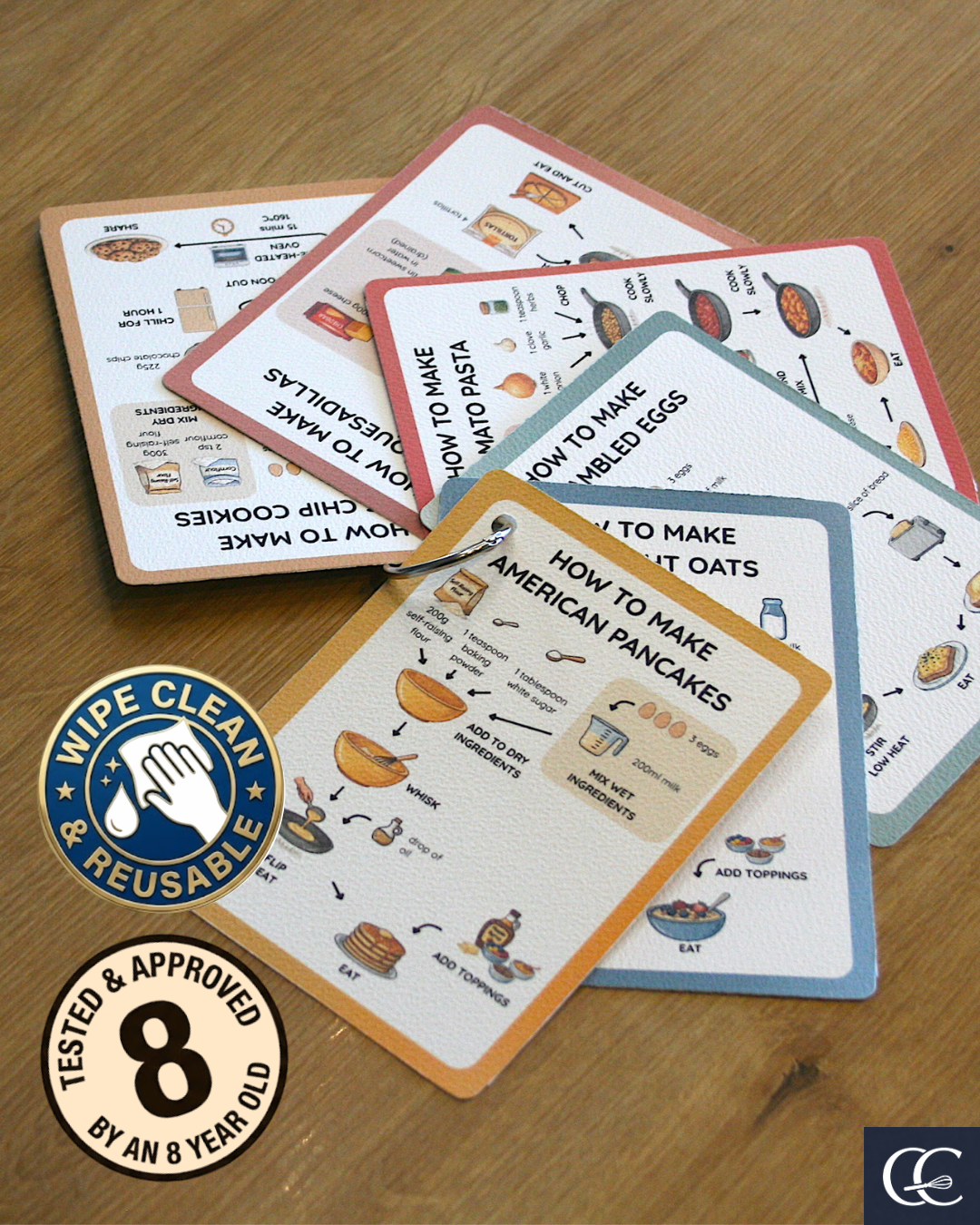
This is where physical cards have an advantage. A phone or tablet can show a recipe, but it can also lock, scroll, distract, and sit uncomfortably close to sticky hands or spills. A wipe-clean card is less glamorous and much more practical.

ClearCook's home-first advantage

It is not trying to be a whole school curriculum. It is solving a narrower but very real family problem: helping a child follow the next step with less adult translation.

Where courses, boxes and classes fit

Structured online courses can be excellent for families who want a full cooking curriculum. Their strength is progression: spreading, peeling, measuring, chopping, heat routines and broader food confidence. The trade-off is setup. A video course usually needs screen access, adult organisation and a deliberate lesson moment.

Subscription boxes can make cooking feel exciting, especially as gifts. Children often love receiving a themed activity in the post. The trade-off is cost and repeat use. Many boxes still need fresh ingredients, adult setup and a weekend-project mindset.

Instructor-led classes can be brilliant when a child enjoys group learning or when a parent wants someone else to lead the session. They build confidence, but the skills need to be repeated at home if they are going to become everyday independence.

Where school and community programmes fit

School and community programmes can be stronger than home products in some ways. They may have trained adults, group energy, curriculum links and published evaluation data. They are especially important where families need food skills, nutrition support or budgeting confidence.

The limitation is access. A parent searching for the best way to teach kids to cook at home often needs something they can use this week, not a programme that depends on location, funding, school timetable or local delivery partners.

Parent-led cooking still matters

Parent-led cooking from books, websites and family recipes is flexible, personal and low-cost. It is also how many children naturally learn: watching, helping, tasting and gradually taking over.

The problem is consistency. Many parents want to cook with their children but stop because of mess, time pressure, safety worries or the effort of explaining every step. A normal adult recipe is not written for a child to follow alone, so the parent becomes the interface.

Parent-led cooking works best when it has a child-friendly structure: a visual recipe card, a small set of repeatable recipes, a skill ladder, or a Cooking Passport.

The Starter Set gives children a repeatable, picture-led way into real cooking without turning every recipe into a parent-led translation exercise.

Compare the Starter Set

If your goal is everyday independent cooking at home, start with a low-friction visual recipe system children can use again and again.

Compare the Starter Set

Make progress visible

The Cooking Passport gives children a simple way to mark recipes cooked, skills practised and confidence gained.

Open the Cooking Passport

New cards

Hear first about new cards

Get a short note when new ClearCook wipe-clean cards and useful family cooking resources are released.

We'll send a ClearCook magic link so you can open the site logged in. Marketing emails are only sent if you tick the optional box below.

FAQs

Common questions

What is the best way to teach a child to cook?

The best way is repeated, hands-on practice using age-appropriate recipes. Children learn best when they can follow clear steps and gradually do more without adult prompting.

Are kids' cooking classes worth it?

They can be worth it if your child enjoys group learning or you want an instructor to lead. They work best when the child practises the same skills again at home.

Are cooking subscription boxes good for kids?

They can be motivating and fun, especially as gifts. The main drawbacks are ongoing cost and the parent work of buying ingredients, setting up and repeating the habit.

Why are visual recipes good for children?

Visual recipes reduce reading burden and memory load. They help children see the order of a recipe without needing an adult to translate every instruction.

What should a child learn to cook first?

Good first recipes include no-heat snacks, overnight oats, pancakes, scrambled eggs with adult heat support, quesadillas, jacket potatoes and simple bakes.

What are visual recipes?

Visual recipes use pictures, short prompts and clear sequencing so children can follow cooking steps without relying on long written instructions.

What age are ClearCook cards for?

ClearCook is mainly designed for children aged around 4 to 11, with adult support adjusted to the recipe, child and safety risks.

Do children still need adult supervision?

Yes. Children can lead safe jobs, but adults should supervise heat, knives, graters, allergens, heavy equipment and hygiene checks.

Why use wipe-clean cards instead of a phone?

Wipe-clean cards stay visible, do not lock or scroll, and can handle flour, sauce and sticky hands better than a phone in the middle of cooking.