ClearCook parent guide

Cooking Skills for Kids by Age

Quick answer: Children can start learning simple kitchen skills much earlier than many parents realise. Toddlers can wash fruit, stir, scoop and tear soft foods; older children can build towards measuring, cracking eggs, safe cutting, grating, baking and supervised heat.

There is no single right age for cooking. The safer question is whether the task fits your child's stage, confidence and ability to listen. A careful 5-year-old may be ready for more than an impulsive 7-year-old, and a child who has practised washing, measuring and stirring is usually more prepared for trickier skills later.

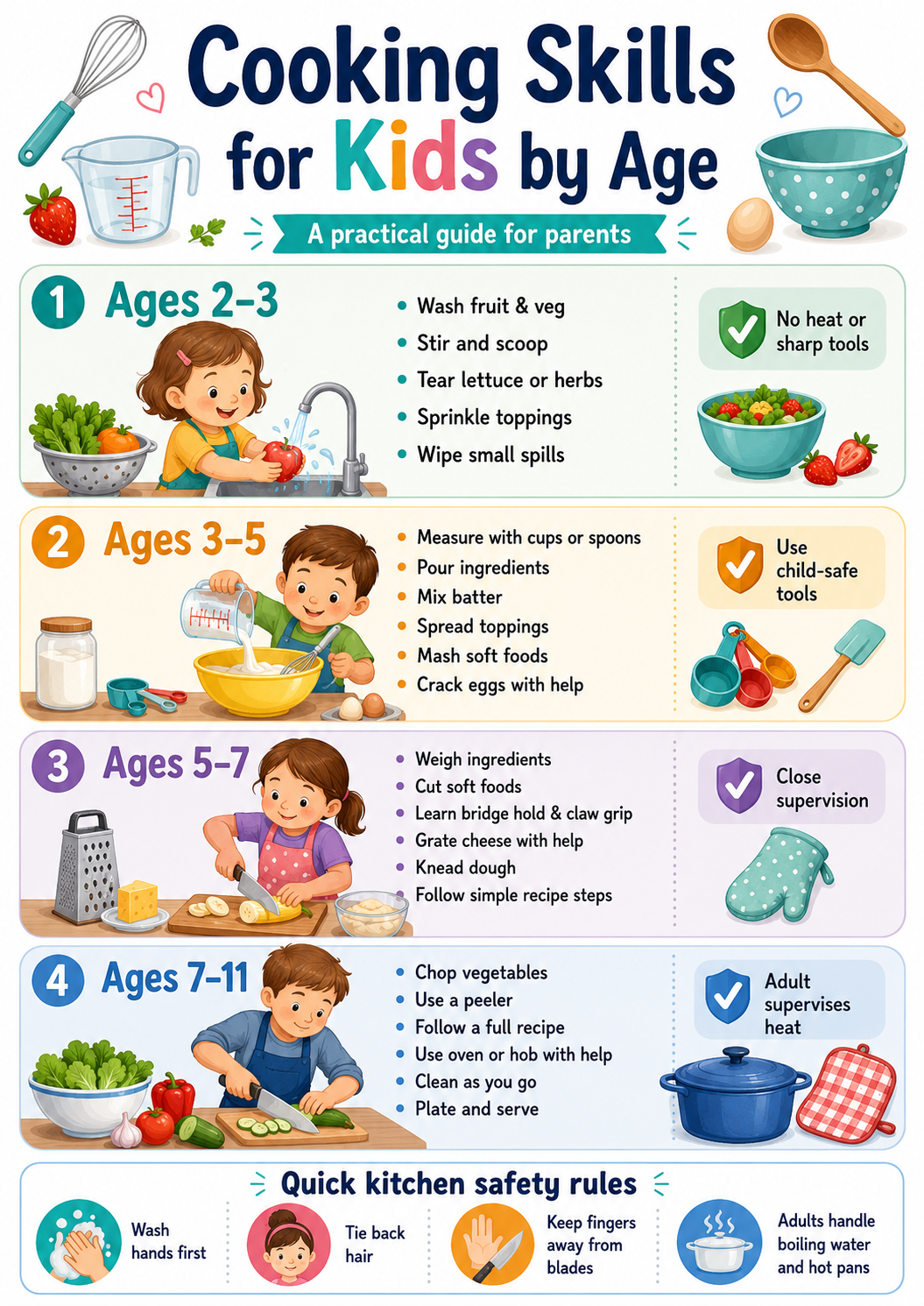
Cooking skills for kids by age infographic showing practical kitchen tasks by stage
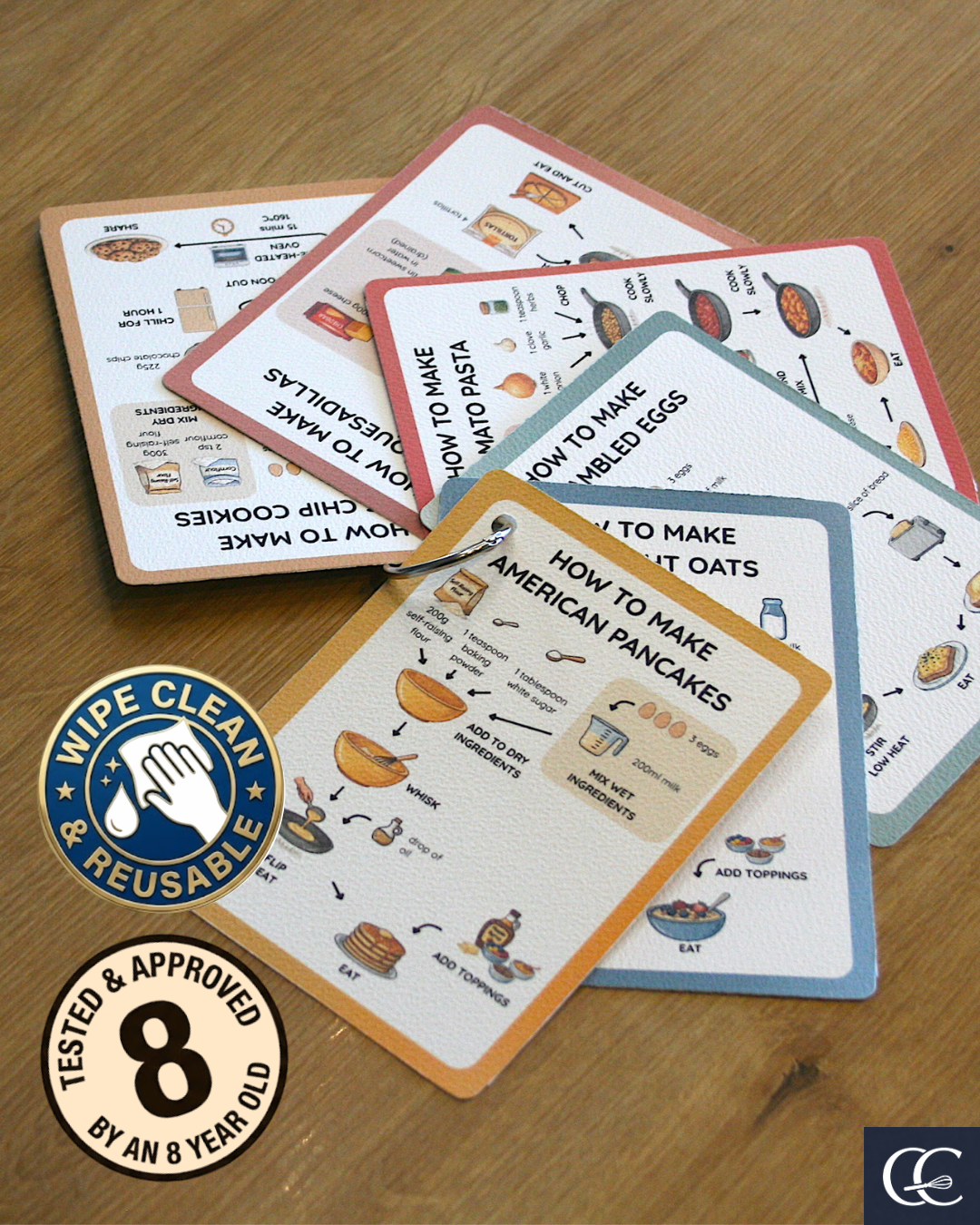
Cooking Skills for Kids by Age guide illustrated with ClearCook visual recipe card imagery.

Children can start learning cooking skills much earlier than many parents realise, but the right task depends on the child in front of you, not just their age.

Age is a guide, not a rule. A careful 5-year-old may be ready for more responsibility than a tired or impulsive 7-year-old. Before choosing a kitchen job, ask whether your child can stop when asked, work at a safe height and focus on one small task for a few minutes.

The safest approach is to teach one new skill at a time. If your child is learning to crack eggs, do not introduce the hob in the same session. If they are learning safe cutting, choose soft food, a stable board and a calm moment.

Toddlers: around 2-3 years

Toddlers can help in the kitchen, but the goal is participation, language and sensory confidence, not speed or independence. Keep them away from heat and sharp tools, and choose jobs where a spill does not matter.

At this stage, children are learning words like hot, sharp, clean, dirty, stop and wait. Those words are cooking skills too.

Good skills
Recipe ideas
Adult boundary
Washing fruit in a bowl, stirring thick mixtures, scooping with a spoon, tearing lettuce, squashing banana and wiping small spills.
Fruit salad, overnight oats, yoghurt bowls, wraps, sandwiches and no-cook snack plates.
Adults handle heat, knives, raw meat, heavy bowls and anything that needs to happen quickly.

Preschoolers: around 3-5 years

Preschool children often want jobs that feel grown up. Pouring, spreading, measuring and mixing are perfect because they are real cooking tasks but still easy to control with the right setup.

This is a good age to let children become the safety checker. Instead of lecturing, ask them to check hands, sleeves, hair and clear surfaces before starting.

Good skills
Recipe ideas
Adult boundary
Measuring with cups or spoons, pouring milk, mixing batter, spreading soft toppings, mashing banana or avocado, rolling dough and cracking eggs with help.
Pancakes, mini pizzas, scrambled eggs with support, cheese quesadillas, muffins, banana bread and jacket potato toppings.
Adults handle hob use, oven trays, grating, chopping, boiling water and final food safety checks.

Early primary: around 5-7 years

This is a useful age for sequencing, weighing, simple knife safety and complete jobs. A child can be in charge of measuring oats, mixing batter or assembling a wrap, rather than being given lots of tiny interrupted tasks.

Bridge hold and claw grip can begin here for many children, but only with soft foods, slow movement and close adult support.

Good skills
Recipe ideas
Adult boundary
Weighing ingredients, reading simple visual recipe steps, using bridge hold, using claw grip, cutting soft foods, juicing citrus fruit, cracking eggs into a separate bowl and plating food.
Pancakes, scrambled eggs, scones, muffins, couscous salad, wraps, pasta salad and mini pizzas.
Adults stay close for graters, knives, raw egg hygiene, hot pans, ovens and any moment where attention slips.

Older primary: around 7-11 years

Older primary children can usually combine several skills in one dish. This is where cooking begins to feel like independence: chopping one ingredient, making a sauce, preparing toppings or serving plates while the adult handles the riskiest parts.

The adult role changes from constant instruction to safety coaching. Prompt before helping, but step in quickly for heat, sharp tools or rushed behaviour.

Good skills
Recipe ideas
Adult boundary
Chopping and slicing with supervision, using a peeler, grating safely, kneading dough, following several steps, timing simple stages and cleaning as they go.
Tomato pasta sauce, vegetable soup, quesadillas, traybake vegetables, scones, coleslaw and simple stir-fries with adult heat control.
Adults still own hot oil, boiling water, heavy oven dishes, raw meat, allergens and decisions about whether a task is safe today.

Tweens and teens: 11+

Older children can move towards more independent cooking depending on maturity, practice and the kitchen setup. This is the age for planning a simple meal, checking ingredients before starting and managing timing across several steps.

Independence still needs boundaries. Agree which jobs are independent, which are ask-first and which are adult-only before they start.

Good skills
Recipe ideas
Adult boundary
Planning a simple meal, preparing ingredients before cooking, using hob and oven routines, cooking eggs, making simple sauces, managing timing and cleaning afterwards.
Scrambled eggs, pasta, soup, pancakes, jacket potatoes, quesadillas and rice salad.
Adults should check readiness around live heat, sharp knives, raw meat, food hygiene and any recipe with several hazards at once.

Turn skills into visible progress

Children often enjoy seeing proof that they are getting better. A Cooking Passport turns kitchen skills into a visible journey without making the activity feel like schoolwork.

You can mark tiny wins: washing hands before cooking, measuring with less help, using a safe grip, cracking an egg into a separate bowl, waiting while the adult handles the oven, or wiping the card clean at the end.

Use the Cooking Passport to track skills by age, confidence and safe repetition rather than rushing children towards full independence.

Get the printable passport

Choose one skill your child can practise this week, then mark the progress with a stamp or badge.

Get the printable Cooking Passport

Make progress visible

The Cooking Passport gives children a simple way to mark recipes cooked, skills practised and confidence gained.

Open the Cooking Passport

Printable passport

Get the printable Cooking Passport

We'll email the printable passport and a few gentle ideas for keeping cooking progress visible.

We'll send a ClearCook magic link so you can open the site logged in. Marketing emails are only sent if you tick the optional box below.

FAQs

Common questions

What age should children start cooking?

Children can start helping with simple kitchen tasks from toddler age, as long as the tasks are safe and supervised. Good first jobs include washing fruit, stirring, scooping, tearing soft foods and helping tidy up.

What cooking skills can a 3-year-old learn?

A 3-year-old can often wash fruit, stir mixtures, pour with help, tear lettuce, sprinkle toppings, mash banana and help set the table. Keep them away from heat, sharp tools and raw meat.

What cooking skills can a 5-year-old learn?

A 5-year-old may be ready to measure ingredients, mix batter, crack eggs with help, mash food, spread toppings, shape dough and start simple safe cutting with close supervision.

When can children learn knife skills?

Many children can begin learning safe cutting techniques in the early primary years, starting with soft foods and child-safe tools. Teach safe hand positions such as bridge hold and claw grip before moving to harder ingredients.

How do I teach my child to crack an egg?

Let your child tap the egg, open it into a separate bowl, check for shell, then wash their hands. Keep the recipe calm and avoid introducing heat at the same time.

How do I cook with kids without making too much mess?

Start with contained tasks such as stirring in a deep bowl, washing fruit in a bowl, sprinkling toppings over a tray or measuring ingredients on a tea towel. Keep a cloth and peelings bowl nearby from the start.

What are visual recipes?

Visual recipes use pictures, short prompts and clear sequencing so children can follow cooking steps without relying on long written instructions.

What age are ClearCook cards for?

ClearCook is mainly designed for children aged around 4 to 11, with adult support adjusted to the recipe, child and safety risks.

Do children still need adult supervision?

Yes. Children can lead safe jobs, but adults should supervise heat, knives, graters, allergens, heavy equipment and hygiene checks.

Why use wipe-clean cards instead of a phone?

Wipe-clean cards stay visible, do not lock or scroll, and can handle flour, sauce and sticky hands better than a phone in the middle of cooking.