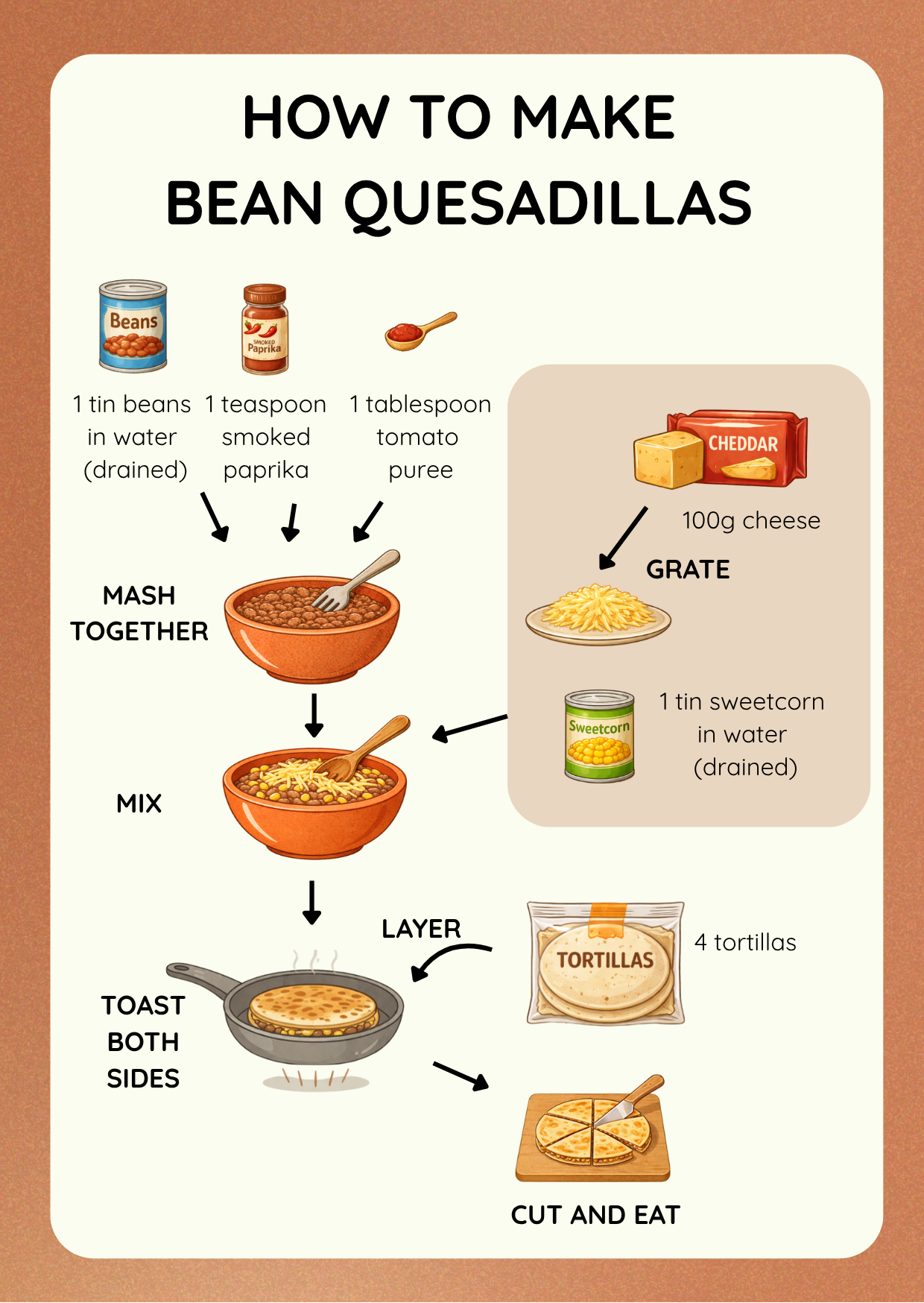
Bean quesadillas go most smoothly when you keep the cold filling work separate from the hot pan work. Start with a sturdy bowl, drained beans, paprika and tomato puree. If the beans are firm, warm them briefly or let the adult do the first few presses with the fork. Once the beans start to break down, children usually enjoy taking over because the job suddenly feels possible.
Aim for a filling that is spreadable, not perfectly smooth. A few whole beans are fine and give texture, but too many whole beans make the filling roll around when the tortilla is moved. If the bowl is sliding, put a damp cloth underneath it. That small setup fix can turn mashing from frustrating into satisfying.
Treat grating as its own focused job. Put the grater on a stable plate or board, grate slowly, and stop before fingers get close to the last small piece of cheese. If your child is not ready for the grater, use pre-grated cheese and give them ownership of sprinkling and mixing instead. That is not a lesser version of the recipe; it is simply choosing the right challenge for this child on this day.
When you build the quesadilla, keep the filling fairly thin and even. It is tempting for children to pile it up in the middle, but a thinner layer melts faster, flips more easily and makes less mess. Spread close to the edges, then press the top tortilla gently so it holds together.
The pan step is where the adult mood matters. Medium heat gives the cheese time to melt before the tortilla burns. Let the first side turn golden, then make the flip a shared job if that suits your child: they can count down, hold the spatula with you, or stand back and check the card while you turn it.
After cooking, give the quesadilla a minute to settle before cutting. This can feel like an annoying pause when lunch smells ready, but it protects fingers and mouths from the hot filling. It also makes the slices hold together better, which gives children a much more satisfying finish.