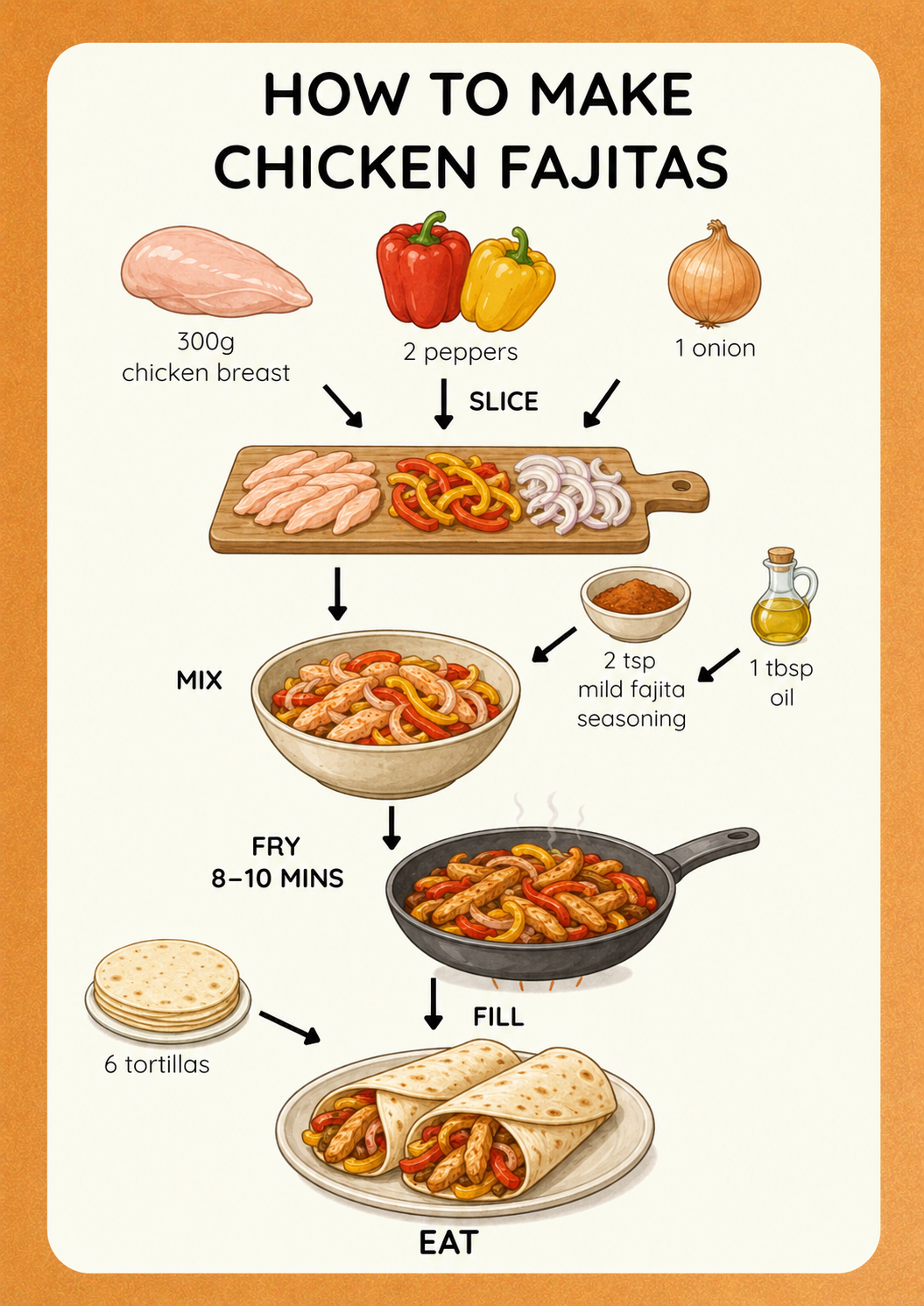
Do all ready-to-eat setup before opening the chicken. Put tortillas, plates and any toppings to one side, wash and slice the vegetables, then create a clearly contained raw-chicken area. This makes handwashing a natural end to one stage instead of something everyone forgets halfway through.
Make the strips genuinely similar. Thick chicken pieces can still be pink when thin ones are ready, while very thin peppers can collapse before the chicken cooks. An adult can halve the chicken breast horizontally first, then cut short, even strips; flatten pepper panels on the board before a child slices them.
Mixing is satisfying, but decide how you want to handle raw meat before inviting the child in. Clean tongs or a long spoon let the child combine the bowl without using hands. Once the mixture goes into the pan, put the bowl and utensils straight by the sink and wash hands before anyone touches tortillas or plates.
Use a large pan and let it heat before the mixture goes in. You want a steady sizzle, not fierce smoke. Stir and turn regularly so chicken surfaces meet the pan, but give the mixture short pauses between stirs so it can colour instead of simply steaming.
At 8 minutes, check rather than assume. Choose the thickest chicken strip, cut through its centre and look for steam and opaque white meat with no pink. If it needs longer, explain that the timer tells us when to check—the chicken itself tells us when it is ready.
Move the cooked filling to a clean serving dish and let it settle for a minute. Children can then count out tortillas, divide filling and practise folding the bottom up before bringing the sides in. Keep portions modest at first; an overfilled fajita is much harder to hold and can turn a cheerful dinner into a lap full of hot peppers.