Chicken Traybake

Visual chicken traybake for kids, with picture steps for chopping, mixing and oven cooking.

MediumAges 7-10Adult help needed55 minMakes 4 portionsKids' score 5/5
Share this recipe
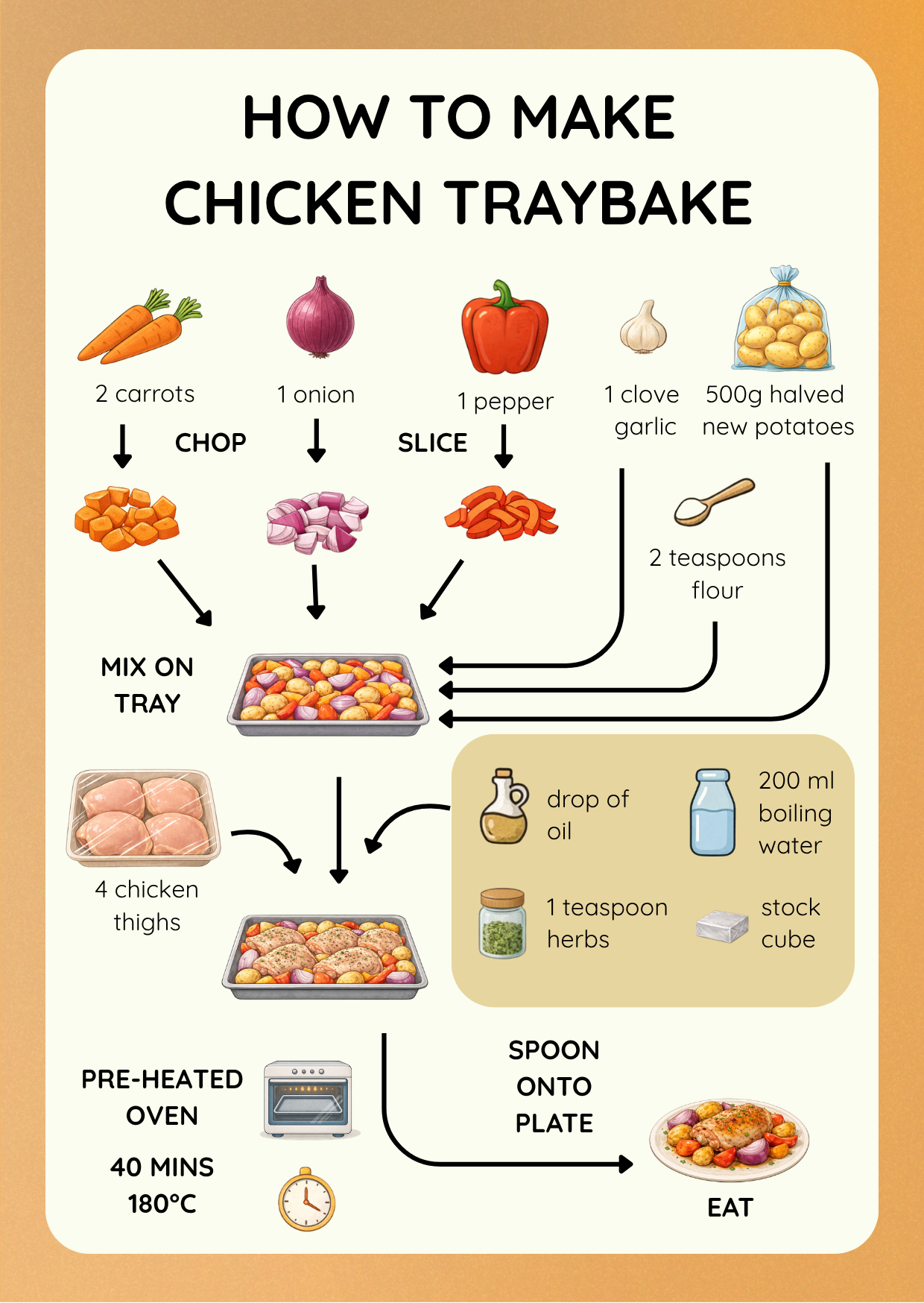
Chicken Traybake visual recipe card for kids with step-by-step picture instructions
ClearCook visual recipe card for Chicken Traybake, with picture-led steps children can follow with adult supervision.

What you’re making

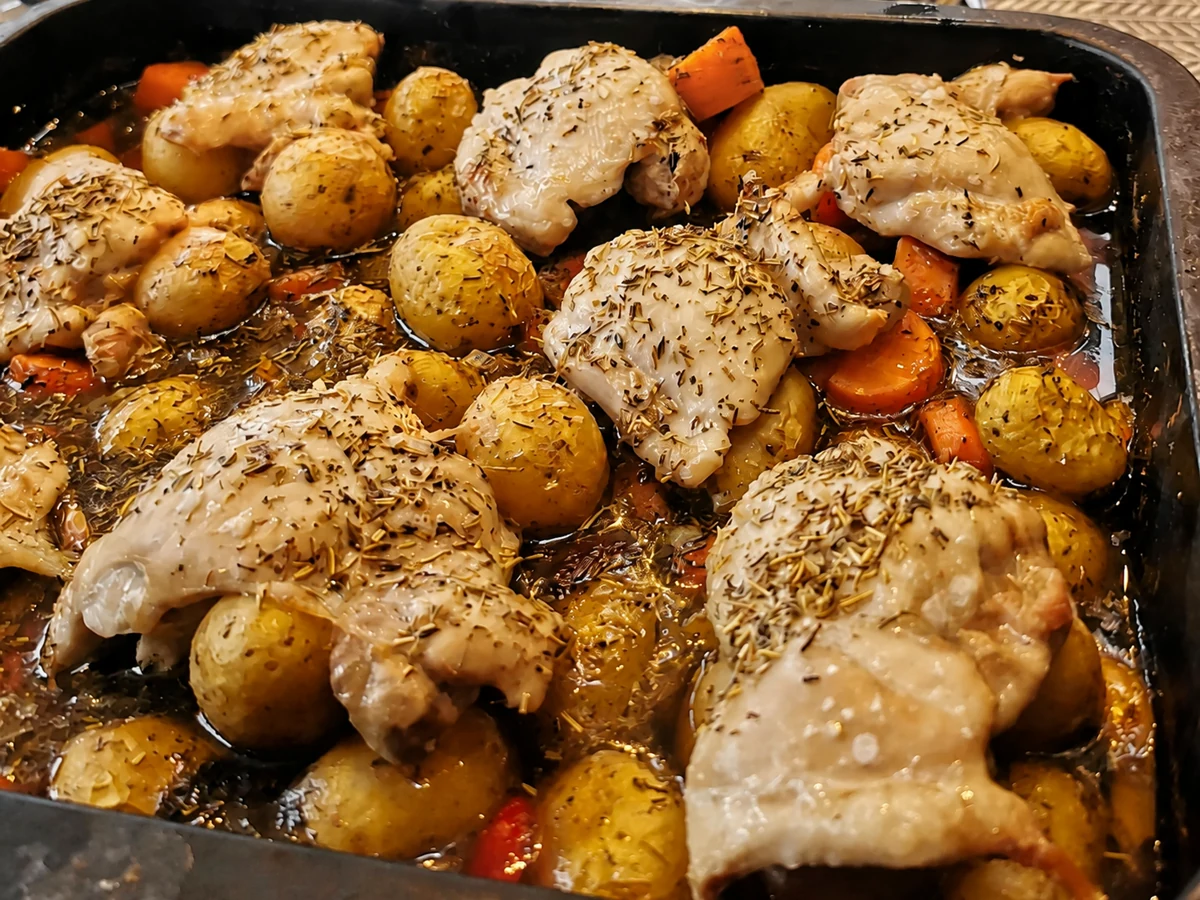
Finished chicken traybake with roasted chicken, potatoes and carrots
Finished Chicken Traybake prepared using the ClearCook visual recipe.

For grown-ups

Ingredients

AmountIngredient
4chicken thighs
500gnew potatoes
2carrots
1onion
1pepper
1clove garlic
1 teaspoonherbs
1stock cube
1 tablespoonflour
-oil
-salt
-pepper

Equipment

No special equipment needed beyond a normal kitchen setup.

Step-by-step written method

1

Preheat oven

Adult help

Preheat the oven to 180C and choose a large roasting tray with enough room for the vegetables and chicken to sit in a single layer. Line the tray if you want easier cleanup.

Child-friendly: Ask an adult to preheat the oven.

Safety: Adult help is needed for the oven.

Tip: A roomy tray helps the vegetables roast instead of steaming in a crowded pile.

2

Chop carrots

Adult help

Chop 2 carrots into similar-sized chunks on a steady chopping board. The pieces do not need to be perfect, but similar sizes help them cook at the same speed.

Child-friendly: Chop the carrots with help if needed.

Safety: Offer adult help with knives and steady the board with a damp cloth if needed.

Tip: Smaller carrot chunks soften more reliably in the same time as the chicken.

3

Chop onion

Adult help

Peel and chop 1 onion into chunky pieces. If onion chopping is too fiddly or makes the recipe tense, an adult can pre-chop it and let the child add it to the tray.

Child-friendly: Chop the onion with help if needed.

Safety: Adult help may be needed for peeling and chopping the onion.

Tip: Chunky onion pieces are fine here because they soften in the oven.

4

Slice pepper

Adult help

Remove the stalk, seeds and white ribs from 1 pepper, then slice it into strips or chunks. Flatter pepper pieces are easier for children to cut safely.

Child-friendly: Slice the pepper with help if needed.

Safety: An adult may need to prepare the pepper and supervise knife work.

Tip: Cut the pepper into flatter pieces before handing it to a child.

5

Mix on tray

Put the carrots, onion, pepper, 500g halved new potatoes, 1 clove garlic and 2 teaspoons flour onto the roasting tray. Add a little oil, salt, pepper and 1 teaspoon herbs, then mix so everything is lightly coated and spread out.

Child-friendly: Mix vegetables and potatoes on the tray.

Safety: Wash hands after touching raw vegetables and keep the tray steady while mixing.

Tip: Use two spoons or clean hands to spread everything into one even layer.

6

Add chicken thighs

Adult help

Place 4 chicken thighs on top of the vegetables, spacing them out so heat can move around them. Use tongs if possible, then wash hands, tools and surfaces straight away.

Child-friendly: Add chicken with adult help.

Safety: Adult help is needed for raw chicken hygiene and safe handling.

Tip: Tongs keep raw chicken handling tidier and make cleanup easier.

7

Add stock, oil and herbs

Adult help

Dissolve 1 stock cube in 200ml boiling water. Carefully pour or spoon the stock around the tray, not over children's hands, then check the herbs and oil are spread across the tray.

Child-friendly: Add stock with adult help.

Safety: Boiling water, steam and a heavy tray need adult help.

Tip: Pour around the tray slowly so the flour mixes into the liquid rather than clumping.

8

Bake for 40 minutes

Adult help

Bake in the preheated oven for around 40 minutes, or until the chicken is cooked through, the juices run clear and the vegetables are soft. Turn vegetables halfway through if needed, keeping the hot tray adult-led.

Child-friendly: Bake until cooked.

Safety: Adult help is needed for the oven, hot tray and checking the chicken is fully cooked.

Tip: Use a food thermometer if you have one, or check the thickest part is cooked through with clear juices.

9

Spoon onto plates

Adult help

Let the tray sit for a few minutes, then spoon chicken, potatoes and vegetables onto plates. Check the food has cooled enough before children eat.

Child-friendly: Spoon onto plates and eat.

Safety: The tray, chicken juices and vegetables will be very hot just after baking.

Tip: A short rest makes serving calmer and gives very hot juices time to settle.

Why this works well for children

Chicken traybake works well for children because the whole dinner is visible on one tray. They can see carrots, onion, pepper and potatoes become a meal, and the card gives them concrete jobs: chop, slice, mix on the tray, add flavourings, then watch the oven transform it. It builds confidence because the child is not just decorating or stirring a side dish; they are helping assemble the main meal. The adult boundary is important and clear: knives as needed, raw chicken hygiene, boiling stock, oven, hot tray and final cooked-through checks.

How to make this one go smoothly

Chicken traybake goes most smoothly when you set up the tray before children start chopping. Choose a large roasting tray, put it on a stable surface, and decide where raw chicken will wait separately until it is needed. That separation keeps the child's vegetable work calmer and makes the hygiene boundary much easier to hold.

Match the knife jobs to the child in front of you. Carrots are firm and can roll, onions are slippery once peeled, and peppers are easier once an adult has removed the stalk, seeds and ribs. It is completely fine to pre-chop one ingredient and let the child do another. The aim is supported independence, not proving they can manage every tool in one recipe.

The tray mixing is the heart of this recipe for children. Let them add potatoes, vegetables, garlic, flour, oil and herbs, then use clean hands or two spoons to coat and spread everything out. Talk about a single layer: food in a heap cooks unevenly, while food spread out has room to roast. That is a practical cooking idea they can actually see.

Keep raw chicken as a deliberate handover. Use tongs, place the thighs on top, then pause for handwashing and surface cleaning before anything else happens. This can feel like a grown-up interruption, so I would frame it as part of the recipe: raw chicken has its own rules, and good cooks follow them.

Boiling stock and oven work are the other adult-led stretches. Spoon or pour the stock around the tray slowly so it does not splash, then let the oven do its long work. If your child gets impatient, give them an observation job: notice the smell changing, check the timer, or predict which vegetable will soften first.

At the end, do not rush the serving just because dinner is ready. The tray is heavy, the juices are hot and the adult needs to check the chicken properly. Once it has rested for a few minutes, hand the recipe back where you can: children can spoon vegetables onto plates, choose a piece of chicken with help, and see that the tray they built has become a proper family meal.

What kids can do independently

  • Chopping
  • mixing
  • seasoning
  • tray preparation
  • using an oven
  • timing
  • checking doneness

These are the child-led jobs to offer first. Keep the adult jobs separate, then hand over one small task at a time so the recipe still feels calm.

Nutrition information

Calories
450 kcal
Protein
28g
Carbohydrates
35g
Fat
20g
Fibre
5g
Sugar
6g
Salt
1.2g

Allergens, swaps and storage

Contains or may contain: gluten. Always check packet labels before cooking.

Simple substitutions usually work best when they keep the same texture and cooking time. Store leftovers safely once cool and follow normal food hygiene guidance.

What adults should supervise

Chicken traybake is a good place to practise the idea that a child can help make a real family dinner without owning every risk. The vegetable prep and tray assembly can feel very independent. Then raw chicken, boiling stock and the oven need the adult to step in clearly and calmly.

I would name the raw chicken moment before you begin. A child may be happily mixing vegetables on the tray and naturally reach for the next thing, but raw chicken changes the hygiene rules. Keeping that as an adult or closely shared job protects the recipe without taking away the child's ownership of the tray they have built.

The other moment to slow down is the oven finish. A roasting tray full of chicken, potatoes and hot juices is heavy and exciting, and everyone wants to see whether dinner is ready. Let children look, smell and notice the changes from a safe place while the adult handles the tray and checks the chicken is cooked through.

  • Knife support depends on the child. Carrots can be hard, onion can be fiddly and pepper can roll, so use a steady board, child-safe tools where appropriate, and pre-cut anything that would make the recipe tense.
  • Raw chicken needs a firm adult boundary. Use tongs, keep it separate from the child-led vegetable prep, and wash hands, boards, knives and worktops before anyone moves on.
  • Boiling stock is easy to underestimate. A small jug of stock can still burn, so an adult should make it and pour or spoon it around the tray while children keep hands back.
  • The oven and hot roasting tray are adult-led. The tray will be heavy, oily and full of hot juices, so children can look from a safe distance while an adult loads, turns or removes it.
  • Chicken doneness is an adult judgement. Check the thickest part is cooked through, the juices run clear, or use a food thermometer if you have one.
  • Serving still needs caution. Roast vegetables and chicken juices hold heat, so let the tray rest briefly and check the food before children eat.
  • Check stock cubes, flour, seasonings and any swaps for allergens such as gluten, celery or mustard.

Parent FAQ

Is chicken traybake a good recipe for children to help with?

Yes, as long as the adult boundaries are clear before raw chicken and the oven appear. Children can do a lot of real dinner-making here: chop vegetables with support, add potatoes, mix everything on the tray, sprinkle herbs and help spoon the finished meal onto plates. The adult needs to hold the raw chicken, boiling stock, oven and cooked-through checks, but that still leaves plenty of meaningful work for the child.

What can children do mostly by themselves?

Many children can add the chopped vegetables to the tray, mix them with oil, flour and herbs, spread everything out and check the picture card for what comes next. Some children can help chop carrots, onion or pepper with close support; others will do better if those are partly prepared first. If the knife work is not right today, tray mixing and arranging are still proper cooking jobs.

How should we handle raw chicken safely?

I would make raw chicken an adult-led or very closely shared step. Use tongs if you can, keep it away from the child-led vegetable prep, then wash hands, tools and worktops straight away. Children can still understand what is happening: the chicken goes on top, but the adult manages the hygiene boundary.

Why does everything need to be spread out on the tray?

A crowded pile steams instead of roasting, and some vegetable pieces may stay firm while others overcook. Spreading the potatoes and vegetables into a single layer helps them cook evenly and gives the chicken space to roast properly. This is a useful visual job for children because they can see whether the tray looks like the card.

How do we know the chicken is cooked?

The adult should check the thickest part of the chicken is cooked through and the juices run clear. A food thermometer is even better if you have one. This is not a judgement to hand over to children yet; they can help notice colour and steam, but the adult confirms it is safe to eat.

What are the main allergens and supervision points?

Adult help needed is recommended. Check stock cubes, flour and any seasoning blends for allergens, especially gluten or celery depending on the brand. Adults should supervise knives, raw chicken, boiling stock, the oven, the hot tray and the final cooked-through check, then make sure the juices and vegetables have cooled enough before children eat.

ClearCook Cooking Passport

Cooked it?

Mark this recipe as done and add it to your ClearCook Passport — a private record of every meal cooked.

View passport

Get this on a fridge card

Wipe-clean and ready for sticky little fingers. Start with a set for the kitchen, then add individual cards for recipes your child wants to repeat.