Beef Stew

Visual beef stew recipe for kids, with picture steps for browning, stirring and slow cooking.

MediumAges 7-10Adult help needed90 minMakes 4 portionsKids' score 5/5
Share this recipe
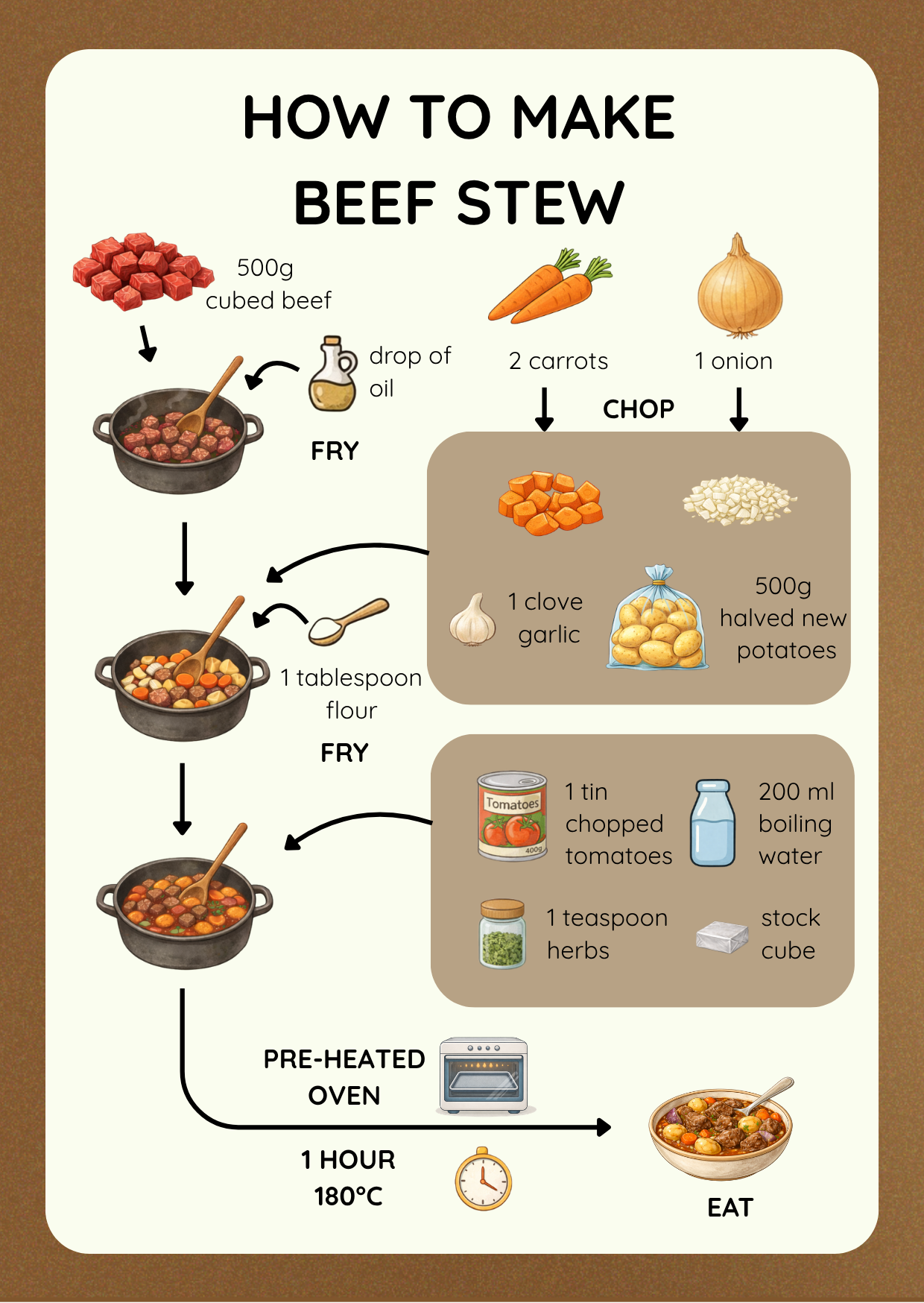
Beef Stew visual recipe card for kids with step-by-step picture instructions
ClearCook visual recipe card for Beef Stew, with picture-led steps children can follow with adult supervision.

For grown-ups

Ingredients

AmountIngredient
500gbeef
2carrots
1onion
1clove garlic
500gpotatoes
1tin chopped tomatoes
1stock cube
1 teaspoondried herbs
1 tablespoonflour
-oil
-salt
-pepper

Equipment

No special equipment needed beyond a normal kitchen setup.

Step-by-step written method

1

Preheat oven

Adult help

Preheat the oven to 180C and choose a large ovenproof casserole pan or lidded dish. If you do not have an ovenproof hob pan, use a frying pan for the first steps and transfer everything to an oven dish before slow cooking.

Child-friendly: Ask an adult to preheat the oven.

Safety: Adult help is needed for the oven.

Tip: A heavy casserole dish keeps the stew cooking steadily in the oven.

2

Brown beef

Adult help

Heat a little oil in a large pan, then brown 500g cubed beef in a single layer as much as possible. Let the beef colour on the outside before stirring too much; this adds flavour, but it does not need to be perfect.

Child-friendly: An adult browns the beef.

Safety: Adult help is needed for raw beef, hot oil and the hot pan.

Tip: Brown in batches if the pan is crowded, or skip deep browning if you need a calmer cook.

3

Chop carrots and onion

Adult help

Chop 2 carrots and 1 onion into similar-sized pieces on a steady board. Smaller, even pieces soften more reliably during the slow cook.

Child-friendly: Chop carrots and onion with help.

Safety: Offer adult help with knives, firm carrots and slippery onion pieces.

Tip: A damp cloth under the board helps stop it sliding.

4

Add vegetables and potatoes

Adult help

Add the chopped carrots and onion to the pan with 1 clove garlic and 500g halved new potatoes. Stir carefully so the vegetables meet the beef and oil without spilling over the pan edge.

Child-friendly: Add vegetables and potatoes.

Safety: The pan is hot, so children need close adult supervision if they add or stir.

Tip: Halved new potatoes match the card and hold their shape well in the stew.

5

Stir in flour

Adult help

Sprinkle in 1 tablespoon flour and stir for a minute so it coats the meat and vegetables. Scrape the bottom of the pan gently so flour does not stick or clump.

Child-friendly: Add flour and stir carefully.

Safety: The pan is hot and flour can catch on the bottom if it is left still.

Tip: Coating the ingredients with flour helps thicken the stew sauce later.

6

Add tomatoes and stock

Adult help

Add 1 tin chopped tomatoes, 200ml boiling water, 1 stock cube and 1 teaspoon dried herbs. Stir well, scraping the bottom of the pan so the flour mixes into the liquid and the sauce starts evenly.

Child-friendly: Add tomatoes and stock with help.

Safety: Boiling water, steam and hot sauce need adult help.

Tip: Pour liquid slowly and stir from the bottom to rescue any floury patches.

7

Slow cook in oven

Adult help

Transfer the stew to the preheated oven and cook for at least 1 hour, or longer if the beef needs more time. It is ready when the beef is tender, the potatoes are soft and the sauce has thickened.

Child-friendly: Cook in the oven until soft.

Safety: Adult help is needed for the oven, hot pan and checking the stew is tender.

Tip: Cover for a softer, saucier stew, or uncover near the end if you want it thicker.

8

Cool and serve

Adult help

Let the stew stand for a few minutes before serving. Spoon into bowls, check the temperature, and make sure pieces of beef, potato and carrot are a safe size for the children eating.

Child-friendly: Let it cool a little, then eat.

Safety: Stew holds heat for a long time, especially in potatoes, sauce and meat pieces.

Tip: Use the resting time to set bowls out and let the sauce settle.

Why this works well for children

Beef stew works well for children because it makes slow cooking visible. The card shows separate ingredients becoming one meal: beef browns, carrots and onion are chopped, potatoes go in, flour thickens, tomatoes and stock become sauce, then time in the oven changes everything again. It is not a quick independence recipe, but it is a generous one. Children can learn chopping, adding, stirring, timing, patience and texture cues while the adult holds the raw meat, hot pan, boiling stock, oven and final tenderness checks.

How to make this one go smoothly

Beef stew goes most smoothly when you set expectations before the pan goes on. This is not a fast recipe where children get an instant result. It is a recipe where they help build dinner, then time and heat do the quiet work. Say that out loud and the waiting feels more like part of cooking and less like being told to go away until dinner is ready.

Start by separating the child-friendly prep from the raw meat job. Put the beef on one side for the adult, then set up a steady chopping board for carrots, onion and potatoes. Carrots are firm, onion can be slippery, and potatoes may need halving by an adult first. Choose the job that gives your child success rather than handing over the hardest piece first.

Browning beef is the grown-up stretch. Use a large pan, do not crowd it too much, and let the beef sit long enough to colour before stirring. If it spits or the child gets nervous, step back from the idea of perfect browning. The flavour is lovely, but a calm kitchen is worth more than a deeply browned batch of beef.

When the vegetables and flour go in, the child can come closer again if they are steady around the hob. Flour can clump or catch on the bottom, so this is a good moment to teach slow scraping rather than frantic stirring. Adding tomatoes and stock turns it into a proper sauce; scrape the bottom of the pan so any floury bits dissolve instead of sticking.

The oven time is a patience lesson. Let children know what you are waiting for: beef that feels tender, potatoes that are soft, and sauce that looks thicker than when it went in. If they need a job during the hour, ask them to set bowls out, check the timer, or draw a tiny before-and-after of what they think the stew will look like.

At the end, give the stew a few minutes to settle. It holds heat in sneaky places, especially potatoes and sauce. Once the adult has checked the texture and temperature, hand back a safe serving job where you can: spooning vegetables, choosing a bowl, or noticing how the separate ingredients have turned into a proper stew.

What kids can do independently

  • Chopping
  • browning meat
  • stirring
  • combining ingredients
  • using an oven
  • slow cooking
  • timing

These are the child-led jobs to offer first. Keep the adult jobs separate, then hand over one small task at a time so the recipe still feels calm.

Nutrition information

Calories
420 kcal
Protein
30g
Carbohydrates
30g
Fat
18g
Fibre
5g
Sugar
6g
Salt
1.1g

Allergens, swaps and storage

Contains or may contain: gluten. Always check packet labels before cooking.

Simple substitutions usually work best when they keep the same texture and cooking time. Store leftovers safely once cool and follow normal food hygiene guidance.

What adults should supervise

Beef stew is a slower recipe, so the adult supervision is less about one dramatic moment and more about holding a calm boundary through several warm, heavy, grown-up steps. The child can be very involved, but raw beef, hot oil, boiling stock and a heavy oven dish need the adult to be clearly in charge.

I would name the browning step before you start. A child may see the beef and want to add it like any other ingredient, but raw meat and hot oil are a different kind of job. Let them watch for the colour change from a safe distance, then hand the recipe back when it is time to add vegetables, flour, herbs or check the card.

The other supervision moment is patience. Stew looks nearly finished long before the beef is tender, and children may want to taste as soon as it smells good. The adult job is to check texture, heat and timing, then make the final serving feel like the child is still part of the meal rather than someone who was parked while dinner cooked.

  • Raw beef and hot oil need a clear adult boundary. Children can watch browning from a safe place, but an adult should manage the pan, splatter risk and handwashing.
  • Knife support depends on the child. Carrots are firm, onions can slip and potatoes may roll, so use a steady board, pre-cut awkward pieces and offer help before tired hands make chopping unsafe.
  • The flour step happens in a hot pan. Stir slowly and scrape the bottom so flour does not clump or catch, with an adult close enough to take the spoon if needed.
  • Boiling water and stock create steam and splash risk. An adult should pour the water and help stir the sauce from the bottom of the pan.
  • The oven or slow cooker is adult-led. A casserole pan is heavy even before it is full of hot stew, so children should not move it in or out.
  • Tenderness and temperature are adult judgements. Check the beef is soft enough, potatoes are cooked through and the stew has cooled before children eat.
  • Check flour, stock cubes and seasonings for allergens such as gluten, celery or mustard.

Parent FAQ

Is beef stew a good recipe for children to help with?

Yes, if you treat it as a shared slow-cooking recipe rather than a quick child-led one. Children can help chop vegetables, add potatoes, stir in flour, notice the sauce changing and understand how a meal develops over time. The adult needs to hold the raw beef, hot oil, boiling stock, oven and tenderness checks, but the child can still feel part of making a proper family dinner.

What can children do mostly by themselves?

Many children can help gather ingredients, add chopped vegetables and potatoes, sprinkle flour, stir slowly with close supervision, add herbs and check the card sequence. Knife work depends on readiness: carrots are firm, onions can slip, and potatoes may need adult halving first. If those prep jobs are too much today, children can still own the adding, stirring, timer and serving parts.

Do we have to brown the beef first?

Browning adds flavour, but it is not worth making the whole recipe stressful. If you have the time and adult capacity, brown the beef in a hot pan and explain that colour means flavour. If you need a calmer version, you can brown less thoroughly or use a slow cooker approach; the recipe still teaches patience, sequence and how ingredients soften together.

Why does the stew need to cook for so long?

The long cook is what turns cubed beef from firm and chewy into tender pieces that break apart more easily. It also gives potatoes and carrots time to soften and lets the flour, tomatoes and stock become a proper sauce. For children, this is a useful cooking lesson: not every recipe changes quickly, and waiting can be part of making food better.

Can this be made in a slow cooker?

Yes. Brown the beef first if you want extra flavour, then add the ingredients to a slow cooker and cook for around 4-5 hours on high or 7-8 hours on low, depending on your machine and beef. Keep the same child-friendly jobs around chopping, adding and stirring, but make the adult boundary clear for hot pans and final food safety.

What are the main allergens and supervision points?

Adult help needed is recommended. Check flour, stock cubes and seasoning blends for allergens, especially gluten, celery or mustard depending on the brand. Adults should supervise knives, raw beef hygiene, hot oil, boiling water, the oven or slow cooker, and the final check that the beef is tender and the stew has cooled enough to eat.

ClearCook Cooking Passport

Cooked it?

Mark this recipe as done and add it to your ClearCook Passport — a private record of every meal cooked.

View passport

Get this on a fridge card

Wipe-clean and ready for sticky little fingers. Start with a set for the kitchen, then add individual cards for recipes your child wants to repeat.