ClearCook parent guide

Kids Cooking Independently

Quick answer: For children aged 6-11, independent cooking means children gradually lead safe, bounded parts of cooking while an adult stays responsible for heat, knives, allergens and final safety checks.

The simplest rule is: children lead the task, adults own the risk. That turns 'Can I help?' into one useful kitchen job the child can complete without taking over the whole meal.

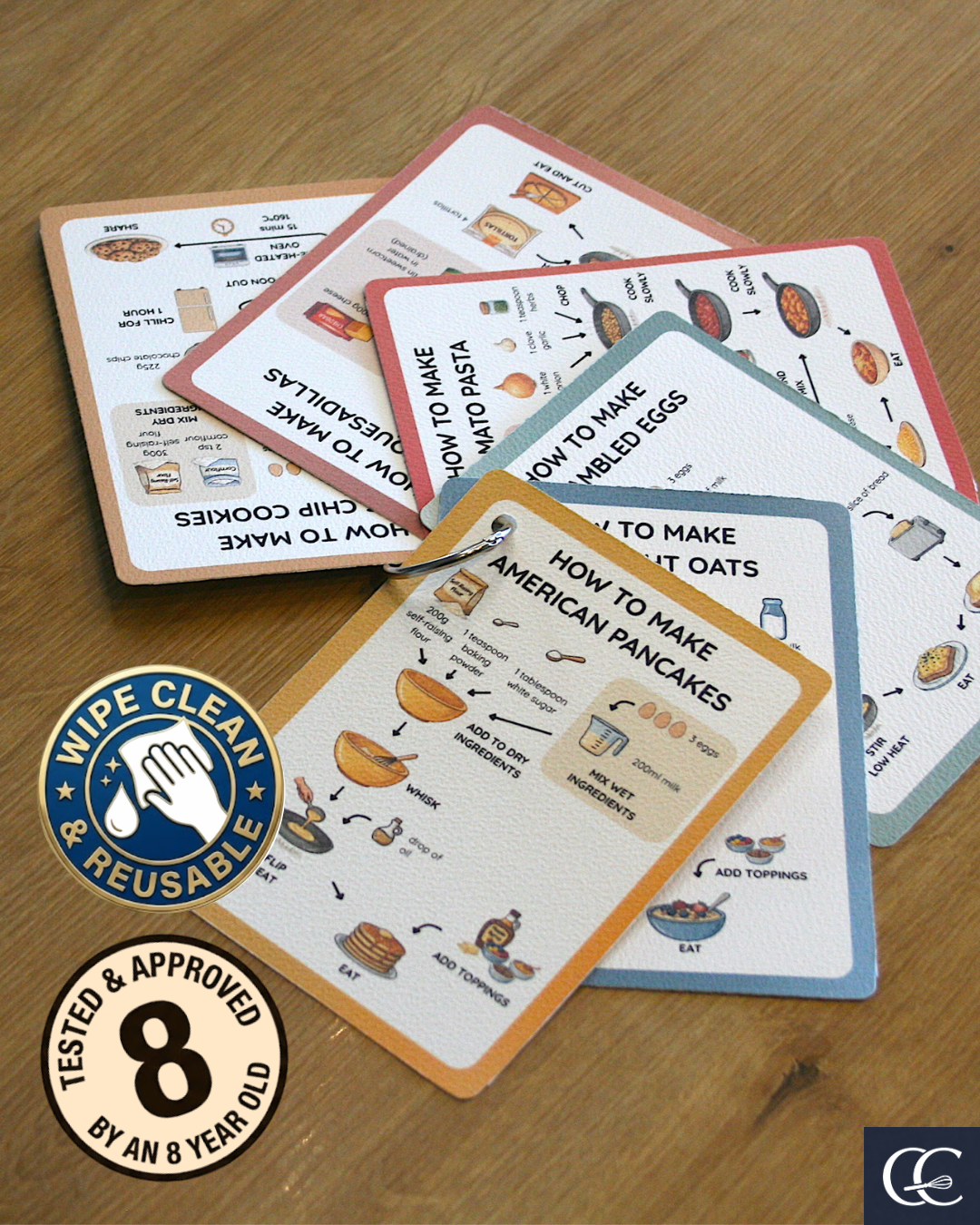
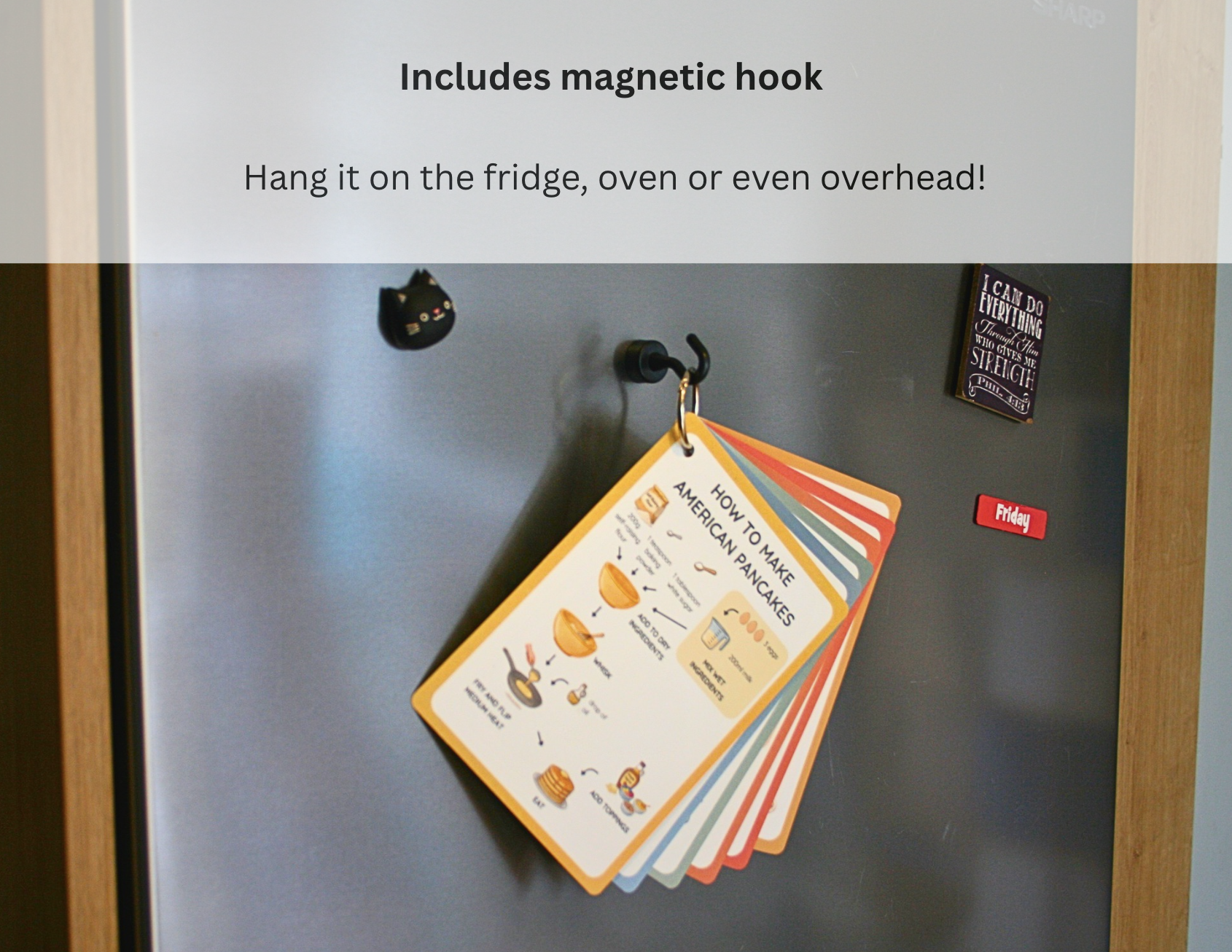
ClearCook kids recipe cards hanging on a fridge to help children cook more independently with adult supervision
Kids Cooking Independently guide illustrated with ClearCook visual recipe card imagery.

Most parents do not begin by wondering how to teach independent cooking skills. They begin with a much more honest problem: how do I make dinner while my child is whining, grabbing, asking to stir boiling food, or turning one simple meal into twice the work?

That is the real starting point for kids cooking independently. For children aged 6-11, independence rarely means being left alone to make dinner from start to finish. It means gradually learning to lead safe, bounded parts of cooking while an adult stays responsible for the risky parts.

The simplest rule is this: children lead the task, adults own the risk. A child can follow a visual recipe card, mix pancake batter, assemble wraps, prepare toppings or tick off steps in their Cooking Passport. The adult still owns heat, boiling water, sharp knives, raw meat, allergens, timing-critical steps and final safety checks.

Why helping often does not feel helpful

Children often want to help at exactly the moment adults have the least patience for it. You might be draining pasta, stopping something burning, answering another child, or trying to get food on the table before everyone melts down. Then a child appears and asks to chop, crack eggs, use the hob or do it themselves.

The problem is not that they want to help. The problem is that their version of helping can create more risk, more mess and more negotiation. This is why children need a real kitchen job that is safe, visible and bounded.

Not pretend help. Not go and play. Not just watch me. A real job they can own: washing fruit, tearing lettuce, sorting toppings, spreading hummus, setting out cutlery, matching ingredients to a recipe card, or mixing pancake batter while the adult handles the hot pan.

The one-job rule

Instead of trying to involve your child in the whole meal, choose one useful job they can own from start to finish. One real job is enough.

Child-led, grown-up and waiting jobs

A useful way to reduce kitchen stress is to divide jobs into three zones. This helps because you are not simply saying no; you are showing your child where they do belong in the cooking process.

The language can stay very simple. You might say, 'Your job is the cold job. My job is the hot job,' or, 'You are in charge of the toppings. I am in charge of the pan.'

Zone
What it means
Good examples
Child-led zone
These are low-risk tasks the child can lead while an adult stays nearby.
Washing vegetables, mixing batter, assembling wraps, spreading fillings, sprinkling cheese, setting the table or ticking off picture steps.
Grown-up zone
These are jobs the adult owns because the risk is too high for most children aged 6-11.
Hob, oven, boiling water, draining pasta, sharp knives, raw meat, hot oil, allergens, heavy pans and final food safety checks.
Waiting zone
These are useful holding jobs for moments when the adult needs both hands.
Matching ingredients to the card, choosing toppings, wiping a safe surface, putting forks out or adding a Cooking Passport stamp.

Safe cooking tasks by age 6-11

Age is a starting point, not a guarantee. Confidence, attention, coordination and experience matter more than a birthday. A careful 7-year-old may be ready for more than an impulsive 10-year-old on a tired day.

Use these age bands as practical prompts for supervised independent cooking, not as permission to leave children alone with heat, knives or allergens.

Age
Child-led jobs
Adult-owned boundaries
6-7
Washing fruit and veg, tearing lettuce, stirring cold mixtures, spreading soft toppings, sprinkling cheese, setting the table and following simple picture steps.
Adults should own the hob, oven, boiling water, sharp knives, raw meat, heavy pans, allergens and any task where the child cannot stop quickly when asked.
8-9
Measuring ingredients, mixing batter, cracking eggs into a separate bowl, assembling wraps, making sandwiches, preparing toppings and using a child-safe knife on soft foods.
Adults should still own live heat, draining pasta, oven trays, sharper knives, raw meat, final allergen checks and any step that becomes rushed or silly.
10-11
Following simple recipes with prompts, making cold lunches, assembling pasta salad from cooled ingredients, using a small knife with supervision and preparing simple breakfasts.
Adults should still supervise hob and oven use, boiling water, hot oil, heavy dishes, high-risk allergens and final decisions about whether food is safe to eat.

The supervision ladder

Supervision does not always mean doing the job for your child. The most useful habit is to prompt before helping, then step in only as much as the task needs.

Start by watching when the job is low-risk and familiar. Prompt if your child hesitates: 'What comes next on the card?' Assist if they can do most of the job but need one small support, such as a steady bowl. Take over when the task becomes unsafe or too difficult.

Helpful prompts before you step in

  • What comes next on the card?
  • Where do your hands need to be?
  • Is this a hot job or a cold job?
  • What is your job, and what is my job?
  • Do we need to stop and ask before touching this?

Real recipe examples make the boundary easier

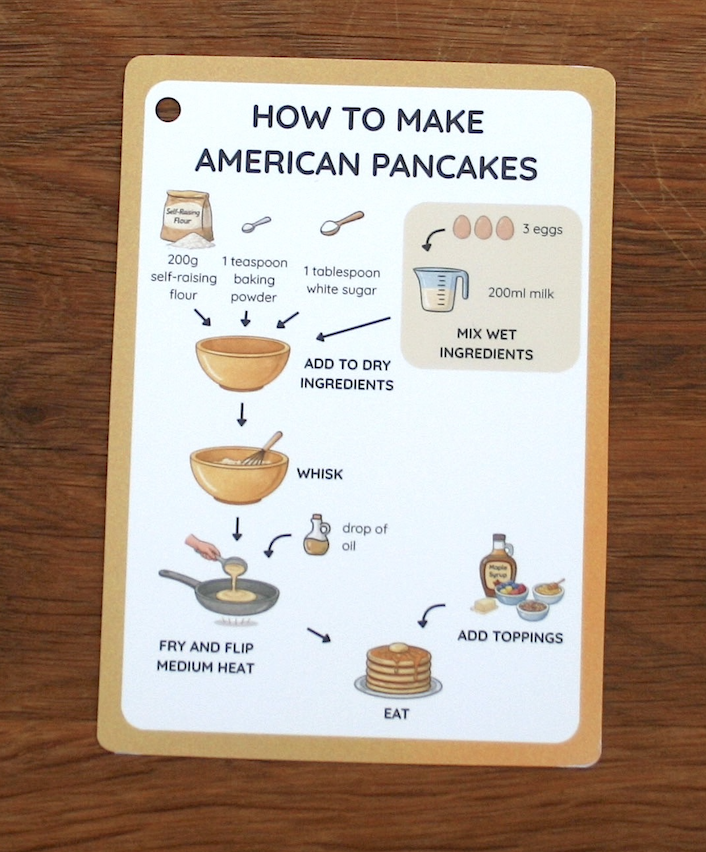
Pancakes are a good example of child-led, adult-supervised cooking. The child can follow the picture card, measure ingredients, mix batter, choose toppings and tick off steps. The adult controls the hob, the hot pan and the flipping if needed.

Jacket potatoes work the same way. The child can choose toppings, mix tuna or beans, set out bowls and add cold toppings once the potato is safe. The adult handles the oven or microwave, cuts open the hot potato and checks the temperature.

Wraps, sandwiches and pasta salad are often calmer first independence recipes because children can own more of the assembly. The adult can still cut harder foods, manage allergens, handle cooked meat safely and deal with boiling water.

Choose one safe job this week, record it in the Cooking Passport, and let the stamp mark progress rather than perfection.

Start your passport

Independent cooking starts with one clear child-led job, one adult-owned risk boundary and one visible progress mark.

Start your passport with one safe job

Make progress visible

The Cooking Passport gives children a simple way to mark recipes cooked, skills practised and confidence gained.

Open the Cooking Passport

Cooking Passport

Save your child's Cooking Passport

Send a magic link so you can come back to their ClearCook progress from your inbox.

We'll send a ClearCook magic link so you can open the site logged in. Marketing emails are only sent if you tick the optional box below.

FAQs

Common questions

Does independent cooking mean leaving a child alone?

No. It means the child can lead appropriate steps while an adult supervises and handles heat, sharp tools, allergens and other higher-risk moments.

What age can a child start cooking independently?

Children can start leading small kitchen jobs from around age 6, depending on confidence, attention and coordination. At this age, independence means simple low-risk tasks with an adult nearby.

Can an 8-year-old use a knife?

Some 8-year-olds can use a child-safe knife or small table knife for soft foods with supervision. Sharp knives should be introduced gradually with clear rules and close adult support.

Should children cook on the hob?

Children aged 6-11 should not usually manage the hob independently. They can prepare ingredients, observe and learn with adult supervision, while the adult owns live heat.

What if my child keeps asking to help while I cook?

Give them one real job and repeat the boundary calmly: 'Your job is toppings. My job is the hot pan.' A useful job reduces negotiation.

How do I stop myself taking over?

Set up the task first, give one clear job, and prompt before touching. If the job is safe, let it be slower and messier than if you did it yourself.

What are visual recipes?

Visual recipes use pictures, short prompts and clear sequencing so children can follow cooking steps without relying on long written instructions.

What age are ClearCook cards for?

ClearCook is mainly designed for children aged around 4 to 11, with adult support adjusted to the recipe, child and safety risks.

Do children still need adult supervision?

Yes. Children can lead safe jobs, but adults should supervise heat, knives, graters, allergens, heavy equipment and hygiene checks.

Why use wipe-clean cards instead of a phone?

Wipe-clean cards stay visible, do not lock or scroll, and can handle flour, sauce and sticky hands better than a phone in the middle of cooking.