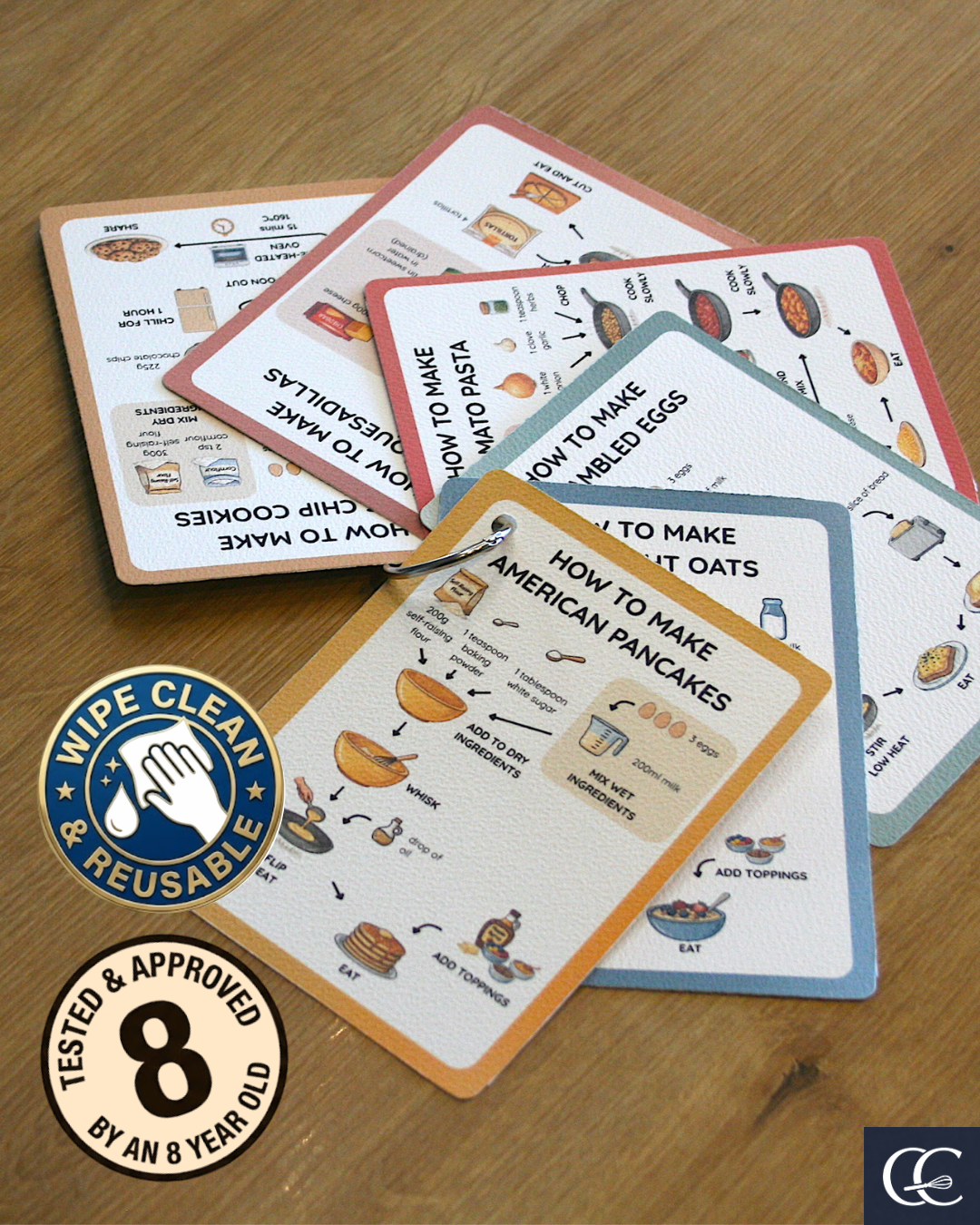
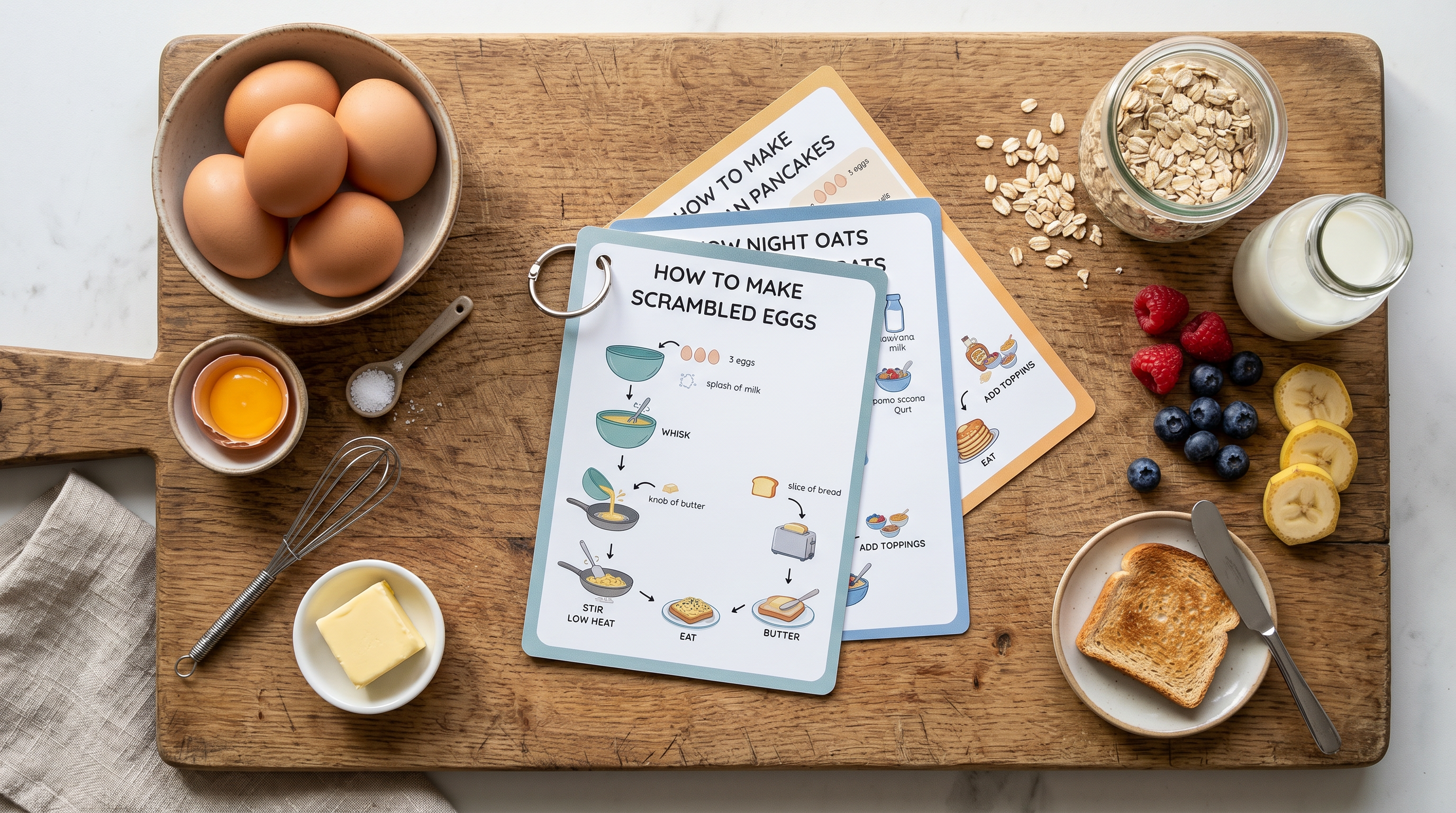
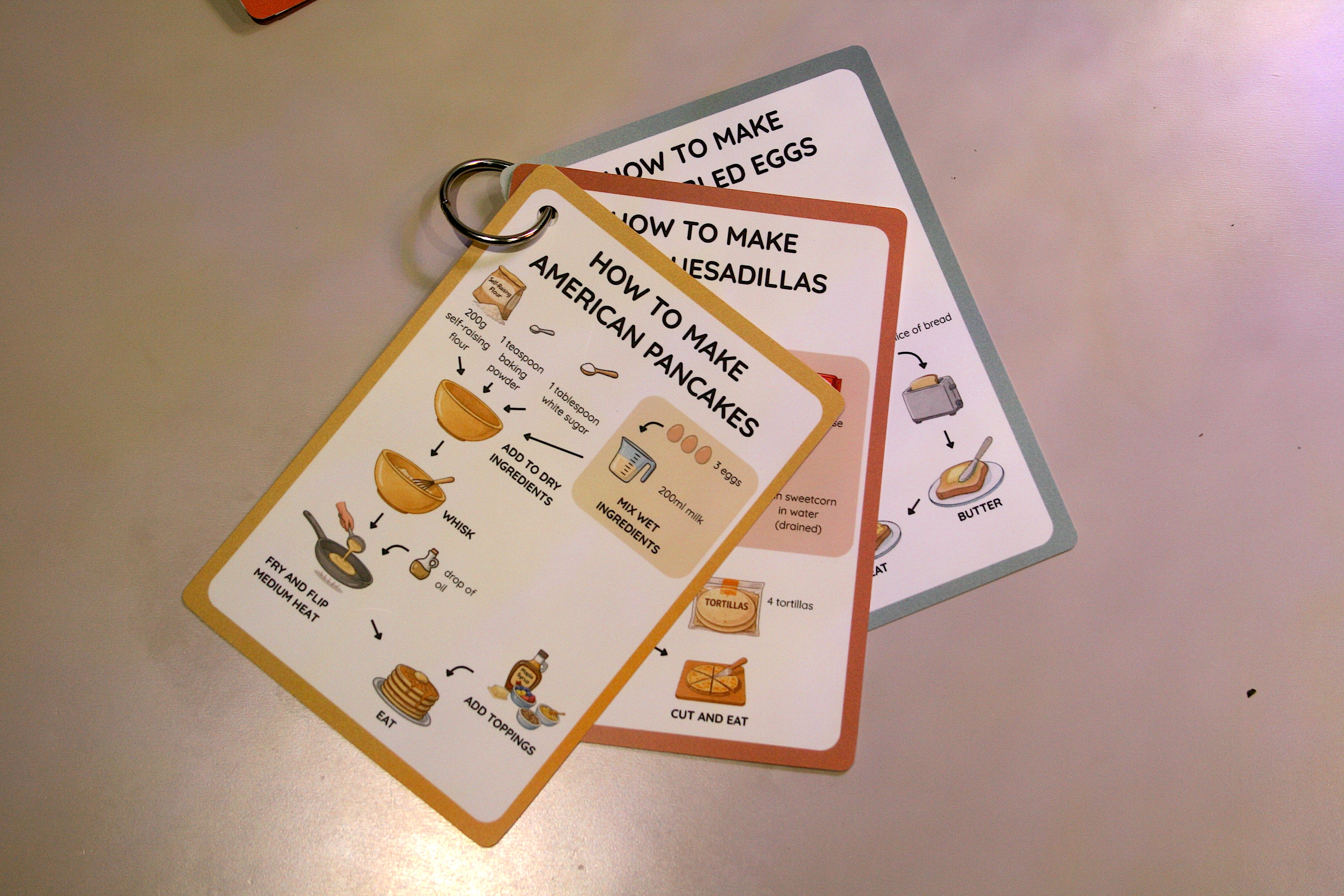
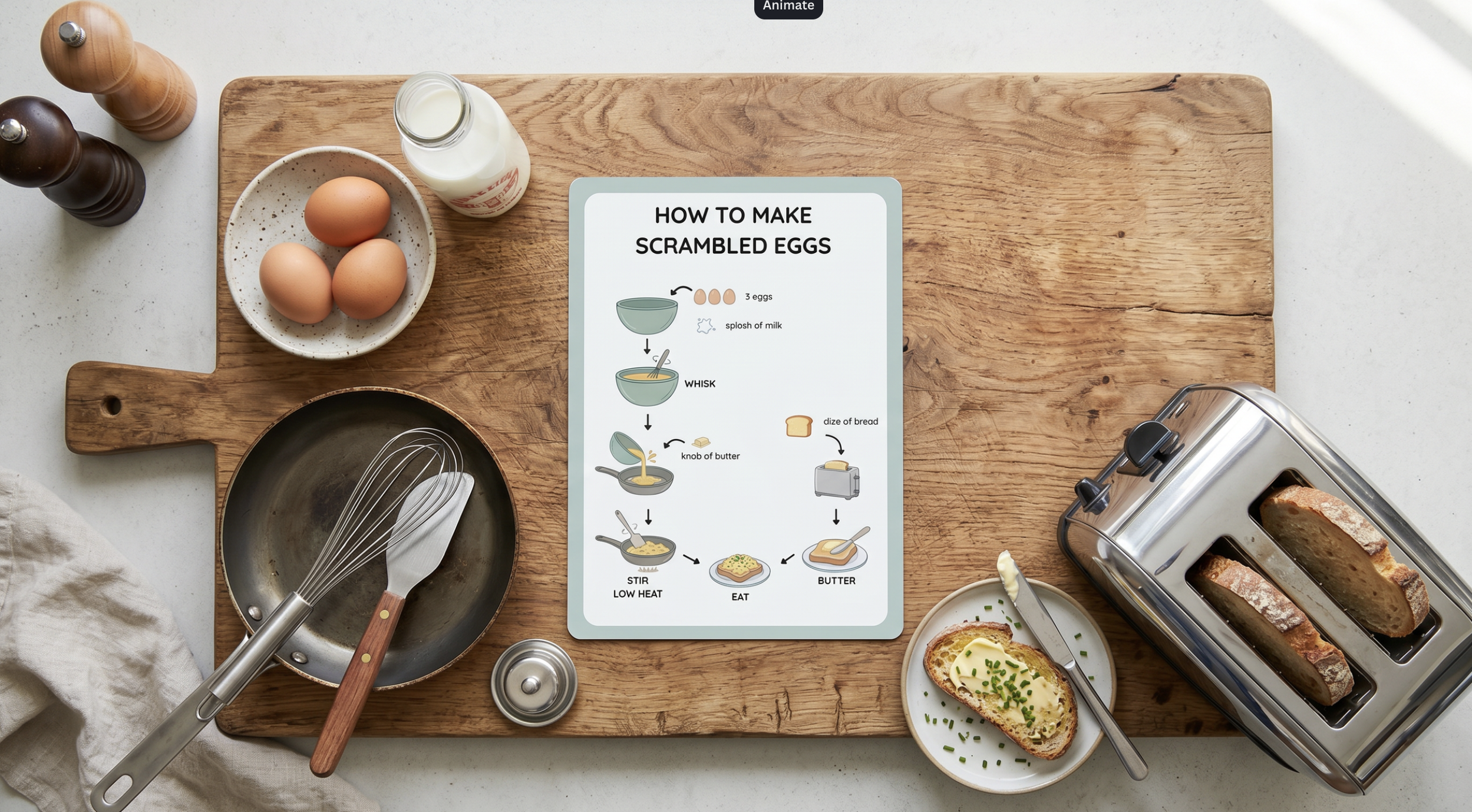
Scrambled eggs go most smoothly when the calm work is genuinely calm. Set out the bowl, small egg-cracking bowl, whisk, spatula, bread, butter and plate before the hob goes on. Once the eggs hit the pan, you do not want to be hunting for the spatula or trying to open the bread bag with one eye on the heat.
Give egg cracking enough time. Crack into a separate bowl first, rescue any shell, then tip each egg into the main bowl. This small step protects the recipe and the child's confidence: shell becomes a normal thing to sort out, not proof that they cannot do it.
Whisking is a good visible goal. Ask your child to look for streaks of clear egg white and keep going until the mixture is one yellow colour. A splash of milk makes the eggs a little more forgiving, and a damp cloth under the bowl stops the slide that can make small hands tense.
Before the pan goes on, agree the heat rule. The adult controls the hob; the child may stir if they are ready. Keep the heat low, let the butter melt gently, and use words like "slow stir" and "soft curds" so the child knows what their job is once the eggs start changing.
The cooking step is where you may need to pause the action. If the eggs are setting too quickly, lift the pan off the heat rather than rushing the child. Scrape gently across the bottom, fold the soft curds over, and stop while the eggs still look glossy. They will keep cooking after the heat is off.
Toast can either be the child's parallel job or the adult's quiet background job, depending on the child. If doing both at once feels too busy, make the toast first and hand it back for buttering and plating. The final spooning-on step matters: it lets the child see that the breakfast they started in a bowl has become something they can serve.