Broccoli Cheese Pasta

Picture-led broccoli cheese pasta for kids, with a creamy cheddar sauce and practical grown-up guidance.

MediumAges 6-10Adult help needed30 minMakes 4 portionsKids' score 4/5

Prep 10 min · Cook 20 min

Mark as cooked
Share this recipe
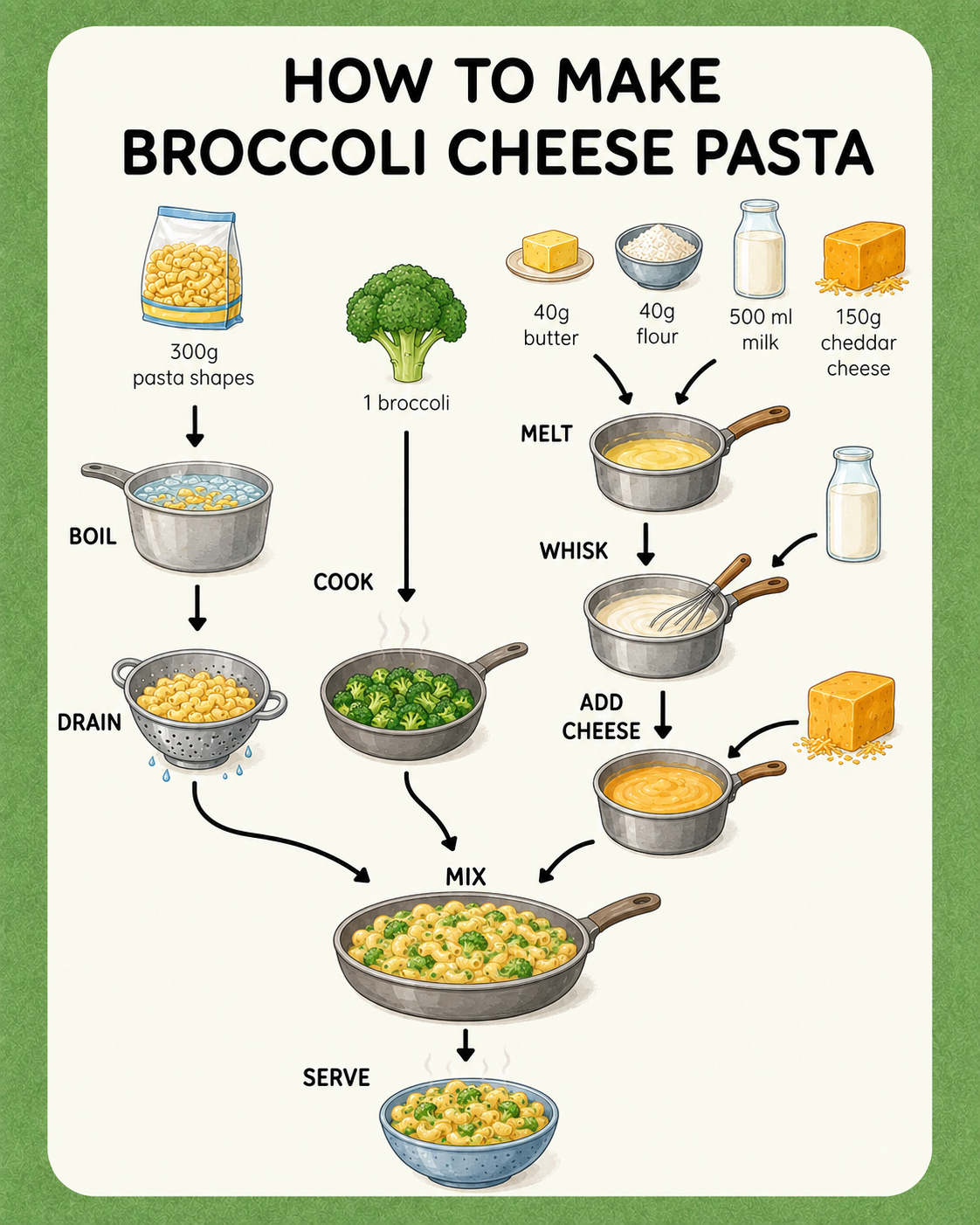
Visual broccoli cheese pasta recipe card showing pasta, broccoli and cheddar sauce steps for children.
Picture-led Broccoli Cheese Pasta recipe card for children.

For grown-ups

Ingredients

AmountIngredient
300 gpasta shapes
1broccoliabout 350g prepared
40 gbutter
40 gplain flour
500 mlmilk
150 gcheddar cheesegrated

Equipment

  • Large saucepan
  • Medium saucepan
  • Colander
  • Chopping board
  • Child-appropriate knife
  • Cheese grater
  • Wooden spoon
  • Whisk
  • Measuring jug
  • Kitchen scales

Step-by-step written method

1

Boil the pasta

Adult help

Bring a large saucepan of water to the boil. Add 300g pasta shapes and cook according to the packet instructions, stirring occasionally, until tender with a little bite.

Child-friendly: Boil the pasta.

Safety: Adult help is needed around the boiling water and hot saucepan.

Tip: Set the packet timer, then test one piece near the end.

2

Drain the pasta

Adult help

Put a colander securely in the sink. An adult should lift the pasta pan and drain it carefully, keeping faces and hands away from the steam. Save a mug of pasta water first if the sauce may need loosening.

Child-friendly: Ask an adult to drain the pasta.

Safety: A full pasta pan is heavy and releases hot steam; an adult should drain it.

Tip: Set up the colander before the pasta is ready.

3

Cook the broccoli

Adult help

Cut the broccoli into small florets and slice the tender stalk. Simmer in a separate saucepan of water for 5 to 6 minutes until bright green and easy to pierce with a fork, then ask an adult to drain it.

Child-friendly: Cook the broccoli until tender.

Safety: Adult support is needed for cutting, the hot pan and draining.

Tip: Small florets cook evenly and mix through the pasta easily.

4

Make the flour paste

Adult help

Melt 40g butter in a medium saucepan over a low heat. Stir in 40g plain flour until there are no dry patches, then cook and stir for 1 minute to make a smooth paste.

Child-friendly: Melt butter. Stir in flour.

Safety: The saucepan and melted butter are hot; an adult should control the heat.

Tip: Scrape around the edge of the pan where flour can hide.

5

Whisk in the milk

Adult help

Add 500ml milk a small splash at a time at first, whisking each addition smooth before adding more. Cook gently and keep whisking until the sauce is smooth and coats the back of a spoon.

Child-friendly: Add milk slowly. Whisk until thick.

Safety: Whisk slowly beside the hot pan to avoid splashes.

Tip: If lumps appear, take the pan off the heat and whisk before continuing.

6

Add the cheese

Adult help

Take the saucepan off the heat. Add 150g grated cheddar and stir until the cheese has melted and the sauce is smooth. If it feels too thick, stir in a splash of milk or reserved pasta water.

Child-friendly: Add cheese. Stir until melted.

Safety: The sauce remains hot after the pan leaves the hob.

Tip: Adding cheese off the heat helps the sauce stay smooth.

7

Mix and serve

Add the drained pasta and broccoli to the cheese sauce and fold everything together until evenly coated. Let the pasta cool for a few minutes, then check the temperature before serving.

Child-friendly: Mix everything. Let it cool. Serve.

Safety: Cheese sauce holds heat, so check the middle of each serving before eating.

Tip: Fold slowly so the broccoli stays in pieces.

Why this works well for children

Broccoli cheese pasta works well for children because the card shows three clear strands coming together: pasta is boiled and drained, broccoli is cooked, and butter, flour, milk and cheese visibly transform into sauce. The final mixing step gives the child a satisfying finish and makes all the earlier measuring and waiting feel purposeful. It teaches sequencing, whisking, sauce texture and the difference between tender pasta and tender vegetables, while keeping the adult boundary easy to understand: boiling water, heavy draining and hot pans stay closely supported.

How to make this one go smoothly

Set out the sauce ingredients before the hob goes on. A cheese sauce asks for attention once the butter melts, and trying to measure flour or grate cheese mid-sauce is the quickest way to make everyone feel rushed. Let the child do those jobs first, then put the milk in a small jug that is easy to control.

Cut the broccoli into genuinely small florets. Children often break off impressive tree-sized pieces, but smaller pieces cook at the same pace and distribute through the pasta instead of taking over the bowl. Peel and slice the tender stalk too if your child is happy with the extra cutting job.

Treat draining as a named adult job before cooking begins. Pasta water is heavy and steamy, and broccoli water can splash just as easily. The child can place the colander in the sink and stand back, then take ownership again when the safe, drained ingredients are ready.

For a smooth sauce, stir the flour into melted butter until no dry flour remains, then add only a small splash of milk. Whisk that smooth before the next splash. The sauce may look oddly thick at first; reassure the child that each addition loosens it, and keep scraping around the edge of the pan.

Look for a sauce that coats the back of a spoon rather than relying only on a timer. If it is too thick, whisk in a splash of milk or reserved pasta water. If it is thin, keep it over gentle heat and stir for another minute. Add the cheese off the heat so it melts without the sauce becoming greasy.

Hand the ending back to the child. Tip the drained pasta and broccoli into the sauce, or pour the sauce over them in a larger bowl, then let the child fold everything together slowly. A short cooling pause protects mouths and gives the sauce time to cling to the pasta.

What kids can do independently

  • Measuring
  • weighing
  • cutting broccoli
  • grating
  • boiling pasta
  • whisking a sauce
  • watching texture cues
  • mixing
  • hob safety

These are the child-led jobs to offer first. Keep the adult jobs separate, then hand over one small task at a time so the recipe still feels calm.

Nutrition information

Calories
625 kcal
Protein
27g
Carbohydrates
70g
Fat
25g
Fibre
5g
Sugar
10g
Salt
1g

Allergens, swaps and storage

Contains or may contain: gluten, dairy. Always check packet labels before cooking.

Simple substitutions usually work best when they keep the same texture and cooking time. Store leftovers safely once cool and follow normal food hygiene guidance.

What adults should supervise

This recipe has several saucepans in play, so the helpful adult job is to simplify the traffic around the hob. Children may feel ready to do everything after confidently weighing the ingredients, but boiling water, steam and a full colander change the risk quickly.

Name the draining moment before you start: the child can help set up the colander, but the adult lifts and pours both hot pans. Once that boundary is clear, the child can concentrate on the more rewarding jobs—watching the sauce thicken, adding cheese and bringing the pasta, broccoli and sauce together.

The sauce needs calm proximity rather than automatic takeover. A child who is steady at the hob may whisk while the adult controls the heat and pan handle. If the sauce catches or lumps, lift it off the heat first; a quiet reset is safer and more useful than faster stirring over the flame.

  • Boiling and draining are the highest-risk moments. A large pasta pan is heavy and steam rises towards hands and faces, so an adult should lift and drain it while the child stands clear.
  • Broccoli can roll while its stalk is cut. Use a stable board, flatten awkward pieces first and choose a knife that matches the child's current skill rather than the job they hope to do.
  • A box grater needs close supervision near the end of the cheese block. Stop while there is still a safe piece to hold, or grate the final piece yourself.
  • The sauce uses a hot pan and can splash as milk is whisked in. Keep the handle turned away from the edge, use low heat and pour from a small jug.
  • Flour can catch on the base of the pan if stirring stops. An adult should control the heat and be ready to lift the pan off while the child keeps whisking.
  • Cheese sauce stays hot even when it stops bubbling. Let the mixed pasta stand briefly and test the centre of a child's serving before eating.
  • Check pasta and flour for gluten and butter, milk and cheddar for dairy. Use household-safe alternatives only if they behave suitably in a cooked sauce.

Parent FAQ

Is broccoli cheese pasta a good recipe for children to make?

Yes, especially for children who enjoy seeing separate parts become one meal. They can measure, grate, whisk with support and do the final mixing, while an adult manages boiling water and draining. The sauce also gives them a useful texture lesson because they can watch it change from thin milk to something that coats the spoon.

What can children do mostly by themselves?

Many children can weigh pasta, break broccoli into small florets, measure butter and flour, pour milk from a small jug, grate cheese with supervision and stir the finished dish together. Readiness around knives, graters and the hob varies, so hand over one job at a time rather than treating the whole recipe as independent.

How do I stop the cheese sauce going lumpy?

Add the milk slowly at first and whisk each small splash completely into the butter-and-flour paste before adding more. Once the mixture is loose and smooth, the remaining milk can go in more quickly. If a few lumps appear, take the pan off the heat and whisk firmly before carrying on.

How soft should the broccoli be?

Aim for broccoli that is bright green and easy to pierce with a fork, but not falling apart. Small florets usually need about 5 to 6 minutes in simmering water. Softer broccoli will blend into the sauce more, while firmer pieces stay more visible for children who like foods kept distinct.

Can I use frozen broccoli?

Yes. Cook it according to the packet instructions and drain it very well so extra water does not thin the cheese sauce. Large frozen florets can be cut into smaller pieces after cooking, once they are cool enough to handle.

How should leftovers be stored and reheated?

Cool leftovers promptly, cover them and refrigerate within 2 hours. Eat within 48 hours, and reheat only once until steaming hot throughout, stirring well so there are no cold pockets. Add a splash of milk before reheating if the sauce has thickened, then let a child's portion cool before serving.

ClearCook Cooking Passport

Cooked it?

Mark this recipe as done and add it to your ClearCook Passport — a private record of every meal cooked.

View passport