ClearCook parent guide

5 Recipes Kids Can Make Mostly by Themselves

Quick answer: Start with overnight oats, American pancakes, chocolate chip cookies, scrambled eggs or bean quesadillas. A child can lead most of each recipe when the steps are visible. An adult should stay available and take responsibility for hot pans, ovens, sharp knives, allergens and final food-safety checks.

There is a useful difference between cooking by yourself and cooking alone. These five recipes let a child own the sequence and make something recognisable, while a grown-up stays close enough to manage the genuinely risky bits.

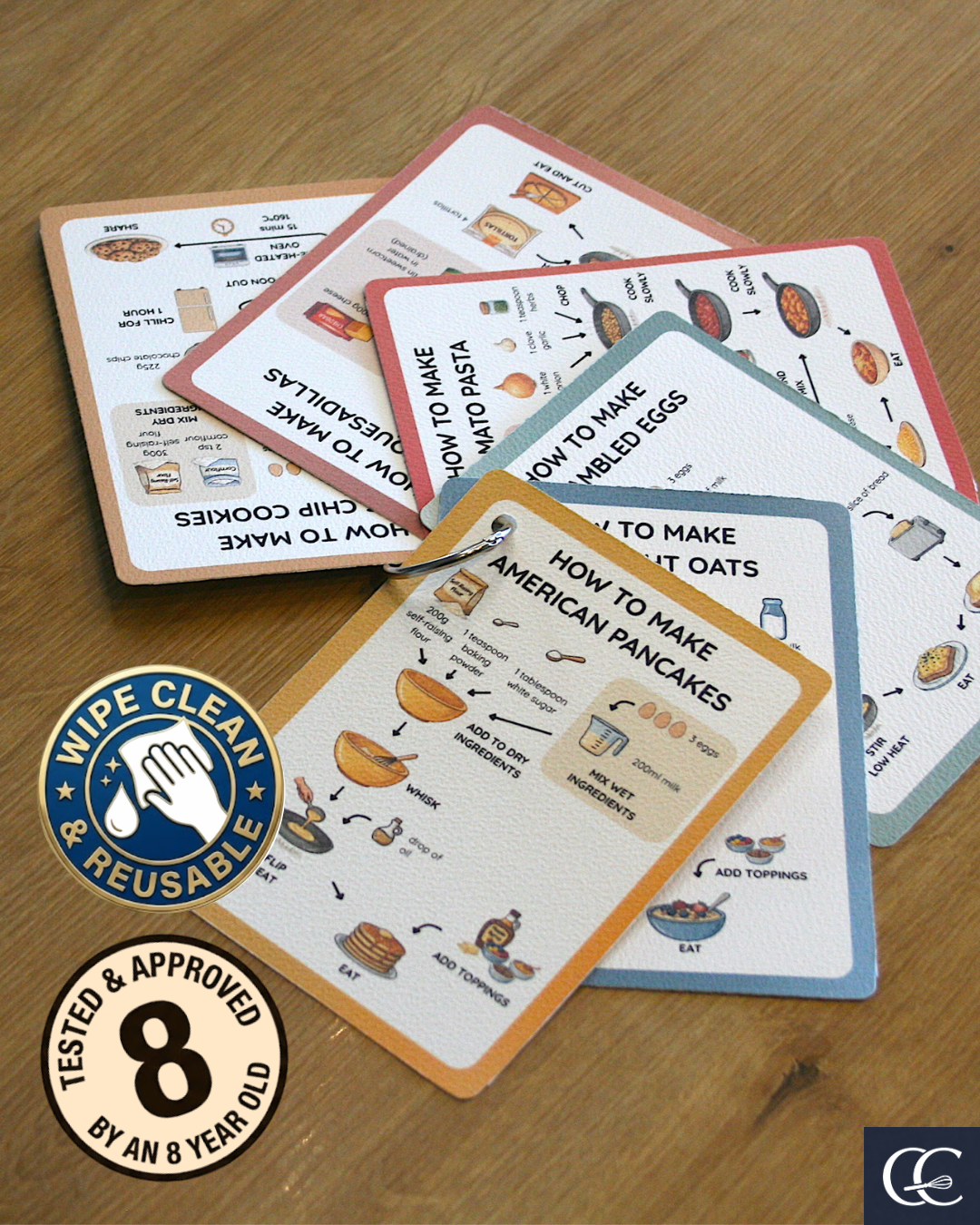
ClearCook visual recipe cards used for child-friendly cooking activities
5 Recipes Kids Can Make Mostly by Themselves guide illustrated with ClearCook visual recipe card imagery.

There is a useful difference between cooking by yourself and cooking alone. These five recipes let a child own the sequence and make something recognisable, while a grown-up stays close enough to manage the genuinely risky bits.

The scribbled pancake card that started ClearCook

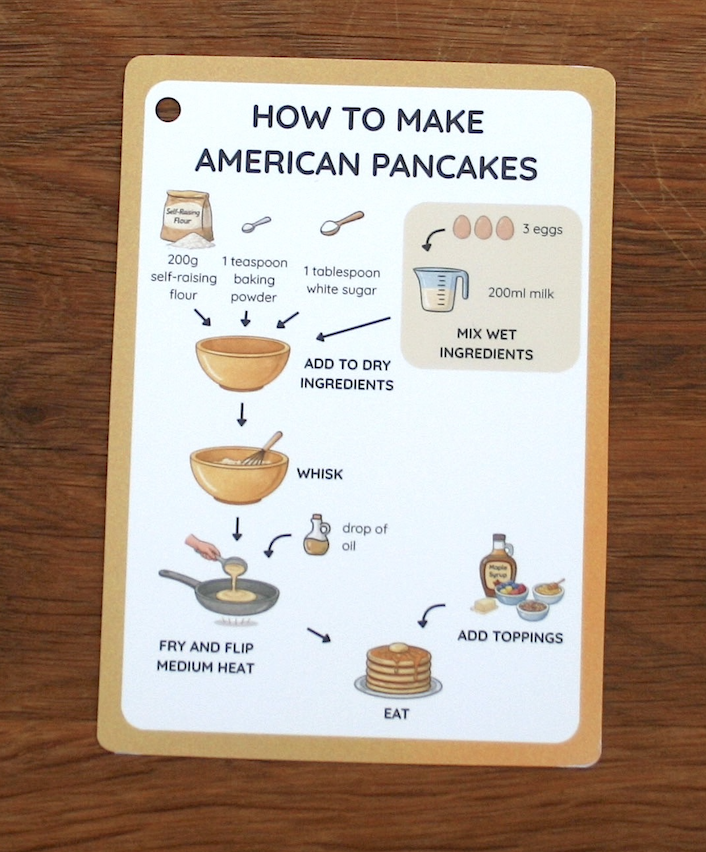
The first ClearCook card was a rough drawing of an American pancake recipe for Edith. It was scribbly, and the quantities needed correcting, but she followed it and made the pancakes without somebody reading every instruction to her.

The important part came the next Saturday. She could do it again. The recipe had stopped being a one-off activity and become something she knew how to lead.

A realistic definition of independence

The child follows the recipe and does every safe step they can. The adult is available for risk, not standing beside them narrating the whole job.

Five recipes, divided into child jobs and adult jobs

Read the whole recipe together once, name the grown-up jobs, then let the child keep control of the card. Readiness matters more than the age printed on a page.

Recipe
The child can lead
The adult still owns
Overnight oats
Measure, pour, stir, add toppings and put the lid on.
Allergen checks, clean storage and making sure it goes into the fridge.
American pancakes
Measure, crack the egg into a separate bowl, mix and check the next picture.
The hot pan, safe flipping and checking the middle is cooked.
Chocolate chip cookies
Weigh, mix, shape the dough and space it on a cold tray.
Electric mixers if needed, the oven and hot trays.
Scrambled eggs
Crack, whisk, measure and watch how the texture changes.
The hob, the hot pan and checking the egg is cooked.
Bean quesadilla
Mash beans, weigh enough cheese, fill and fold the tortilla.
The hot pan, slicing and checking the filling temperature.

The failure points adults forget to explain

Children often add too much liquid, move on before a step is finished or stop cooking as soon as the outside looks done. That can look careless. Usually the instruction has asked them to hold too much in their head.

The first quesadilla card also got the quantities wrong. There were too many beans and nowhere near enough cheese. The children were furious, lunch was rescued with more cheese, and the card was corrected. A child cannot follow a vague or inaccurate recipe successfully, however carefully they try.

Before stepping away, check that the recipe shows:

  • an exact quantity for every ingredient;
  • the order ingredients go in;
  • what finished mixing or cooking looks like;
  • where the child should pause for an adult;
  • which hot or sharp jobs belong to the adult.

How to help without quietly taking over

Ask what the card says next before giving another instruction. If the child is safe, let an imperfect mixture or uneven cookie survive. The goal is for them to learn, not for the cake to look as though an adult made it.

Step in as much as the moment needs: watch, prompt, assist with one part, then take over only when the task becomes unsafe.

Let your child lead the mixing and the sequence. Keep the hot pan as the grown-up job.

Try the free pancake recipe

Make progress visible

The Cooking Passport gives children a simple way to mark recipes cooked, skills practised and confidence gained.

Open the Cooking Passport

New cards

Hear first about new cards

Get a short note when new ClearCook wipe-clean cards and useful family cooking resources are released.

We'll send a ClearCook magic link so you can open the site logged in. Extra ClearCook emails are only sent if you tick the box below.

FAQs

Common questions

What is the easiest recipe for a child to make independently?

Overnight oats are a useful first choice because there is no heat. The child can measure, pour, stir and choose toppings while an adult checks allergens and fridge storage.

What can a child bake mostly by themselves?

Cookies or a Victoria sponge can work when the child weighs and mixes independently and an adult handles the oven and hot tins.

Should children cook alone?

Young children should not cook alone. Independent cooking means they lead the safe work while an adult remains available and responsible for risk.

What if my child keeps asking what comes next?

Point back to the visible step before explaining it again. If they still get stuck, check whether the recipe makes the order, quantity or finished state clear enough.

What are visual recipes?

Visual recipes use pictures, short prompts and clear sequencing so children can follow cooking steps without relying on long written instructions.

What age are ClearCook cards for?

ClearCook is mainly designed for children aged around 4 to 11, with adult support adjusted to the recipe, child and safety risks.

Do children still need adult supervision?

Yes. Children can lead safe jobs, but adults should supervise heat, knives, graters, allergens, heavy equipment and hygiene checks.

Why use wipe-clean cards instead of a phone?

Wipe-clean cards stay visible, do not lock or scroll, and can handle flour, sauce and sticky hands better than a phone in the middle of cooking.