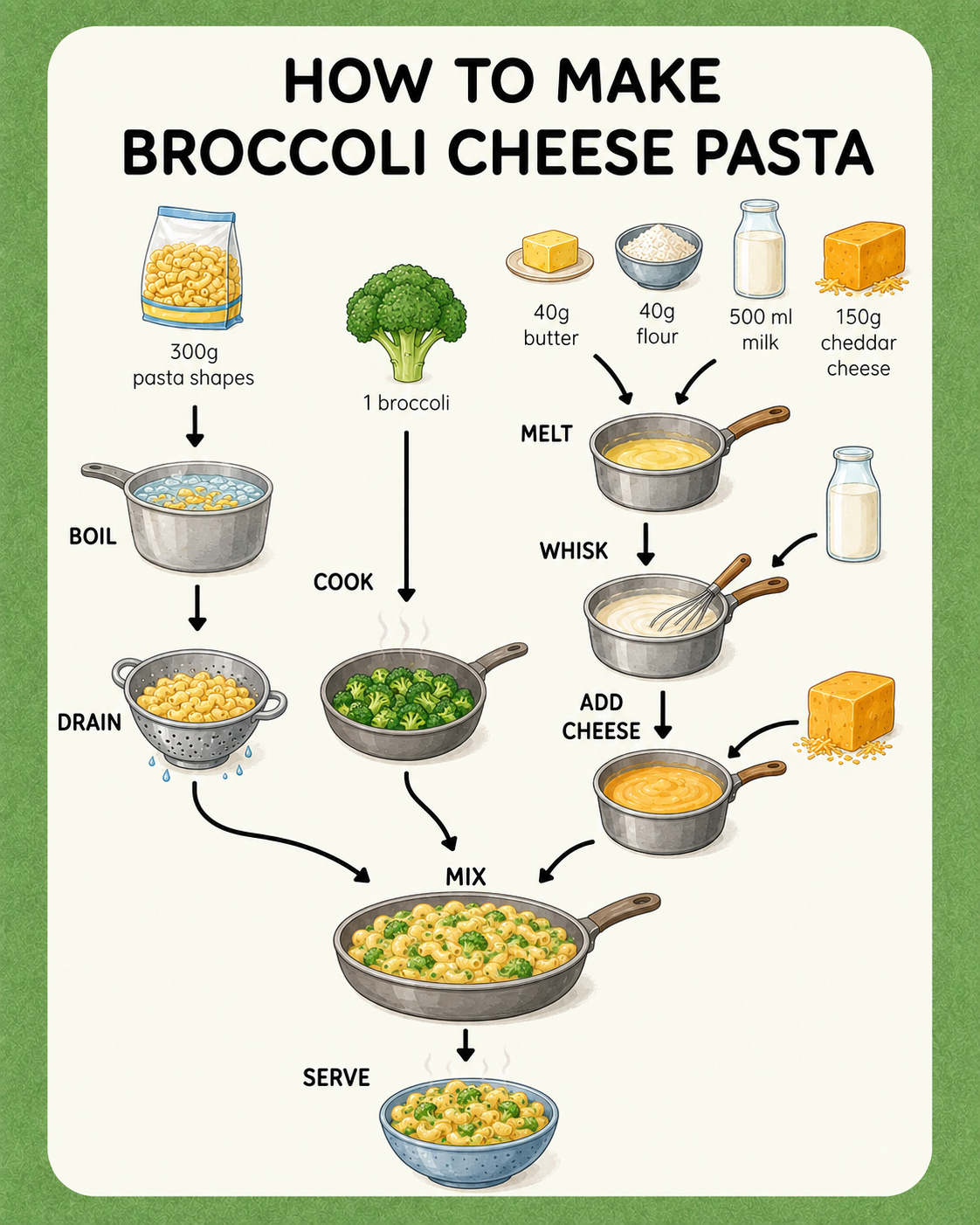
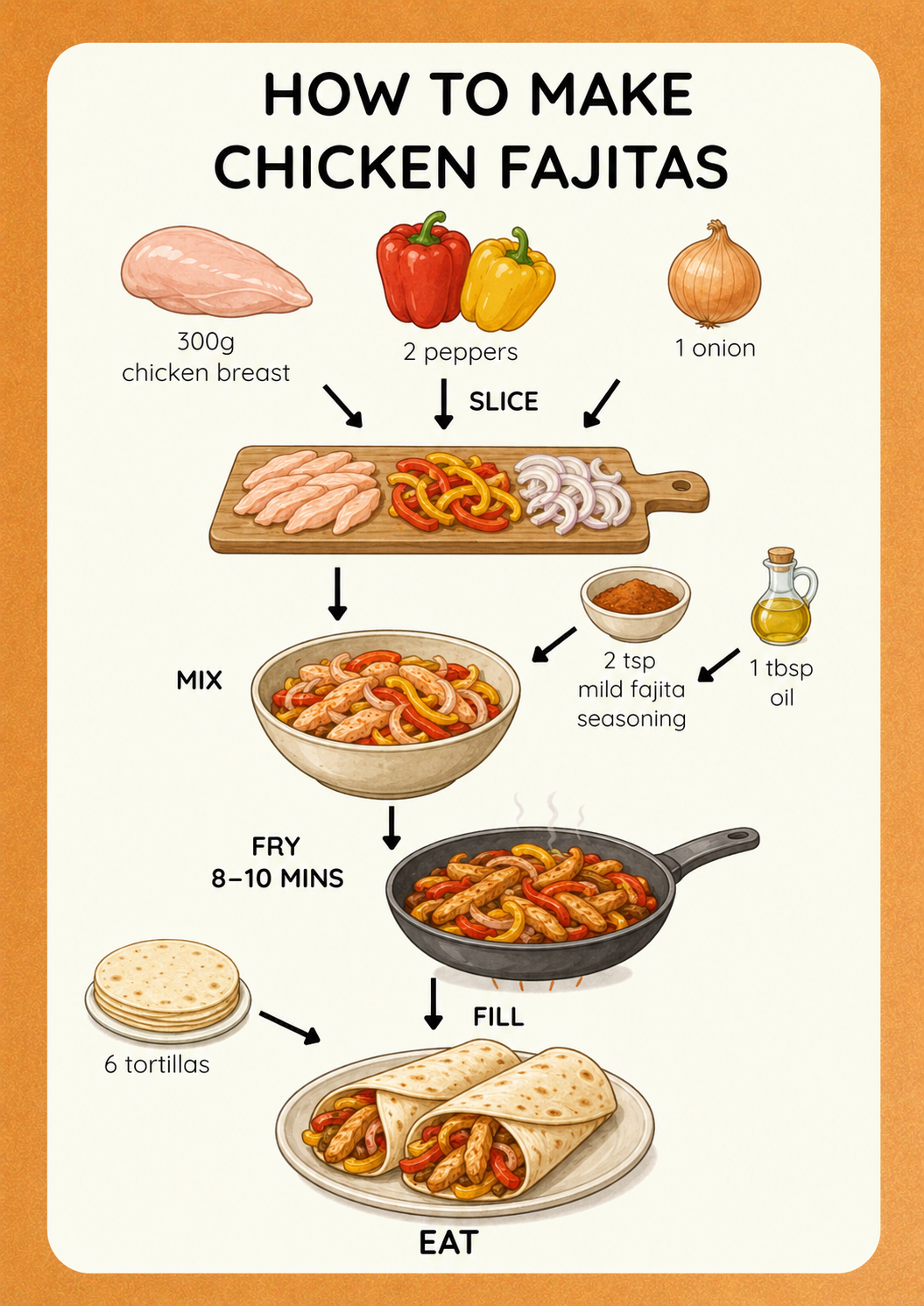
Creamy Chicken Pasta

A picture-led creamy chicken pasta for kids, with tender chicken, sweet peas and a silky Parmesan sauce.

MediumAges 7-11Adult help needed35 minMakes 4 portionsKids' score 5/5

Prep 15 min · Cook 20 min

Mark as cooked
Share this recipe
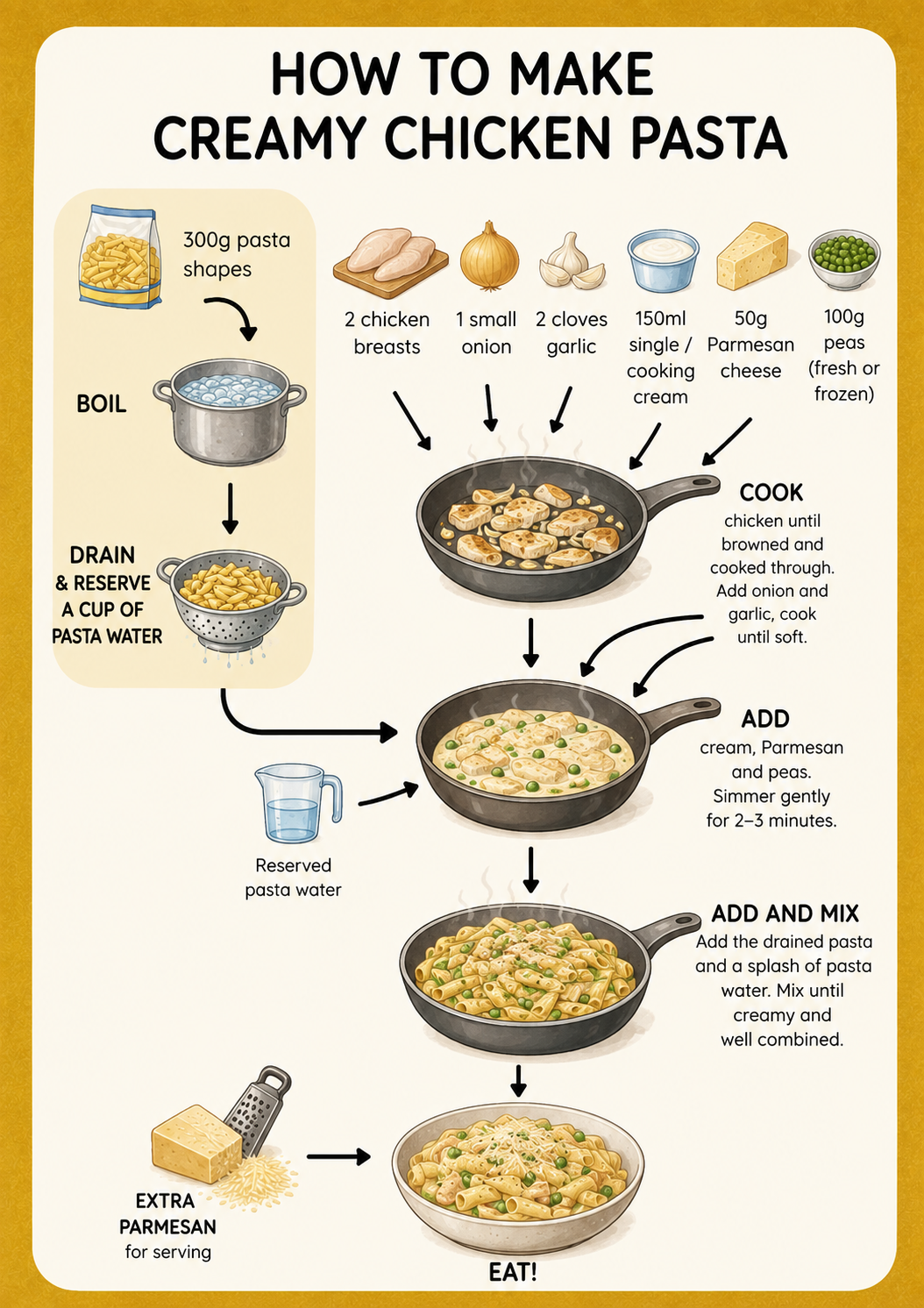
Visual creamy chicken pasta recipe card showing pasta, chicken, onion, garlic, cream, Parmesan and peas being cooked into a creamy meal.
Picture-led Creamy Chicken Pasta recipe card for children.

For grown-ups

Ingredients

AmountIngredient
300 gpasta shapes
2chicken breasts
1small onionpeeled and finely chopped
2garlic clovescrushed or finely chopped
150 mlsingle or cooking cream
50 gParmesan cheesefinely grated, plus extra to serve if liked
100 gpeasfresh or frozen

Equipment

  • Kitchen scales
  • Large saucepan
  • Colander
  • Measuring jug
  • Cheese grater
  • Chopping board
  • Separate board for raw chicken
  • Child-appropriate knife
  • Large non-stick frying pan
  • Wooden spoon
  • Garlic crusher
  • Mug or heatproof jug
  • Oven gloves

Step-by-step written method

1

Prepare the ingredients

Weigh 300g pasta and 100g peas, measure 150ml cream and finely grate 50g Parmesan. Finely chop 1 small onion and crush 2 garlic cloves.

Child-friendly: Measure everything. Grate the cheese. Chop the onion and garlic.

Safety: Supervise the grater, knife and garlic crusher.

Tip: Prepare these ingredients before opening the chicken.

2

Cut the chicken safely

Adult help

On a separate board, an adult should cut 2 chicken breasts into small, even pieces. Do not wash the chicken. Wash hands with soap and clean the knife, board and surfaces it touched.

Child-friendly: Ask an adult to cut the chicken.

Safety: Raw chicken can spread harmful bacteria to hands, utensils and surfaces.

Tip: Equal pieces cook at a similar speed.

3

Cook the pasta

Adult help

Cook 300g pasta shapes in a large saucepan of boiling water according to the packet time, until tender with a little bite.

Child-friendly: Boil the pasta for the packet time.

Safety: Boiling water and the saucepan need close adult supervision.

Tip: Set a timer and stir carefully once or twice.

4

Reserve water and drain

Adult help

Before draining, an adult should scoop a mugful of cloudy pasta water from the pan. Drain the pasta in a colander and keep the reserved water nearby.

Child-friendly: Save some pasta water. Ask an adult to drain.

Safety: The pan, water and steam can cause serious burns.

Tip: Pasta water helps make the sauce glossy.

5

Cook the chicken

Adult help

Put the chicken pieces in a large non-stick frying pan over medium heat. Cook, turning regularly, until browned and cooked through. Check a thick piece is steaming hot inside with no pink meat.

Child-friendly: Cook the chicken until brown and cooked through.

Safety: An adult must supervise the hob and confirm the chicken is fully cooked.

Tip: Check doneness before adding cream because the sauce will hide the surface.

6

Soften onion and garlic

Adult help

Add the chopped onion and garlic to the cooked chicken. Cook for 4 to 5 minutes, stirring, until the onion is soft and the garlic smells fragrant without browning.

Child-friendly: Add onion and garlic. Stir until soft.

Safety: Keep the pan handle turned inward and stir slowly.

Tip: Lower the heat if the garlic colours quickly.

7

Make the creamy sauce

Adult help

Turn the heat low. Add 150ml cream, 50g grated Parmesan and 100g peas. Simmer very gently for 2 to 3 minutes, stirring, until the cheese melts and the peas are piping hot.

Child-friendly: Add cream, cheese and peas. Stir for 2 to 3 minutes.

Safety: The sauce and pan are hot; do not let the cream boil hard or splash.

Tip: A gentle simmer keeps the sauce smooth.

8

Mix with the pasta

Adult help

Add the drained pasta and a small splash of reserved pasta water. Mix until every shape is coated. Add more water one tablespoon at a time if the sauce is too thick.

Child-friendly: Add the pasta and a splash of pasta water. Mix.

Safety: Stir carefully so hot sauce stays inside the pan.

Tip: Stop while the sauce is slightly loose because the pasta keeps absorbing it.

9

Serve

Spoon into bowls and add extra Parmesan if liked. Serve promptly, checking that each child's portion has cooled enough to eat.

Child-friendly: Add extra cheese if you like. Enjoy!

Safety: Chicken pieces and creamy sauce stay hot inside.

Tip: Creamy pasta is best served straight away.

Why this works well for children

Creamy chicken pasta works for young cooks because each ingredient has an observable job. Pasta water changes cream and Parmesan into a sauce that clings, peas add colour without extra preparation, and evenly cut chicken pieces make doneness easier to judge. The finished meal feels grown-up and useful while still giving children achievable measuring, grating and mixing tasks. Raw poultry and two hot pans create firm adult boundaries, but those stages are easy to name before cooking starts.

How to make this one go smoothly

Set up the non-chicken ingredients first. Weigh the pasta and peas, measure the cream, grate the Parmesan, and chop the onion and garlic before opening the chicken. This keeps the raw-poultry stage short and prevents chicken-covered hands from reaching for packets and drawer handles.

Use a genuinely separate board for the chicken and do not wash the meat. An adult can cut it into small, similar pieces, move it straight to the pan and then wash hands with soap while the child stays with the prepared ingredients. Clean the board, knife and any contaminated surface before cooked food comes near them.

Cook the pasta to the packet time, but make reserving water part of the draining routine. Put a heatproof mug beside the hob before cooking so nobody remembers at the last second. The cloudy water contains starch that loosens the sauce while helping it stay attached to the pasta.

Give the chicken space in the pan and turn the pieces rather than stirring constantly. Cook until browned, then inspect a thick piece for a steaming, non-pink centre before the sauce goes in. Once cream coats the chicken, visual checking becomes harder, so this checkpoint matters.

Turn the heat down for cream and Parmesan. A quiet simmer for the card's 2 to 3 minutes heats the peas and melts the cheese without aggressively boiling the sauce. Stir across the bottom and into the corners so Parmesan cannot collect and catch.

Add pasta water in small splashes after the pasta goes in. The sauce should look slightly looser than perfect while still in the pan, because hot pasta absorbs more on the way to the table. Serve promptly and let each child's portion cool before eating.

What kids can do independently

  • Weighing
  • measuring
  • grating
  • chopping
  • raw-chicken hygiene
  • boiling
  • draining
  • browning
  • stirring
  • gentle simmering
  • reserving pasta water
  • judging chicken doneness
  • adjusting sauce consistency

These are the child-led jobs to offer first. Keep the adult jobs separate, then hand over one small task at a time so the recipe still feels calm.

Nutrition information

Calories
500 kcal
Protein
35g
Carbohydrates
59g
Fat
14g
Fibre
4g
Sugar
5g
Salt
0.6g

Allergens, swaps and storage

Contains or may contain: gluten, dairy. Always check packet labels before cooking.

Simple substitutions usually work best when they keep the same texture and cooking time. Store leftovers safely once cool and follow normal food hygiene guidance.

What adults should supervise

The easiest boundary is to treat raw chicken as one contained adult stage. Everything else can be prepared first; then the adult opens, cuts and transfers the chicken, cleans down and deliberately hands the recipe back to the child for peas, cream, cheese and final mixing.

There are two hot vessels in use, so agree where the child will stand. Turn both handles inward, keep the colander clear in the sink and reserve the pasta water before lifting the saucepan. An adult should drain because a pan holding boiling water and pasta is too heavy and steamy for a child.

Creamy pasta retains heat and the chicken pieces can be hotter inside than the sauce appears. Check that the chicken is fully cooked before adding cream, keep tasting spoons away from the raw-chicken area, and cool the child's serving without leaving the rest of the dish at room temperature.

  • Use a separate raw-chicken board and knife. Do not wash chicken; wash hands with soap after touching it and clean contaminated surfaces before continuing.
  • An adult should cut the chicken into small, even pieces and confirm the thickest pieces are steaming hot with no pink middle before cream is added.
  • Support onion and garlic preparation according to the child's knife skills. Stabilise the board with a damp cloth and keep fingertips tucked back.
  • The pasta saucepan contains boiling water and becomes heavy. An adult should scoop out the reserved water and drain the pasta while children stand clear of steam.
  • Keep frying-pan and saucepan handles turned inward. Stay beside a child who stirs and lower the heat if onion, garlic or sauce begins to catch.
  • Add cream only after the chicken is safely cooked and lower the heat first. Gentle simmering reduces splashes and helps prevent the sauce from separating.
  • Parmesan and cream contain dairy, and ordinary pasta contains gluten. Check every substitute label, including cooking cream and hard-cheese alternatives.
  • Refrigerate leftovers within 2 hours, use within 48 hours and reheat only once until steaming hot throughout.

Parent FAQ

Is creamy chicken pasta a good recipe for children to make?

Yes, especially as a shared next-step meal. It offers plenty of calm jobs such as weighing pasta, measuring cream, grating cheese, adding peas and stirring the final dish. An adult should contain the raw-chicken stage and manage boiling water and the hottest pan work.

Which jobs can children do?

Children can weigh the pasta and peas, measure the cream, grate Parmesan with supervision, crush garlic and stir ingredients into the sauce. Depending on knife confidence, they may also chop onion with an age-appropriate knife. The adult should cut the raw chicken on a separate board and drain the pasta.

How do I know the chicken is safely cooked?

Cut the chicken into evenly sized pieces and turn them as they cook. Check one of the thickest pieces: it should be steaming hot through the middle with no pink meat, and the juices should run clear. If using a clean food thermometer, 75C for 30 seconds is one accepted time-and-temperature combination.

Why did my creamy sauce split or become oily?

Cream and Parmesan prefer gentle heat. Lower the heat before adding them, simmer softly rather than boiling hard, and stir as the cheese melts. A splash of starchy pasta water can help bring a slightly oily sauce back together.

Can I use frozen peas or a different cream?

Frozen peas can go straight into the pan; give them enough time to become piping hot. The card allows single or cooking cream, with cooking cream usually being more resistant to splitting. Check labels carefully if using dairy-free cream or hard-cheese alternatives because allergens and melting behaviour vary.

How should leftovers be stored and reheated?

Cool leftovers promptly, cover and refrigerate within 2 hours, then eat within 48 hours. Reheat only once until the chicken and pasta are steaming hot throughout, adding a splash of water if the sauce has thickened. Let a child's portion cool to a safe temperature before serving.

ClearCook Cooking Passport

Cooked it?

Mark this recipe as done and add it to your ClearCook Passport — a private record of every meal cooked.

View passport