Choc Chip Cookies

Visual choc chip cookies for kids, with picture steps for mixing, scooping and baking.

MediumAges 6-9Adult help needed35 minMakes 12 big cookiesKids' score 5/5
Share this recipe

For grown-ups

Ingredients

AmountIngredient
250gbrown sugar
180gmelted butter
2eggs
300gself-raising flour
2 teaspoonscornflour
225gchocolate chips

Equipment

No special equipment needed beyond a normal kitchen setup.

Step-by-step written method

1

Mix dry ingredients

Put 300g self-raising flour and 2 teaspoons cornflour into a medium bowl. Stir them together so the cornflour is evenly mixed through the flour before it goes into the wet ingredients.

Child-friendly: Mix flour and cornflour.

Safety: Keep flour away from the edge of the worktop to avoid spills.

Tip: Cornflour gives a softer cookie texture; without it the result is more biscuit-like.

2

Whisk wet ingredients

Put 250g brown sugar, 180g cooled melted butter and 2 eggs into a large mixing bowl. Whisk until the mixture looks smooth and glossy. The butter should be warm or cool, not hot, before children mix it with eggs.

Child-friendly: Whisk sugar, butter and eggs.

Safety: Melted butter can be hot, so let it cool before children mix.

Tip: Whisk until the mixture looks glossy.

3

Add dry to wet

Add the flour and cornflour mixture to the wet ingredients. Stir slowly with a sturdy spoon or spatula until it becomes a soft dough, scraping the sides and bottom of the bowl so no floury pockets are left.

Child-friendly: Add dry mix to wet mix. Stir.

Tip: Switch from whisking to stirring once the flour goes in.

4

Fold in chocolate chips

Fold in 225g chocolate chips until they are spread through the dough. Check chocolate labels for allergens, and remind children not to taste raw dough because it contains egg and uncooked flour.

Child-friendly: Fold in chocolate chips.

Safety: Check chocolate labels for allergens and do not eat raw dough.

Tip: Swap in dried fruit or nuts only if suitable for your household.

5

Chill dough

Cover or contain the dough and chill it in the fridge for 1 hour. Chilling helps the dough firm up, makes it easier to spoon out and helps control spreading in the oven.

Child-friendly: Chill dough for 1 hour.

Safety: Keep the dough chilled until ready to bake.

Tip: Use the chilling time to line trays and tidy up.

6

Spoon onto trays

Spoon evenly sized portions of dough onto lined baking trays, leaving generous gaps between each one because the cookies will spread. Use two trays if needed so they do not crowd.

Child-friendly: Spoon dough onto trays with gaps.

Tip: Similar-sized cookies bake more evenly.

7

Bake

Adult help

Bake in a preheated 160C oven for about 15 minutes, until the edges are golden but the centres still look soft. An adult should put trays in, take trays out and judge the hot oven step.

Child-friendly: An adult bakes the cookies.

Safety: Adult help is needed for the oven and hot trays.

Tip: The centres firm up as the cookies cool.

8

Cool and share

Adult help

Leave the cookies on the tray for a few minutes so they firm up, then move them carefully if needed and share. Hot chocolate chips can burn, so check they have cooled enough before eating.

Child-friendly: Cool the cookies, then share.

Safety: Hot cookies, melted chocolate and baking trays can burn.

Tip: Cooling on the tray helps the cookies set without breaking.

Why this works well for children

Chocolate chip cookies work well for children because every stage has something visible to notice: dry ingredients being mixed, wet ingredients turning glossy, chocolate chips disappearing into the dough, dough firming in the fridge, dough blobs spaced on the tray, and soft cookies setting as they cool. It feels exciting, but it also teaches real baking judgement. Children learn that some steps need patience, that spacing changes the final result, and that baked food can still be cooking after it leaves the oven. They can own the bowl work, chilling, scooping and spacing while the adult holds the oven, hot tray and raw-dough boundaries.

How to make this one go smoothly

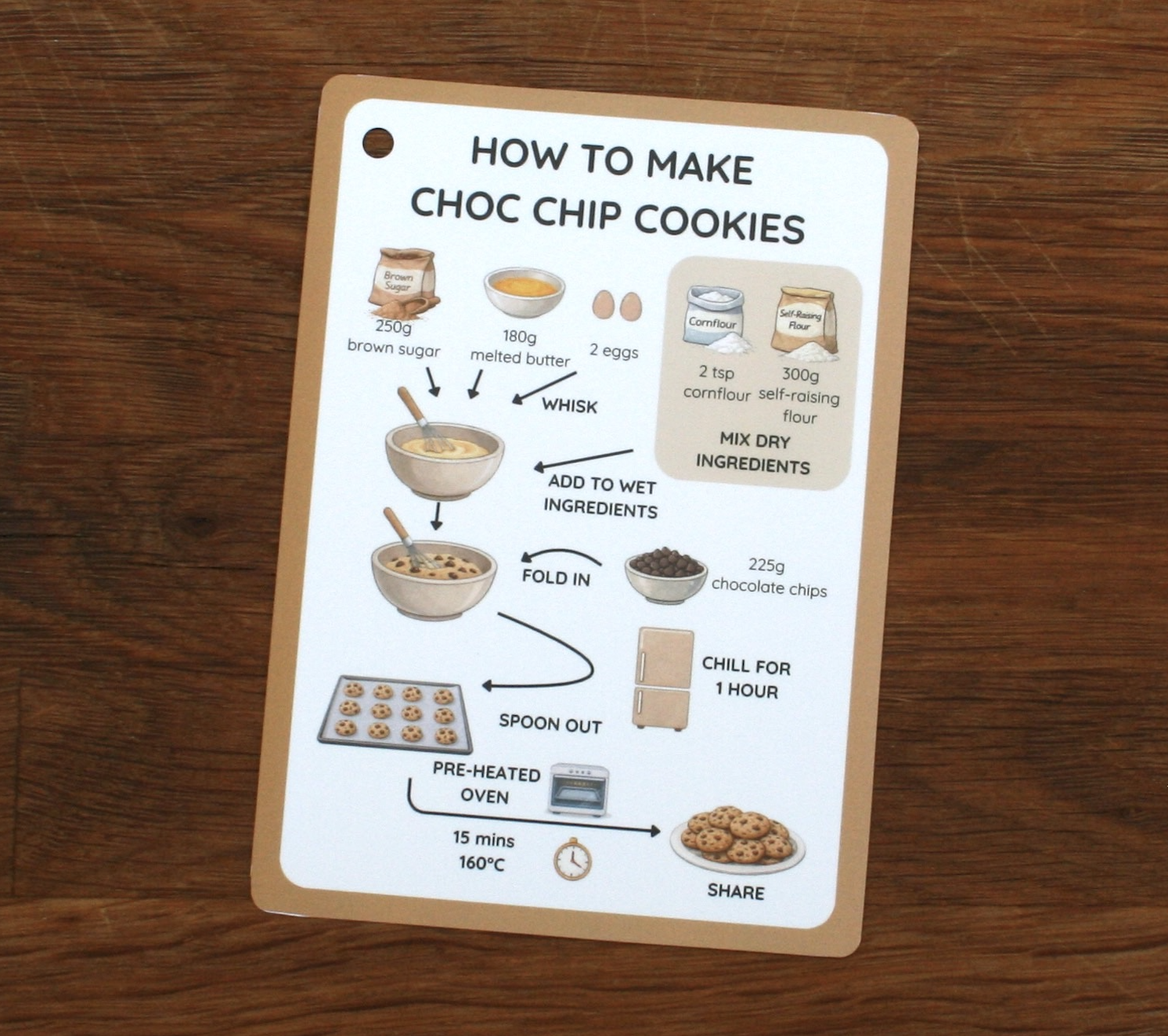
Cookies go most smoothly when you set up the ingredients in two little worlds: dry and wet. Put the flour and cornflour together first, then keep the sugar, cooled melted butter and eggs for the wet bowl. That mirrors the card and helps children understand why some ingredients are mixed before everything becomes dough. It also gives you a natural pause to check the butter is cool enough before the eggs appear.

Let the melted butter cool before children whisk it with the eggs. Warm is fine; hot is not. Once the sugar, butter and eggs are in the bowl, whisk until the mixture looks smooth and glossy. If the bowl slides, a damp cloth underneath makes whisking feel far less chaotic.

When the dry ingredients go in, switch the language from whisking to stirring or folding. Children often keep beating hard because that worked in the previous step, but cookie dough needs a slower, heavier mix. Scrape around the sides and bottom of the bowl so no floury pockets are hiding.

The chocolate chip step is a good place to hand ownership back. Folding chips through the dough is satisfying and low-risk, as long as the raw-dough tasting boundary is clear. If you are swapping in raisins, nuts or dried fruit, check allergens and chopping needs before the child is already mid-recipe. Once the dough looks exciting, children are much less patient with adult label-reading.

Chilling is useful even if everyone is impatient. It makes the dough firmer, easier to scoop and less likely to spread too much. Use that hour for cleanup, lining trays and preheating the oven. If waiting is hard, make the next job visible: "When the timer goes, we scoop and space them."

When spooning out, leave real gaps between blobs. The cookies will spread, and two trays are calmer than one overcrowded tray. If your child wants to make them enormous, try giving them a teaspoon or small scoop so the portion size is built into the tool rather than argued about each time.

Bake until the edges are golden but the centres still look soft. That can feel wrong to children, so explain that cookies keep setting as they cool. Leave them on the tray for a few minutes before sharing; it protects fingers, keeps the cookies from falling apart and turns waiting into part of the bake.

What kids can do independently

  • Measuring ingredients accurately
  • whisking wet ingredients
  • combining mixtures into a dough
  • folding in additions
  • portioning evenly
  • using an oven safely
  • judging doneness

These are the child-led jobs to offer first. Keep the adult jobs separate, then hand over one small task at a time so the recipe still feels calm.

Nutrition information

Calories
180 kcal
Protein
2g
Carbohydrates
22g
Fat
9g
Fibre
1g
Sugar
12g
Salt
0.2g

Allergens, swaps and storage

Contains or may contain: eggs, dairy, gluten. Always check packet labels before cooking.

Simple substitutions usually work best when they keep the same texture and cooking time. Store leftovers safely once cool and follow normal food hygiene guidance.

What adults should supervise

Cookies are full of child-friendly jobs, which is exactly why the adult boundaries are worth naming before you start. The bowl work can be theirs: measuring, whisking, folding and spooning. The oven and hot trays are yours. That split keeps the recipe generous without pretending a hot baking tray is a child job.

I would also name the raw-dough rule early, before the chocolate chips go in and the dough suddenly looks delicious. It lands better as part of the recipe than as a panicked "don't" when a spoon is already halfway to a mouth.

The easy-to-miss moment is after baking. Everyone can smell the cookies, the chocolate is soft, and a child naturally wants to touch the tray or pinch one straight away. I would make cooling part of the recipe, not an annoying delay: the cookies are still finishing on the tray, and they will be easier to move if you give them a few minutes.

  • Melted butter can stay hot for longer than children expect. Let it cool until warm, not hot, before it goes into the bowl with eggs so the recipe stays safe and the eggs do not start cooking in the bowl.
  • Raw eggs and uncooked flour mean no tasting the dough from the spoon. It is tempting, so set that boundary before the chocolate chips go in and give children a safe tasting job later.
  • The oven and hot trays are adult jobs. A lined tray full of cookies looks harmless, but the metal stays hot and children often reach for the best-looking cookie.
  • Cookie dough spreads. Help children leave proper gaps, use two trays if needed, and explain that spacing is part of making cookies rather than an adult fuss.
  • Hot chocolate chips can burn. Let cookies cool on the tray for a few minutes before moving or eating them, even if they smell ready.
  • Check labels for flour, butter, eggs and chocolate chips, and check any swaps such as nuts, raisins or dried fruit before the child is already mid-mix.

Parent FAQ

Are chocolate chip cookies a good recipe for children to help bake?

Yes. Cookies are a brilliant child-led bake because so much happens in the bowl before the oven appears: measuring, mixing dry ingredients, whisking wet ingredients, folding in chocolate chips, scooping dough and counting spaces on the tray. The adult still owns the oven and hot trays, but the child can do enough real work that the finished cookies feel genuinely theirs.

What can children do mostly by themselves?

Many children can measure sugar, flour and chocolate chips, whisk the sugar, cooled melted butter and eggs, stir the dry ingredients into the wet ingredients, fold in the chocolate chips and spoon dough onto a lined tray. Adults should judge readiness for cracking eggs, handling melted butter and portioning dough neatly. If scooping evenly is too much, let the child count spaces or add a few extra chocolate chips on top instead.

Why chill the cookie dough?

Chilling helps the dough firm up so the cookies spread less in the oven, but it is also a useful child-learning pause. The dough feels soft and sticky before chilling, then firmer and easier to scoop afterwards. The card says chill for 1 hour, which is a good moment to wash up, line trays, preheat the oven and reset everyone before the hot part begins.

How much space should children leave between cookies?

More than they think. Cookie dough spreads as it bakes, so crowded blobs can join together into one large cookie sheet, which is funny once but frustrating if the child was expecting separate cookies. Use two trays if needed, or mark out the spaces together before spooning the dough so the spacing job is visible and concrete.

How do we know the cookies are baked?

Look for golden edges and centres that still seem a little soft. They firm up as they cool, so waiting until the whole cookie looks hard usually means they have gone too far. This is a lovely judgement moment for children: baked food can still be changing after it leaves the oven.

What are the main allergens and supervision points?

Adult help needed is recommended. Adults should handle the oven, hot trays, melted butter if it is still warm, raw egg and flour hygiene, and any allergy checks for flour, butter, eggs, chocolate chips or swaps such as nuts. It helps to set the no-raw-dough boundary before the chocolate chips go in, because that is when tasting suddenly becomes very tempting.

ClearCook Cooking Passport

Cooked it?

Mark this recipe as done and add it to your ClearCook Passport — a private record of every meal cooked.

View passport