Victoria Sponge

Visual Victoria sponge for kids, with picture steps for creaming, folding, baking and filling.

MediumAges 7-10Adult help needed50 minMakes 8 good slicesKids' score 5/5
Share this recipe
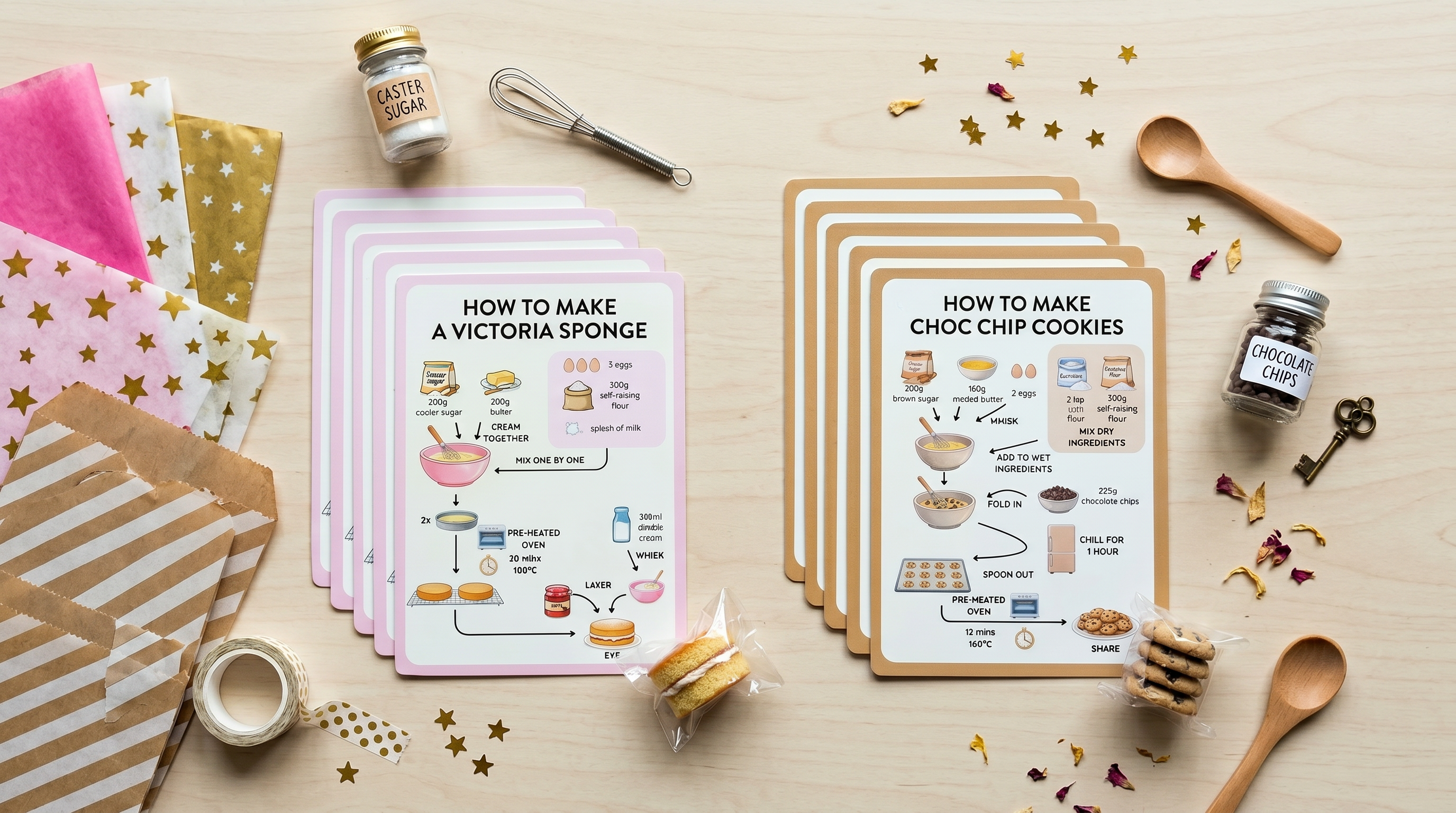
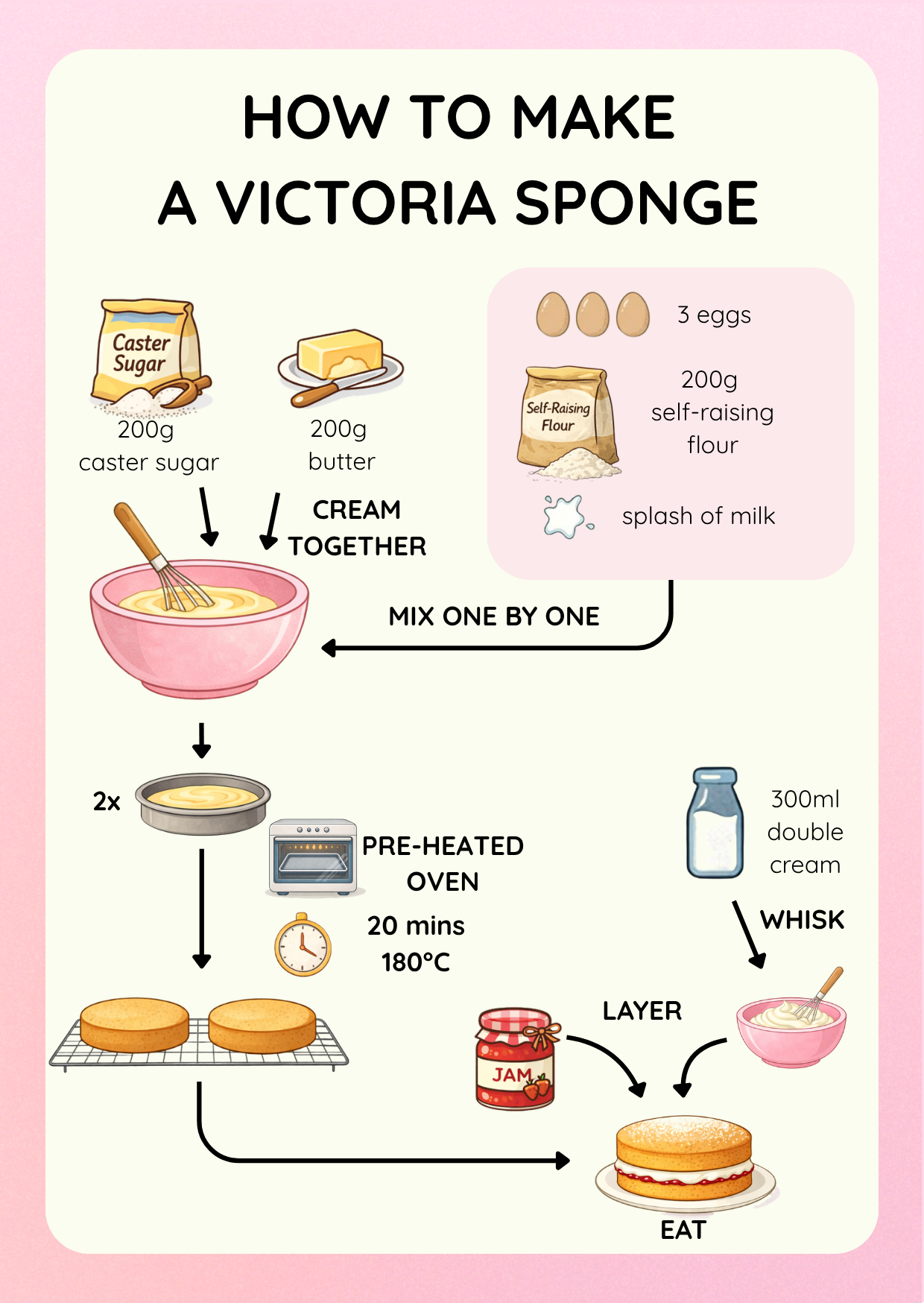
Victoria Sponge visual recipe card for kids with step-by-step picture instructions
ClearCook visual recipe card for Victoria Sponge, with picture-led steps children can follow with adult supervision.

For grown-ups

Ingredients

AmountIngredient
200gcaster sugar
200gbutter or margarine
3eggs
200gself-raising flour
-splash of milk
300mldouble cream
-jam

Equipment

No special equipment needed beyond a normal kitchen setup.

Step-by-step written method

1

Cream butter and sugar

Put the soft butter or margarine and caster sugar into a large mixing bowl. The bowl needs enough room for whisking without sugar puffing over the sides. Beat until the mixture looks paler, softer and a little fluffy, scraping down the sides once or twice so no buttery streaks are hiding at the edge.

Child-friendly: Mix butter and sugar until pale and fluffy.

Safety: Adult supervision is needed if using an electric whisk.

Tip: Margarine can be more forgiving than butter.

2

Add eggs

Use room-temperature eggs if you can, because very cold eggs can make the mixture look split. Crack each egg into a small bowl first if your child is practising, then add one egg at a time to the main bowl and beat well before adding the next. Pause for handwashing after raw egg.

Child-friendly: Add one egg at a time and mix.

Safety: Wash hands after touching raw eggs.

Tip: Weighing eggs and matching the other ingredients can improve consistency.

3

Fold in flour

Add the self-raising flour and fold it in gently with a spatula or large spoon. Try to lift and turn the mixture rather than beating it hard, because the air you made in the first step helps the cake rise. If the batter feels stiff or does not drop slowly from the spoon, add a small splash of milk.

Child-friendly: Fold in flour. Add a splash of milk if needed.

Tip: Fold gently to keep air in the batter.

4

Fill tins

Grease and line two 20cm sandwich tins, then share the mixture between them as evenly as you can. Spread the batter right to the edges and smooth the tops gently with the back of a spoon or spatula. The cakes do not need to look perfect, but an even layer helps them bake at the same speed.

Child-friendly: Share the mixture between two lined tins.

Tip: Line and grease tins well to prevent sticking.

5

Bake

Adult help

Bake in the centre of a 170C oven for about 20 minutes. Keep the oven door closed until the cakes look risen and set, because an early peek can make the sponge sink. They are ready when the tops spring back lightly and a skewer comes out clean.

Child-friendly: An adult bakes the cakes.

Safety: Adult help is needed for the oven and hot tins.

Tip: Bake in the centre of the oven and avoid opening the door.

6

Cool and fill

Adult help

Leave the cakes in their tins for a few minutes, then an adult can loosen the edges and turn them onto a rack to cool completely. Stir the jam so it spreads easily. Whip the cream until it holds soft peaks, stopping before it turns grainy, then layer the cake with jam and cream once the sponges are fully cool.

Child-friendly: Cool the cakes, then add jam and cream.

Safety: Adult help may be needed for whipping cream and moving cake layers.

Tip: Whip cream until thick but stop before it becomes grainy.

Why this works well for children

Victoria sponge works well with children because it feels special without being mysterious. They can see the recipe changing in front of them: butter and sugar turning pale, eggs disappearing into the mixture, batter filling the tins, jam spreading across the middle. It has enough ceremony to feel exciting, but the actual sequence is very teachable when you slow it down. I like it for children who enjoy a proper project, because it rewards patience as much as enthusiasm. The cake only comes together if you wait for the sponges to cool, spread gently, and let the grown-up handle the hot bits.

How to make this one go smoothly

Victoria sponge is one of those recipes where the grown-up mood matters almost as much as the ingredients. It is tempting to hurry because everyone can picture the finished cake, but children usually do better if the bake is set up as a sequence of small, satisfying jobs: weigh, mix, spoon, bake, cool, fill. Say the oven and hot tins are adult jobs before you begin, then make the child jobs feel genuinely important.

If you can, soften the butter before you start and line the tins before your child comes over. That avoids the slightly flat moment where they are ready to cook but the grown-up is still wrestling with baking paper. Weighing the eggs first, then matching the butter, sugar and flour to the egg weight, is a lovely way to make the recipe feel logical rather than fussy.

The creaming stage is the place to linger. Children often want to stop as soon as the butter and sugar are combined, but the cake is lighter if it becomes pale and fluffy. You can show them the colour change and make that the goal. An electric whisk helps, but it is also noisy and powerful, so this is a good shared-hands or grown-up-led moment depending on the child.

Once the cakes are in the oven, try not to keep checking. Opening the door too early can make sponge sink, and that is a hard lesson when a child has put their whole heart into it. I usually frame the waiting time as part of the recipe: tidy the bowl, choose a plate, stir the jam so it spreads smoothly, then leave the cakes alone until they are ready.

The filling stage is the joyful bit, but it needs a little patience. Let the cakes cool properly before moving them, because warm sponge is fragile and cream can slump. If the layers are not perfect, that is fine. A homemade cake with a slightly uneven jam layer is still a very successful child-led bake.

What kids can do independently

  • Measuring
  • creaming
  • cracking eggs
  • mixing
  • folding
  • using an oven
  • timing
  • testing doneness
  • whisking
  • layering

These are the child-led jobs to offer first. Keep the adult jobs separate, then hand over one small task at a time so the recipe still feels calm.

Nutrition information

Calories
350 kcal
Protein
4g
Carbohydrates
35g
Fat
22g
Fibre
1g
Sugar
20g
Salt
0.3g

Allergens, swaps and storage

Contains or may contain: eggs, dairy, gluten. Always check packet labels before cooking.

Simple substitutions usually work best when they keep the same texture and cooking time. Store leftovers safely once cool and follow normal food hygiene guidance.

What adults should supervise

Victoria sponge is a lovely shared bake, but it has a few moments where excitement can get ahead of safety. The biggest one is the oven. A child who has carefully mixed and filled the tins will naturally want to see the cake, touch the tin, or help turn it out. I would make the rule very clear before baking: children can look, but the adult owns the oven, hot tins and first lift out of the tin.

The other easy-to-miss wobble is the electric whisk. It feels like a fun child job, and it can be, but only with calm hands, hair tied back and the whisk switched off before anyone scrapes the bowl. Those boundaries keep the recipe feeling generous rather than tense.

  • The oven and hot tins need a clear adult boundary. A sponge tin can look harmless, but it stays hot long after it comes out of the oven, and excited children often reach for the cake before thinking.
  • If you use an electric whisk, treat it as a shared tool. Tie back hair, keep fingers and spoons away from the beaters, and turn it off before scraping the bowl.
  • Raw eggs mean handwashing, wiped surfaces and no tasting the batter from the spoon. It is a small hygiene habit, but cake batter is very tempting.
  • Moving the cooled cakes can be surprisingly delicate. A sponge that is still warm can split when lifted, so an adult should loosen the edges, turn it out and help position the layers.
  • Whipping cream is a good place for adult judgement. It can go from soft peaks to grainy very quickly, especially when a child is enthusiastically whisking.

Parent FAQ

Is Victoria sponge a good cake for children to help with?

Yes, as long as the grown-up holds the oven and hot-tin boundary. It has lots of child-friendly jobs: weighing, cracking eggs, mixing, spreading jam and helping assemble the layers. I would treat it as a shared bake rather than an independent one, because the electric whisk, hot tins and soft cake layers all need a calm adult nearby.

What part can my child do mostly by themselves?

The easiest ownership moments are weighing ingredients into bowls, counting eggs, helping cream the butter and sugar, spooning mixture into the tins and spreading the jam once the cakes are cool. If your child likes jobs with a clear finish, give them the role of checking each picture step and telling you what comes next.

Where does this recipe usually wobble?

Cake recipes can wobble when everyone is excited and the steps start to blur together. The big ones are rushing the creaming stage, opening the oven door too early, trying to move the sponge before it has cooled, and whipping cream past the point where it is soft. Slowing those moments down makes the whole bake feel much easier.

How do I keep it calm with a child who really wants to do everything?

I would name the grown-up jobs at the start: oven, hot tins, electric whisk if needed, and moving the cake layers. Then give your child proper ownership of the safe jobs rather than tiny token jobs. Children cope better with boundaries when they can see they still have real responsibility.

Can we use margarine instead of butter?

Yes. Butter gives a classic flavour, but margarine can be more forgiving for children because it softens quickly and creams easily. If the point of the bake is confidence and participation, the more forgiving option is often the better one.

Do children still need adult supervision?

Adult help needed is recommended. An adult should supervise the oven, hot tins, electric whisk, lifting cake layers, allergens and hygiene. Children can still lead plenty of the recipe while the adult quietly handles those safety edges.

ClearCook Cooking Passport

Cooked it?

Mark this recipe as done and add it to your ClearCook Passport — a private record of every meal cooked.

View passport

Get this on a fridge card

Wipe-clean and ready for sticky little fingers. Start with a set for the kitchen, then add individual cards for recipes your child wants to repeat.