Tomato Pasta

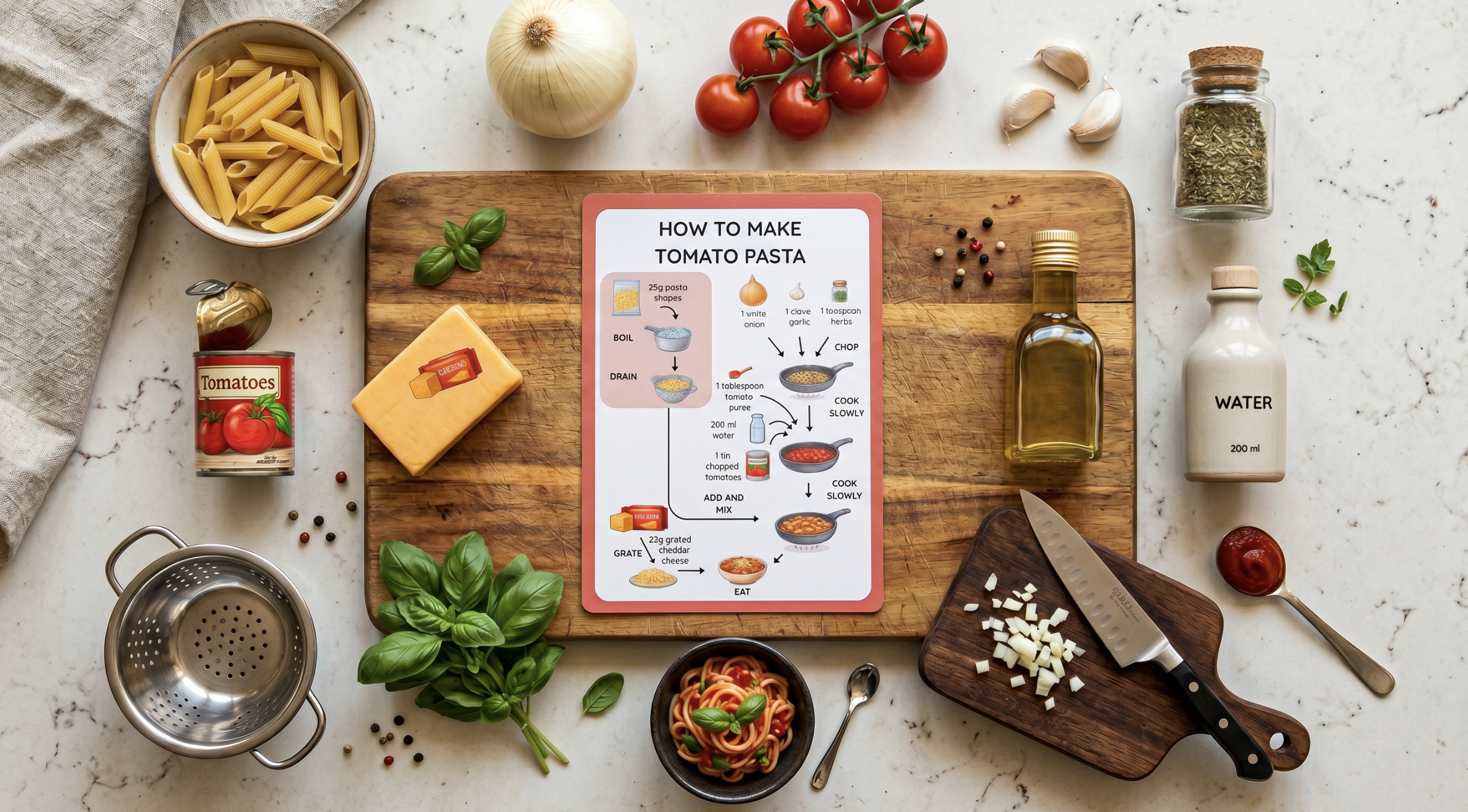
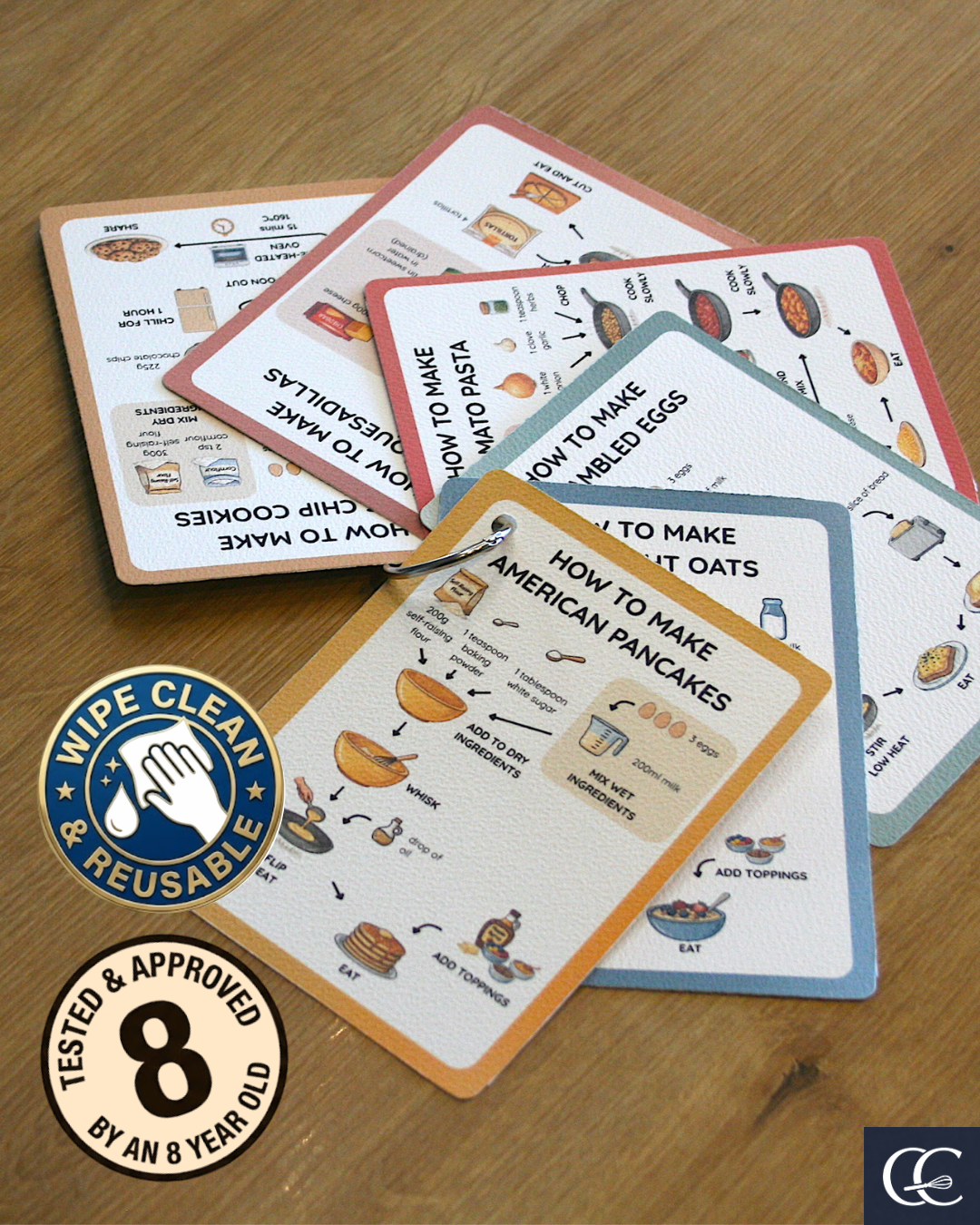
Visual tomato pasta for kids, with picture steps for boiling, simmering, stirring and serving.

MediumAges 6-9Adult help needed30 minMakes 4 portionsKids' score 4/5
Share this recipe

For grown-ups

Ingredients

AmountIngredient
300gpasta shapes
1onion
1clove garlic
1 teaspoondried herbs
1tin chopped tomatoes
1 tablespoontomato puree
25gcheese

Equipment

No special equipment needed beyond a normal kitchen setup.

Step-by-step written method

1

Boil pasta

Adult help

Boil 300g pasta shapes in a large saucepan of water according to the packet timing. Use enough water for the pasta to move freely. Children who are ready for hob work can help with close adult supervision; otherwise an adult can do this step.

Child-friendly: Boil the pasta with adult help nearby.

Safety: Close adult supervision is needed around boiling water and the hob.

Tip: Use a large pan so the pasta has room to move.

2

Drain pasta

Adult help

Drain the pasta carefully in a colander. This is the highest-risk moment because of steam, a heavy pan and boiling water. Offer adult help clearly here; many children can watch or help set up the colander, but an adult should be ready to take over. Optionally save a small mug of pasta water before draining.

Child-friendly: Drain the pasta with adult help.

Safety: Steam, boiling water and a heavy pan can burn.

Tip: Save a little pasta water in case the sauce needs loosening later.

3

Chop onion and garlic

Adult help

Chop 1 white onion and 1 clove garlic on a steady chopping board. Depending on the child, they can chop with a child-safe knife, use scissors for softer pieces, or have these ingredients pre-chopped.

Child-friendly: Chop onion and garlic with help if needed.

Safety: Offer help with knives and keep the chopping board steady.

Tip: Pre-chop for younger children so they can focus on the cooking steps.

4

Cook onion, garlic and herbs

Adult help

Add the onion, garlic and 1 teaspoon dried herbs to a medium frying pan or saucepan with a little oil. Cook slowly on medium-low heat until the onion softens and smells sweet, not brown. A child can stir if they are calm around the hob and the pan handle is turned safely.

Child-friendly: Stir onion, garlic and herbs slowly.

Safety: Stay close around the hob and hot pan.

Tip: Slow cooking makes the sauce sweeter.

5

Add tomatoes, puree and water

Adult help

Add 1 tin chopped tomatoes, 1 tablespoon tomato puree and 200ml water. Stir well so the puree disappears into the sauce. Help younger children pour into the hot pan to avoid splashes.

Child-friendly: Add tomatoes, puree and water. Mix.

Safety: The pan is hot, so pour slowly and watch for splashes.

Tip: Stir until the tomato puree has disappeared into the sauce.

6

Cook sauce slowly

Adult help

Simmer gently for around 15 minutes, stirring now and again, until the sauce thickens and the tomato lumps break down. Add a splash more water if it gets too thick. Children can learn patience here, but bubbling sauce can spit.

Child-friendly: Cook slowly until thicker.

Safety: Bubbling tomato sauce can spit, especially if the heat is too high.

Tip: A gentle simmer is better than a fierce boil.

7

Add pasta and mix

Adult help

Add the drained pasta to the sauce and stir until the pasta is coated. Cook briefly so everything is hot through, loosening with a splash of pasta water if needed. Offer help if the pan is heavy or the stirring feels awkward.

Child-friendly: Add pasta and mix.

Safety: The pan, sauce and pasta will be hot.

Tip: A splash of pasta water can loosen a thick sauce.

8

Grate cheese and serve

Adult help

Grate 25g cheese separately, then serve the pasta into bowls and sprinkle cheese on top. Offer adult help for the grater and check the pasta has cooled enough before eating.

Child-friendly: Grate cheese with help. Add it on top.

Safety: Offer help with the grater and check the food is cool enough to eat.

Tip: Stop grating before fingers get too close to the end of the cheese.

Why this works well for children

Tomato pasta works well because it feels like a proper dinner, not a pretend children’s recipe. The sequence is visible: dry pasta becomes soft, onion and garlic soften, tomatoes turn into sauce, pasta gets coated, cheese goes on top. It gives children real jobs while still letting the adult hold the safety boundary around boiling water, steam and the hob. The sauce is especially useful for learning patience because children can see it thicken slowly instead of expecting every step to be instant.

How to make this one go smoothly

Tomato pasta works best when you think of it as two small jobs running alongside each other: pasta on one side, sauce on the other. That is a lot for a child to hold in their head, so the visual card is useful. It lets them see that boiling and draining the pasta is one track, while chopping, cooking and simmering the sauce is another.

Before you start, decide how much chopping your child is ready for. If chopping onion and garlic will make the whole recipe tense, pre-chop them. That does not make the recipe less child-led. It simply moves the challenge to the places where your child can succeed: adding ingredients, stirring slowly, watching the sauce change and grating the cheese.

The simmering step is a good place to practise patience. Children often want to rush as soon as the tomatoes are in the pan, but the sauce gets better when it has time to bubble gently and thicken. Point out what is changing: the watery edges disappear, the tomato lumps soften, and the spoon starts leaving a clearer trail through the sauce.

Draining is the step to slow right down. A child who has stirred calmly may still not be ready for a heavy pan of boiling water. Offer adult help clearly and give them a nearby role, such as checking the colander is in the sink, holding the pasta bowl away from the steam, or watching for when the pasta has stopped dripping.

Save a little pasta water if you can. It gives you an easy rescue if the sauce gets too thick or the pasta starts clumping. Then hand the recipe back: pasta into sauce, stir until coated, cheese on top. That final separate cheese step matters because it gives children a safe, satisfying finish after the hotter work.

What kids can do independently

  • Boiling
  • draining
  • chopping
  • sauteing
  • stirring
  • simmering
  • grating
  • timing
  • combining ingredients

These are the child-led jobs to offer first. Keep the adult jobs separate, then hand over one small task at a time so the recipe still feels calm.

Nutrition information

Calories
320 kcal
Protein
11g
Carbohydrates
50g
Fat
8g
Fibre
5g
Sugar
6g
Salt
0.6g

Allergens, swaps and storage

Contains or may contain: dairy, gluten. Always check packet labels before cooking.

Simple substitutions usually work best when they keep the same texture and cooking time. Store leftovers safely once cool and follow normal food hygiene guidance.

What adults should supervise

Tomato pasta can look deceptively simple once a child is happily stirring the sauce. That is exactly why the draining moment is worth naming before you start. A child may feel ready because the recipe has gone well so far, but steam, boiling water and a heavy pan make draining a different kind of job.

I would offer help rather than announce that the adult is doing everything. Let the child set the colander in place, stand back, or watch for when the pasta has stopped dripping. Then hand the recipe back to them for mixing, cheese and serving once the high-risk moment has passed.

  • Boiling pasta needs close supervision. Children who are ready can help, but the pan should be stable, the handle turned safely, and an adult should stay close enough to step in.
  • Draining is the highest-risk moment. The pan is heavy, steam rises quickly, and a colander can wobble in the sink. Offer adult help clearly and be ready to take over.
  • Chopping onion and garlic depends on the child. Use a steady board, child-safe tools where appropriate, or pre-chop so the child can focus on the cooking sequence.
  • Tomato sauce can spit as it bubbles. Keep the heat gentle, use a pan with enough room, and remind children to stir slowly from the side rather than leaning over the pan.
  • Grating cheese is a good child job with a small caution: fingers can slip near the end of the block, so offer help before the last little piece gets awkward.
  • Check the pasta has cooled enough before eating. Tomato sauce holds heat and can surprise children even when it looks ready.

Parent FAQ

Is tomato pasta a good recipe for children to help with?

Yes. It feels like a real dinner, but the actions are still easy to understand: boil, chop, stir, simmer, mix and add cheese. The useful thing is that the child can own parts of the recipe without needing to own every risky moment. Some children will be ready to stir at the hob; others can grate cheese, measure water, add tomatoes or check the picture card while you handle the hotter steps.

Can a child boil and drain the pasta?

Some older or more practised children can help with boiling pasta while an adult stays close, but draining is the step I would treat most carefully. A heavy pan, boiling water, steam and a colander are a lot at once. Offer help clearly and be ready to take over, even if your child has confidently managed the stirring parts.

How can younger children help with chopping?

You can pre-chop the onion and garlic, use a child-safe knife on softer pieces, or let them use scissors where that feels safer. Chopping is not the only meaningful job. A younger child can still add herbs, stir tomato puree into the sauce, grate cheese with help, and decide when the sauce looks thicker.

Why does the sauce need to cook slowly?

The slow cooking is what turns sharp, watery tomatoes into a softer sauce that coats the pasta. It is a nice patience lesson because children can actually see the change: the sauce bubbles, thickens and looks less lumpy. A timer helps, but looking and stirring are part of the learning too.

Can we add extra vegetables?

Yes. Grated carrot or courgette work well because they soften into the sauce without changing the recipe too much. Keep the pieces small, add a splash more water if the sauce thickens quickly, and give it enough time to cook down.

What are the main supervision points?

Adult help needed is recommended, but that does not mean the adult has to do every step. Stay close for the hob, offer help with chopping and grating, and treat draining the pasta as the moment most likely to need adult takeover.

ClearCook Cooking Passport

Cooked it?

Mark this recipe as done and add it to your ClearCook Passport — a private record of every meal cooked.

View passport

Get this on a fridge card

Wipe-clean and ready for sticky little fingers. Start with a set for the kitchen, then add individual cards for recipes your child wants to repeat.

Individual cards

Add one extra recipe card at a time as your child builds confidence.