Sausage and Mash

Visual sausage and mash for kids, with picture steps for boiling, mashing, oven cooking and serving.

EasyAges 6-9Adult help needed35 minMakes 4 portionsKids' score 5/5
Share this recipe
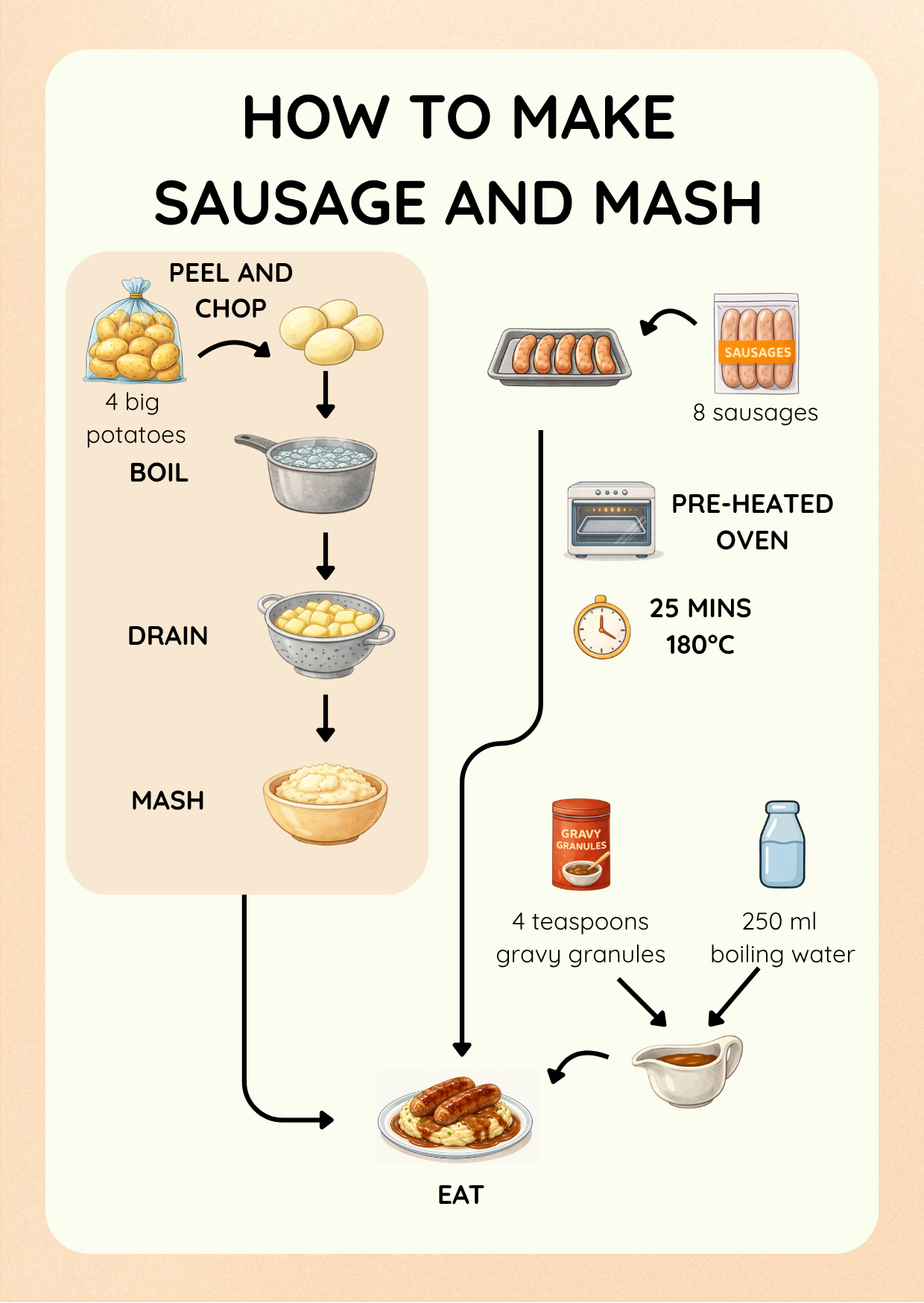
Sausage and Mash visual recipe card for kids with step-by-step picture instructions
ClearCook visual recipe card for Sausage and Mash, with picture-led steps children can follow with adult supervision.

For grown-ups

Ingredients

AmountIngredient
4large potatoes
8sausages
4 teaspoonsgravy granules
-butter
-milk
-salt
-pepper

Equipment

No special equipment needed beyond a normal kitchen setup.

Step-by-step written method

1

Peel and chop potatoes

Adult help

Peel 4 large potatoes, then chop them into similar-sized pieces so they cook evenly. Use a stable chopping board and choose the tool that matches the child: peeler, child-safe knife, table knife for softer pieces, or adult-prepped chunks.

Child-friendly: Peel and chop potatoes with help.

Safety: Adult supervision is needed for peeling and chopping.

Tip: Similar-sized potato pieces cook evenly.

2

Boil potatoes

Adult help

Put the potato pieces into a large saucepan, cover with water and boil until they are soft enough to mash. Test with a fork: the potato should slide off easily. Children who are ready can help watch for softness while an adult stays close to the hob.

Child-friendly: Boil potatoes with adult help nearby.

Safety: Close adult supervision is needed around boiling water and the hob.

Tip: A fork should slide into the potato easily when it is ready.

3

Drain potatoes

Adult help

Drain the potatoes carefully in a colander. This is the highest-risk potato moment because of steam, boiling water and a heavy pan. Let children set up the colander or stand back while an adult drains if needed.

Child-friendly: Drain potatoes with adult help.

Safety: Boiling water, steam, heavy pans and colanders can burn.

Tip: Drain slowly and keep faces away from the steam.

4

Mash potatoes

Mash the hot potatoes with butter, a splash of milk, salt and pepper. Add milk gradually and scrape around the edges so there are no hidden lumps. The pan or bowl may still be hot, so check where children place their hands.

Child-friendly: Mash with butter and milk.

Safety: The pan or bowl may still be hot.

Tip: Add milk gradually; it is easy to add more but hard to take it out.

5

Cook sausages

Adult help

Put 8 sausages on a baking tray and cook in a preheated 180C oven for about 25 minutes, until browned and cooked through. An adult should handle the oven, hot tray and final cooked-through check.

Child-friendly: An adult cooks the sausages.

Safety: Adult help is needed for the oven, hot tray and checking sausages are cooked through.

Tip: Cook until well browned and piping hot in the middle.

6

Make gravy

Adult help

Put 4 teaspoons gravy granules into a heatproof jug or bowl. An adult pours in 250ml boiling water, then stir until smooth. Keep the jug stable because hot gravy can splash and thicken quickly.

Child-friendly: Mix gravy with adult help.

Safety: Boiling water and hot gravy can burn.

Tip: Add the water gradually and stir until smooth.

7

Serve and eat

Adult help

Spoon mash onto plates, add the sausages and pour gravy on top. Try peas, baked beans or a small spoonful of grainy mustard if liked. Check everything has cooled enough before children eat.

Child-friendly: Put sausages on mash. Add gravy.

Safety: Check sausages, mash and gravy are cool enough before children eat.

Tip: Try faces, gravy volcanoes or patterns for fun plating.

Why this works well for children

Sausage and mash works well for children because it is familiar but still feels like a proper dinner. The card makes the parallel jobs visible: potatoes move from wash, peel and chop to boil, drain and mash, while sausages cook in the oven and gravy finishes the plate. Mashing is satisfyingly physical, plating is creative, and children can see plain ingredients become a meal they recognise. It also gives a useful lesson in supported independence: the child can lead the potato prep, mashing and plating, while the adult clearly holds the oven, draining, gravy water and final cooked-through checks.

How to make this one go smoothly

Sausage and mash goes best when you set the two tracks up clearly. The sausages need the oven and a timer; the potatoes need peeling, chopping, boiling, draining and mashing. Tell your child which track they are leading. For many children, the potato track is the most satisfying because they can see and feel the change, while the adult quietly keeps the oven track moving.

Start with stable prep. Put a damp cloth under the chopping board, cut potatoes into similar-sized chunks, and do not worry if the pieces are not perfect. Similar is enough. If peeling is too tiring or fiddly, share the job or peel some potatoes in advance so the recipe does not become a test of stamina before the cooking has begun.

Before the water boils, decide what the child will do during the waiting time. They might check the card, set out butter and milk, count plates, or help you look for when the potato pieces are soft. Giving them a small observation job keeps the recipe from turning into "grown-up watches pan while child disappears."

The boil-and-drain section needs a slower adult pace. Children can help notice when the potato pieces are soft enough to mash, but draining is not a moment to rush. Steam can burn before anyone has touched the water. Once the potatoes are safely drained, the recipe becomes child-friendly again: butter, milk, mash, taste and adjust.

Mashing is a great place to teach texture. Add butter first so it melts into the hot potatoes, then add milk gradually. Children often pour too much milk when they are excited, so a small jug helps. Ask them to look for lumps and scrape the edges rather than simply pounding the middle of the bowl. If the mash gets too stiff, add a splash more milk; if it gets too soft, pause and let it sit for a minute before deciding it is ruined.

Gravy and plating are good final jobs, but both need a little adult judgement. Boiling water for gravy is an adult pour; children can stir once the jug or bowl is stable. Let the finished plate cool for a moment before eating, especially where gravy pools around the sausages and mash.

The nicest handoff is after the risky bits are done. Once the potatoes are drained, the sausages are checked and the gravy is safe to stir, give the plate back to your child: spoon mash, place sausages, add gravy if appropriate, and decide whether the meal looks ready. That final ownership matters because it stops the adult safety steps from feeling like the adult made the dinner.

What kids can do independently

  • Peeling
  • chopping
  • boiling
  • draining
  • mashing
  • seasoning
  • using an oven
  • timing
  • mixing
  • serving

These are the child-led jobs to offer first. Keep the adult jobs separate, then hand over one small task at a time so the recipe still feels calm.

Nutrition information

Calories
500 kcal
Protein
18g
Carbohydrates
40g
Fat
28g
Fibre
4g
Sugar
3g
Salt
1.5g

Allergens, swaps and storage

Contains or may contain: dairy, gluten. Always check packet labels before cooking.

Simple substitutions usually work best when they keep the same texture and cooking time. Store leftovers safely once cool and follow normal food hygiene guidance.

What adults should supervise

Sausage and mash is familiar, but it is not a one-track recipe. The sausages are cooking while the potatoes are being peeled, boiled, drained and mashed. That can be a lot for a child to hold in their head, so I would make the adult role very plain: the adult manages the oven, hot tray and the risky draining moment, while the child gets real ownership of the potato jobs.

The draining step is the one I would name before you start. A child may have peeled, chopped and mashed beautifully, but boiling water and steam are a different level of risk. Give them a nearby job, such as putting the colander in the sink or checking the plate is ready, then hand the recipe back for mashing and plating once the danger has passed.

Gravy is another moment where a small adult boundary helps. The child can whisk or stir, but the boiling water pour belongs to the adult. Say that upfront and it feels like a shared plan, not a sudden takeover right at the end.

  • Peeling and chopping potatoes needs support matched to the child. Use a stable board, similar-sized pieces and a safe tool choice, and share the prep before tired hands make it frustrating.
  • Boiling potatoes needs close supervision. The pan should be stable, the handle turned safely, and children should know the steam is part of the danger, not just the water.
  • Draining is the highest-risk potato moment. A heavy pan, boiling water and a colander can wobble, so offer adult help clearly and be ready to take over completely.
  • The oven tray and sausages are adult-led. A tray of sausages looks simple, but hot fat and a hot tray need adult handling, and the sausages must be checked as fully cooked before serving.
  • Gravy uses boiling water and can splash or thicken suddenly. An adult should pour the water, then children can help stir once the jug or bowl is stable and safely placed.
  • Check sausage and gravy ingredients for allergens such as gluten, milk, sulphites or mustard, and check the food has cooled enough before children eat.

Parent FAQ

Is sausage and mash a good recipe for children to help with?

Yes, as a shared family cook. Sausage and mash has proper dinner jobs children can understand: washing, peeling, chopping, mashing, stirring gravy and plating up. The adult needs to hold the hot-water, oven and sausage-cooking boundaries, but children can still own meaningful parts of the meal, especially the potato track.

What can children do mostly by themselves?

Depending on age and confidence, children can wash potatoes, help peel, chop softer potato pieces with a safe knife, mash with butter and milk, count sausages onto a tray before it is hot, stir gravy once the boiling water has been added, and arrange sausages on the mash. If peeling is too tiring, share it or do some in advance. The goal is for the child to stay engaged through the recipe, not to prove they can do every prep job alone.

Where does this recipe usually wobble?

The potato track and sausage track happen at the same time, which can feel busy. The easiest way to keep it calm is to treat them as two jobs: sausages go into the oven with adult help, then the child focuses on the potatoes. Draining the potatoes is the moment to slow right down, because a child who has managed peeling and mashing may still not be ready for steam, boiling water and a heavy pan.

Can children boil and drain potatoes?

Some older children can help with boiling potatoes while an adult stays close, but draining needs much stronger support. A heavy pan, boiling water, steam and a colander are a lot to manage at once. Let children set up the colander, stand back from the steam, or watch for when the potatoes have stopped dripping, and be ready for the adult to take over completely.

How do you get smoother mash?

Cut potatoes into similar-sized pieces so they cook evenly, drain them well, then mash while they are still hot. Add butter first so it melts in, then milk a little at a time from a small jug. Children often enjoy the mashing, but they may need help scraping the corners of the pan or bowl because enthusiastic mashing tends to happen in the middle.

What are the main allergens and supervision points?

Adult help needed is recommended. Adults should supervise peeling, chopping, boiling, draining, oven trays, checking sausages are fully cooked, boiling water for gravy and the final heat check before eating. Check sausage and gravy labels carefully, especially for gluten, milk, sulphites, mustard or other household allergen needs.

ClearCook Cooking Passport

Cooked it?

Mark this recipe as done and add it to your ClearCook Passport — a private record of every meal cooked.

View passport

Get this on a fridge card

Wipe-clean and ready for sticky little fingers. Start with a set for the kitchen, then add individual cards for recipes your child wants to repeat.