Lemon Drizzle Cake

Picture-led lemon drizzle cake for kids, with a soft lemon sponge, crunchy drizzle and practical grown-up guidance.

EasyAges 6-10Adult help needed80 minMakes 10 slicesKids' score 5/5

Prep 20 min · Cook 45 min

Mark as cooked
Share this recipe
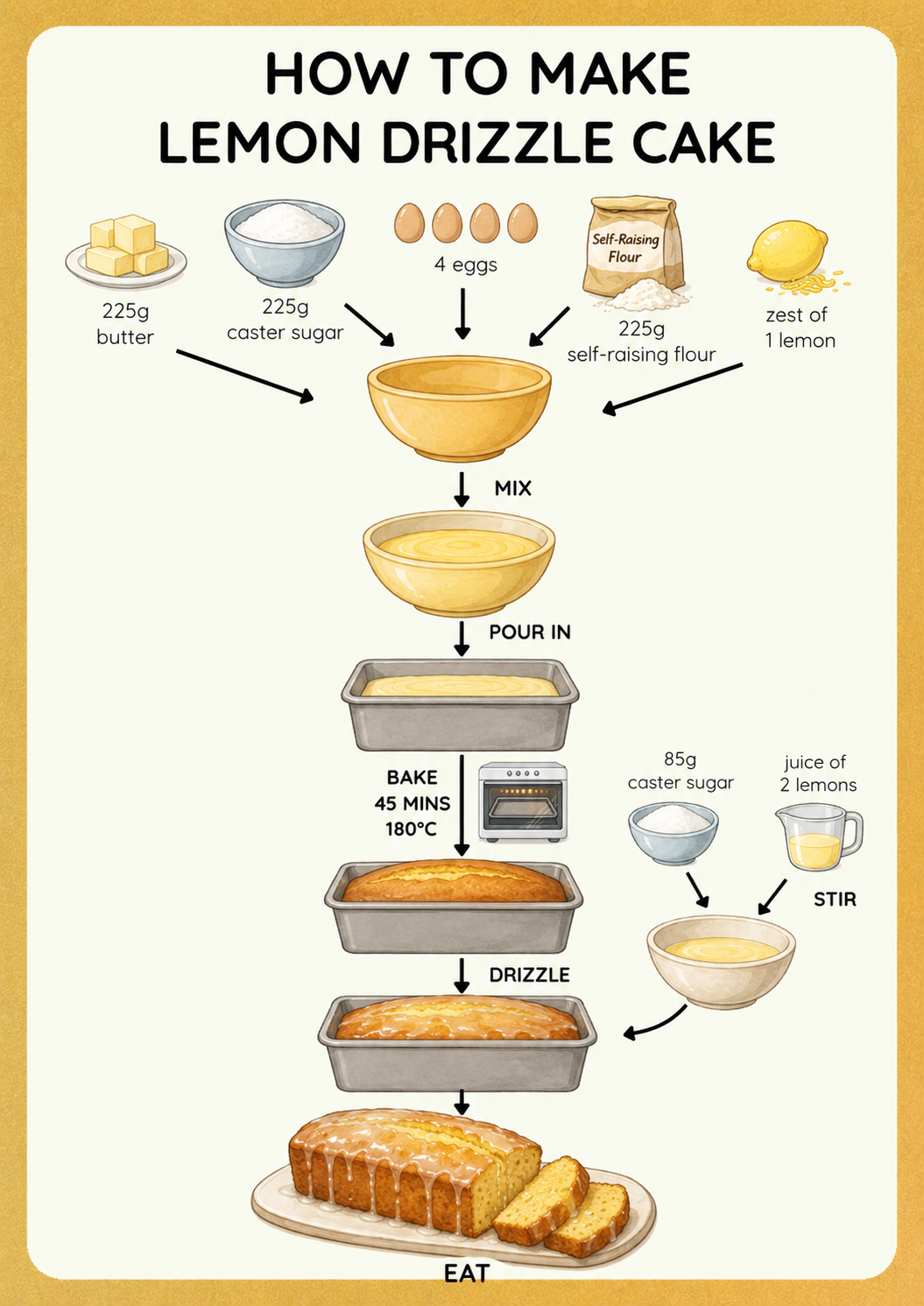
Visual lemon drizzle cake recipe card showing ingredients, mixing, baking and lemon-sugar drizzle steps for children.
Picture-led Lemon Drizzle Cake recipe card for children.

What you’re making

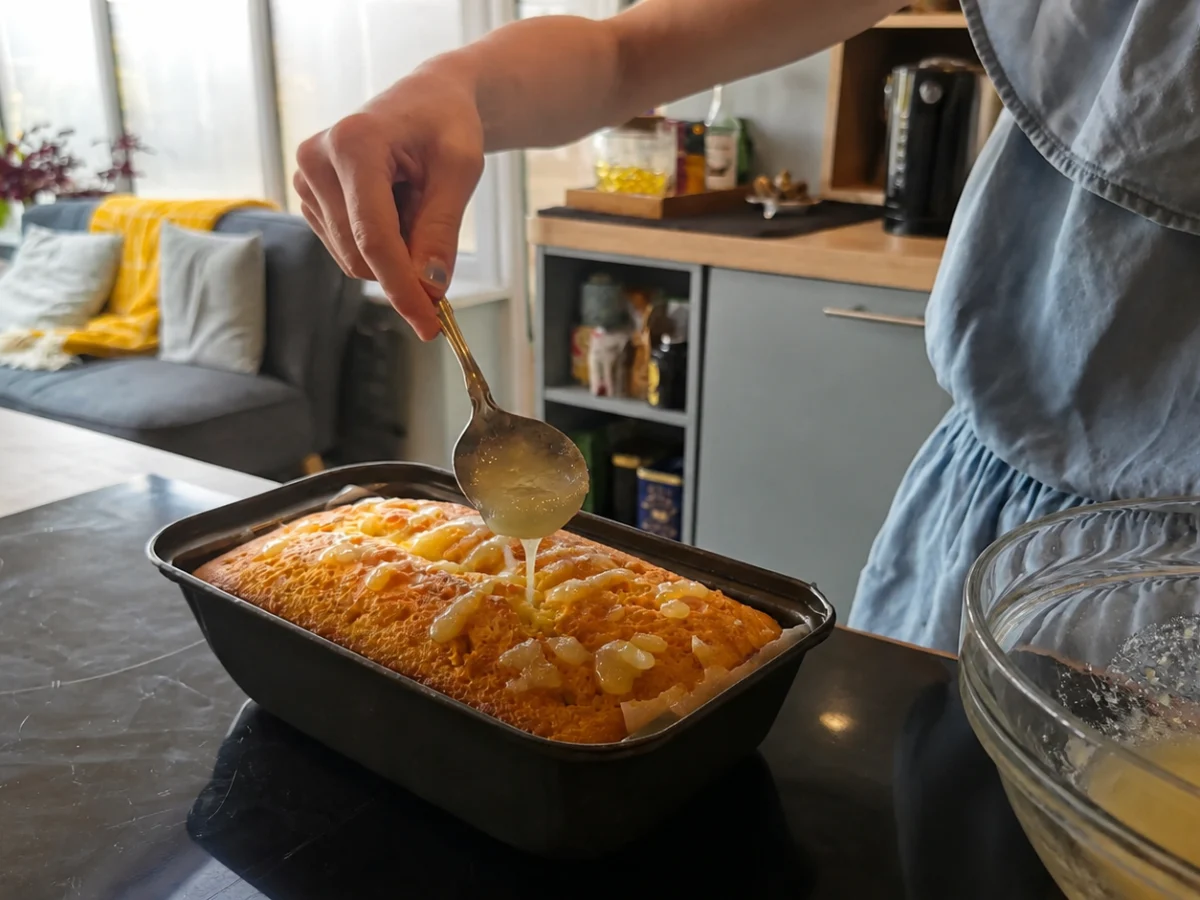
Warm lemon drizzle loaf cake being topped with lemon-sugar drizzle
Lemon drizzle being spooned over the warm loaf cake.

For grown-ups

Ingredients

AmountIngredient
225 gbuttersoftened, plus a little for greasing
225 gcaster sugar
4eggs
225 gself-raising flour
1lemonfinely grated zest only
85 gcaster sugarfor the drizzle
2lemonsjuice only, about 60ml

Equipment

  • 2lb (900g) loaf tin
  • Baking paper
  • Large mixing bowl
  • Kitchen scales
  • Electric hand mixer or wooden spoon
  • Small bowl
  • Fine grater or zester
  • Lemon juicer
  • Spoon
  • Skewer
  • Oven gloves
  • Cooling rack

Step-by-step written method

1

Prepare the oven and tin

Adult help

Heat the oven to 180C (160C fan). Grease a 2lb (900g) loaf tin, then line it with baking paper, leaving enough paper at the long sides to lift the cooled cake.

Child-friendly: Line the loaf tin.

Safety: An adult should switch on the oven and explain that the door and nearby surfaces will become hot.

Tip: A long strip of paper makes useful lifting handles.

2

Put everything in the bowl

Adult help

Put 225g softened butter, 225g caster sugar, 4 eggs, 225g self-raising flour and the finely grated zest of 1 lemon into a large mixing bowl. Crack each egg into a separate cup first.

Child-friendly: Add butter, sugar, eggs, flour and lemon zest.

Safety: Supervise zesting closely and wash hands and surfaces after handling raw egg.

Tip: Zest the lemon while it is still whole and easy to hold.

3

Mix the batter

Adult help

Mix slowly at first, then beat just until the batter is smooth, creamy and an even pale yellow. Stop the mixer before scraping the base and sides of the bowl once.

Child-friendly: Mix until smooth.

Safety: Switch electric beaters off before scraping the bowl or lifting them from the batter.

Tip: Soft butter prevents stubborn yellow lumps.

4

Fill the tin

Spoon the batter into the lined loaf tin. Spread it into the corners and level the top gently with the back of the spoon.

Child-friendly: Spoon into the tin. Smooth the top.

Safety: Keep fingers away from the oven while it is heating nearby.

Tip: A slight dip along the centre can encourage an even central crack.

5

Bake the cake

Adult help

An adult should put the tin into the oven and bake for about 45 minutes. The cake is ready when it is golden, the centre springs back and a skewer comes out clean or with a few dry crumbs.

Child-friendly: Ask an adult to bake for 45 minutes.

Safety: Only an adult using dry oven gloves should handle the oven, hot tin and skewer test.

Tip: Do not open the oven during the first 35 minutes.

6

Mix the lemon drizzle

Adult help

While the cake bakes, squeeze the juice from 2 lemons into a small bowl. Add 85g caster sugar and stir together; the mixture should stay slightly grainy rather than completely clear.

Child-friendly: Stir lemon juice and sugar.

Safety: An adult should halve the lemons; check the juice and remove any pips before mixing.

Tip: Grainy sugar helps the finished top turn crisp.

7

Prick and drizzle

Adult help

Set the hot cake, still in its tin, on a heatproof surface. An adult should prick the top all over with a skewer. Spoon the lemon mixture slowly and evenly over the whole loaf, pausing to let it soak in.

Child-friendly: Prick the cake. Spoon over the drizzle.

Safety: The cake and metal tin are hot; an adult should steady the setup and keep the child from leaning across it.

Tip: Remember the ends and the crack down the middle.

8

Cool and serve

Adult help

Leave the cake to cool completely in the tin. Lift it out using the baking paper, peel the paper away, then ask an adult to cut it into 10 slices.

Child-friendly: Cool completely. Slice and eat.

Safety: The adult should confirm the tin is cool and use the knife for slicing.

Tip: Cooling fully gives the drizzle time to settle and the crumb time to firm.

Why this works well for children

Lemon drizzle cake works especially well as a child-facing bake because its pattern is easy to see and remember: equal weights of butter, sugar and flour join four eggs and lemon zest in one bowl, the batter is poured into one tin, and the baked loaf gets a two-ingredient finish. Children practise accurate weighing, egg cracking, citrus preparation and noticing when a mixture becomes smooth, then receive a quick confidence boost as each spoonful of drizzle disappears into the warm cake. The adult boundary is concrete rather than vague: the oven, hot metal tin, skewer test and final slicing stay supported, while the child owns the mixing and can share the dramatic drizzle moment from a safe position.

How to make this one go smoothly

Start with genuinely soft butter and line the loaf tin before any ingredients enter the bowl. Butter that yields when pressed but is not oily will combine quickly; fridge-cold cubes leave yellow lumps and can turn a simple all-in-one cake into an exhausting mixing job.

Set up citrus work in the right order: wash and dry the lemons, zest one while it is still whole, then cut and squeeze. Show the child how to move the lemon across the zester rather than rubbing fingers towards the teeth, and rotate as soon as the white pith appears.

Crack each egg into a small cup first. A shell rescue is much easier there than in a bowl full of flour and butter. Mix on a low speed to begin so flour stays in the bowl, then stop once the batter is pale, smooth and drops reluctantly from the spoon.

Level the batter but do not chase a perfectly flat top; a central crack is normal for a loaf cake. Keep the oven closed during the early rise. Near 45 minutes, an adult can check the centre: wet batter needs longer, while a clean skewer or a few dry crumbs means it is ready.

Mix the drizzle while the cake bakes and expect it to look grainy. Put the hot tin on a stable heatproof surface, prick the loaf, and spoon slowly from end to end. If drizzle pools at the sides, pause for a few seconds and let the first spoonfuls soak in before adding more.

Cooling is part of the recipe. The warm cake is fragile and the syrup needs time to settle, so leave it in the lined tin until completely cool. If the centre dips slightly, serve it proudly; if it is still wet rather than just sunken, it was underbaked and should not be eaten as finished cake.

What kids can do independently

  • Weighing
  • cracking eggs
  • zesting and juicing citrus
  • mixing cake batter
  • lining a tin
  • reading texture cues
  • testing a bake
  • making and spooning a drizzle
  • oven safety

These are the child-led jobs to offer first. Keep the adult jobs separate, then hand over one small task at a time so the recipe still feels calm.

Nutrition information

Calories
402 kcal
Protein
5g
Carbohydrates
48g
Fat
21g
Fibre
1g
Sugar
32g
Salt
0.5g

Allergens, swaps and storage

Contains or may contain: gluten, eggs, dairy. Always check packet labels before cooking.

Simple substitutions usually work best when they keep the same texture and cooking time. Store leftovers safely once cool and follow normal food hygiene guidance.

What adults should supervise

This recipe has a lovely handover point, but name it before you begin: the child can lead the weighing and mixing, while the adult owns every movement into and out of the oven. A confident-looking loaf tin is still very hot, and the sweet drizzle can hide how much heat the cake is holding.

The moment worth planning is the drizzle. Set the hot tin on a heatproof mat, keep oven gloves nearby, and decide whether the child will spoon from beside the tin or the adult will hold the small bowl. That preparation lets the child enjoy watching the liquid disappear without reaching across hot metal.

Zesting also deserves calm, close support. Hold the tool steady or guide the lemon according to the child's control, rotate before the bitter white pith appears, and take over while there is still plenty of lemon left to grip. The aim is a successful fragrant ingredient, not using every last patch of peel.

  • The oven and loaf tin are the main burn hazards. An adult should load, check and remove the cake using dry oven gloves, then put the tin on a stable heatproof surface away from the counter edge.
  • A fine grater can catch fingertips as the lemon gets smaller or slippery. Keep the whole lemon dry, move slowly, rotate often and let the adult finish before fingers approach the teeth.
  • Raw egg can spread from shells and hands. Crack one egg at a time into a cup, remove shell there, then wash hands, utensils and any splashed surface with hot soapy water.
  • Electric beaters can catch fingers, hair or loose sleeves. Switch them off before scraping the bowl or lifting the beaters from the mixture, and keep the cable away from the work area.
  • The skewer test happens over a hot tin and near the oven. An adult should perform it, keeping their free hand protected and face clear of escaping heat.
  • For drizzling, keep the hot cake in its tin and give the child a small spoon. Support the bowl or spoon from the side so they never need to lean over or steady the metal tin.
  • Check labels for wheat/gluten in the self-raising flour, egg, and milk in the butter. Use only alternatives already known to be safe for the household and suitable for baking.

Parent FAQ

Is lemon drizzle cake a good baking recipe for children?

Yes. The equal 225g butter, sugar and flour quantities make the weighing pattern easy to notice, and children can see a clear change from batter to loaf to glossy drizzle cake. An adult still needs to manage the oven, hot tin and close supervision of the zester.

Why did my lemon drizzle cake sink in the middle?

The oven door may have opened before the centre had set, or the batter may have been beaten for too long after the flour went in. Keep the door closed for at least the first 35 minutes, then look for a risen, springy centre and use a skewer to check the deepest part.

Should the drizzle sugar dissolve first?

No. Stir the caster sugar and lemon juice together, but leave the mixture slightly grainy. The juice soaks into the warm sponge while some sugar remains on top to make the familiar crisp finish.

Can I use bottled lemon juice?

Fresh lemons give the cake its zest as well as the drizzle, so they produce a brighter result. If bottled juice is all you have, use about 60ml for the drizzle, but you will still need a fresh unwaxed lemon if you want the zest in the sponge.

How do I know when the loaf is baked?

At about 45 minutes it should be golden, risen and spring back when gently pressed in the centre. A skewer pushed into the deepest part should come out clean or with a few dry crumbs, not wet batter. If the top colours too quickly before the middle is ready, an adult can loosely cover it with foil.

How should lemon drizzle cake be stored?

Cool it completely, then keep it in an airtight container in a cool, dry place for up to 3 days. It can also be frozen, well wrapped, for up to 3 months; thaw it at room temperature while still wrapped so it stays moist.

ClearCook Cooking Passport

Cooked it?

Mark this recipe as done and add it to your ClearCook Passport — a private record of every meal cooked.

View passport