American Pancakes

Visual American pancakes for kids, with picture steps for mixing, frying and flipping.

EasyAges 6-9Adult help needed25 minMakes 16 pancakesKids' score 5/5
Share this recipe

For grown-ups

Ingredients

AmountIngredient
200gself-raising flour
1 teaspoonbaking powder
1 tablespoonwhite sugar
3eggs
200mlmilk
-small amount of oil for frying

Equipment

No special equipment needed beyond a normal kitchen setup.

Step-by-step written method

1

Mix dry ingredients

Put 200g self-raising flour, 1 teaspoon baking powder and 1 tablespoon white sugar into a large mixing bowl. Use a bowl with enough room for whisking later. Stir the dry ingredients together so the baking powder and sugar are spread through the flour.

Child-friendly: Put dry ingredients in a big bowl. Mix.

Tip: A large bowl makes the later whisking much less messy.

2

Mix wet ingredients

Crack 3 eggs into a separate jug or bowl, then add 200ml milk. Whisk until the mixture looks all one colour. Cracking into a separate bowl first makes it easier to remove any shell before the eggs go into the batter.

Child-friendly: Mix eggs and milk in a jug.

Safety: Wash hands after touching raw egg.

Tip: A jug makes the wet mixture easier to pour.

3

Add wet to dry

Pour the egg and milk mixture into the dry ingredients. Pour slowly so the flour does not puff over the edge of the bowl. If your child is pouring, steady the bowl or put a damp cloth underneath it.

Child-friendly: Pour wet mix into the dry bowl.

Tip: A damp cloth under the bowl helps stop it sliding.

4

Whisk batter

Whisk until the batter is smooth with no obvious floury lumps. Scrape around the sides and bottom of the bowl where dry flour can hide. If the batter thickens while it waits, whisk in a small splash of milk.

Child-friendly: Whisk until smooth.

Tip: Smooth batter gives softer, more even pancakes.

5

Heat pan and add oil

Adult help

Heat a non-stick frying pan on medium heat and add a small drop of oil. Children who are ready can help with close supervision, but the hob and hot pan need a calm adult nearby. Medium heat gives more control than a very hot pan.

Child-friendly: Heat the pan with help. Add a drop of oil.

Safety: Close adult supervision is needed for the hob, hot pan and oil.

Tip: Wipe or swirl the oil so the pan is lightly coated, not swimming.

6

Fry and flip

Adult help

Pour small amounts of batter into the pan. Cook until bubbles appear on the surface and the edges look a little set, then flip and cook the other side until golden. Keep pancakes small while children are learning because they are much easier to turn.

Child-friendly: Pour small pancakes. Wait for bubbles. Flip with help.

Safety: Hot oil can spit and flipping can be tricky.

Tip: Expect the first pancake to be a practice one.

7

Add toppings

Stack the pancakes and add favourite toppings. Check labels for allergens, especially with spreads, nuts, chocolate, yoghurt or shop-bought sauces. Let children choose toppings if you can; it gives them a safe final job after the hot pan work.

Child-friendly: Stack pancakes and add toppings.

Safety: Check topping labels for allergens.

Tip: Toppings are a good place to hand the recipe fully back to the child.

Why this works well for children

American pancakes work beautifully for children because the recipe has very visible stages: dry ingredients in one bowl, wet ingredients in another, batter changing as it is whisked, bubbles appearing in the pan, then toppings at the end. It feels exciting, but it is also nicely repeatable. Each small pancake gives another chance to practise timing without the whole recipe depending on one perfect flip. I like the way this one teaches children to watch for cues rather than just wait for an adult to say what to do.

How to make this one go smoothly

Pancakes go most smoothly when the cold work and the hot work are treated as different parts of the recipe. Let children really own the bowl work first: measuring flour, adding baking powder and sugar, cracking eggs into a separate bowl, pouring milk and whisking. That way, by the time the pan comes out, they already feel involved.

Use a big bowl and a jug if you can. The big bowl keeps the flour from puffing out when the wet mixture goes in, and the jug makes pouring easier for small hands. A damp cloth under the bowl is a tiny thing, but it can stop that annoying slide-across-the-counter moment just when a child starts whisking enthusiastically.

The batter is a good place to teach adjustment rather than perfection. If there are floury pockets around the edge, scrape and whisk again. If the batter thickens while it waits, add a small splash of milk. Children often find this reassuring: cooking is not ruined just because something needs a little fix.

Once you get to the hob, make the pancakes small. Small pancakes are easier to pour, easier to flip and much easier to forgive if they fold over. I would say out loud that the first pancake is the practice pancake. It lowers the pressure immediately and gives everyone permission to learn.

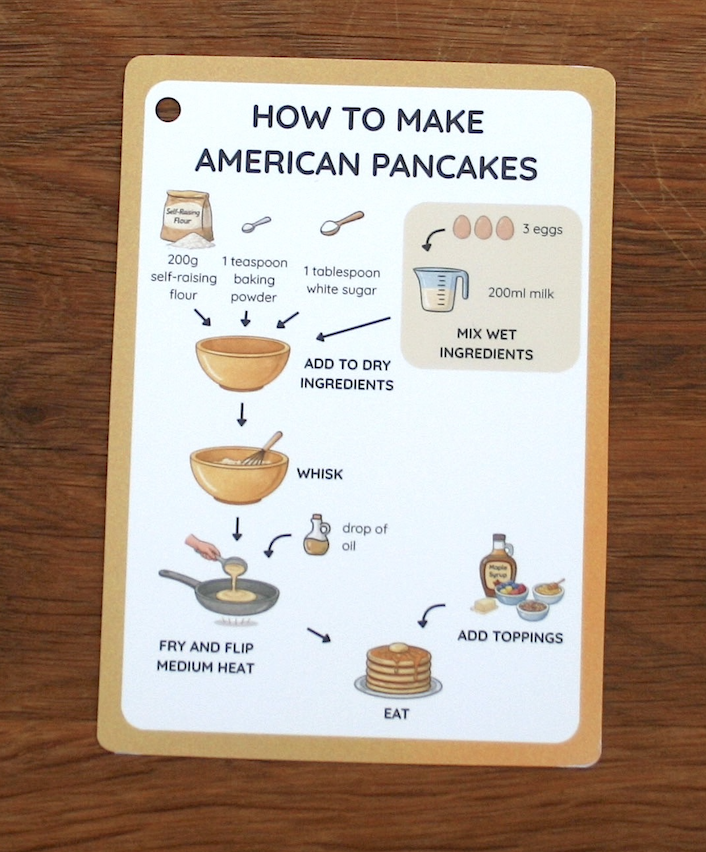
Watch for bubbles together. That is the moment where the visual recipe comes alive: the card says fry and flip, and the pan gives a real sign that it is nearly time. When the hot work is done, hand the recipe back with toppings. Choosing fruit, syrup, yoghurt or other toppings is a safe, satisfying finish after the more supervised pan step.
What kids can do independently

  • Measuring ingredients
  • mixing wet and dry ingredients
  • whisking until smooth
  • adjusting consistency
  • using a hob safely
  • frying
  • flipping food
  • timing

These are the child-led jobs to offer first. Keep the adult jobs separate, then hand over one small task at a time so the recipe still feels calm.

Nutrition information

Calories
300 kcal
Protein
10g
Carbohydrates
45g
Fat
8g
Fibre
2g
Sugar
8g
Salt
0.5g

Allergens, swaps and storage

Contains or may contain: eggs, dairy, gluten. Always check packet labels before cooking.

Simple substitutions usually work best when they keep the same texture and cooking time. Store leftovers safely once cool and follow normal food hygiene guidance.

What adults should supervise

Pancakes are a lovely recipe for supported independence because children can do so much before anything hot happens. The wobble usually comes when the pan appears. A child who has confidently measured and whisked may suddenly want to pour, poke and flip quickly, but the pan changes the pace of the recipe.

I would talk about the hob before you turn it on: the child can help, but the adult stays close, the pan handle stays turned in, and the first pancake is allowed to be a practice one. That takes the drama out of a folded or messy pancake and makes it easier to keep trying.

  • The hob and hot pan need close supervision. Children may be able to help pour or flip, but an adult should stay beside them and keep the pan handle turned safely.
  • Oil can spit when batter hits the pan. Use only a small amount, keep the heat at medium, and help children pour slowly rather than dropping batter from a height.
  • Flipping is the most likely wobble. A pancake can fold, tear or slide towards the edge of the pan, so keep the first few pancakes small and offer help before frustration takes over.
  • Raw eggs mean handwashing and no tasting the batter from the spoon. Cracking eggs into a separate bowl first makes shell rescue calmer.
  • Toppings still need a quick adult check. Check labels for allergens and think about sticky syrups, nuts or hard fruit pieces for younger children.

Parent FAQ

Are American pancakes a good first hob recipe for children?

They can be, because the child gets lots of low-risk ownership before the pan appears: measuring, cracking eggs, mixing wet and dry ingredients, whisking and choosing toppings. The hob part still needs close adult supervision, and some children will be ready to pour or flip sooner than others.

What can children do mostly by themselves?

Many children can measure the flour, baking powder and sugar, crack eggs into a separate bowl, whisk the eggs and milk, pour wet into dry, and keep whisking until the batter is smooth. Toppings are also a brilliant child-led finish because they make the pancakes feel like theirs.

When should an adult step in?

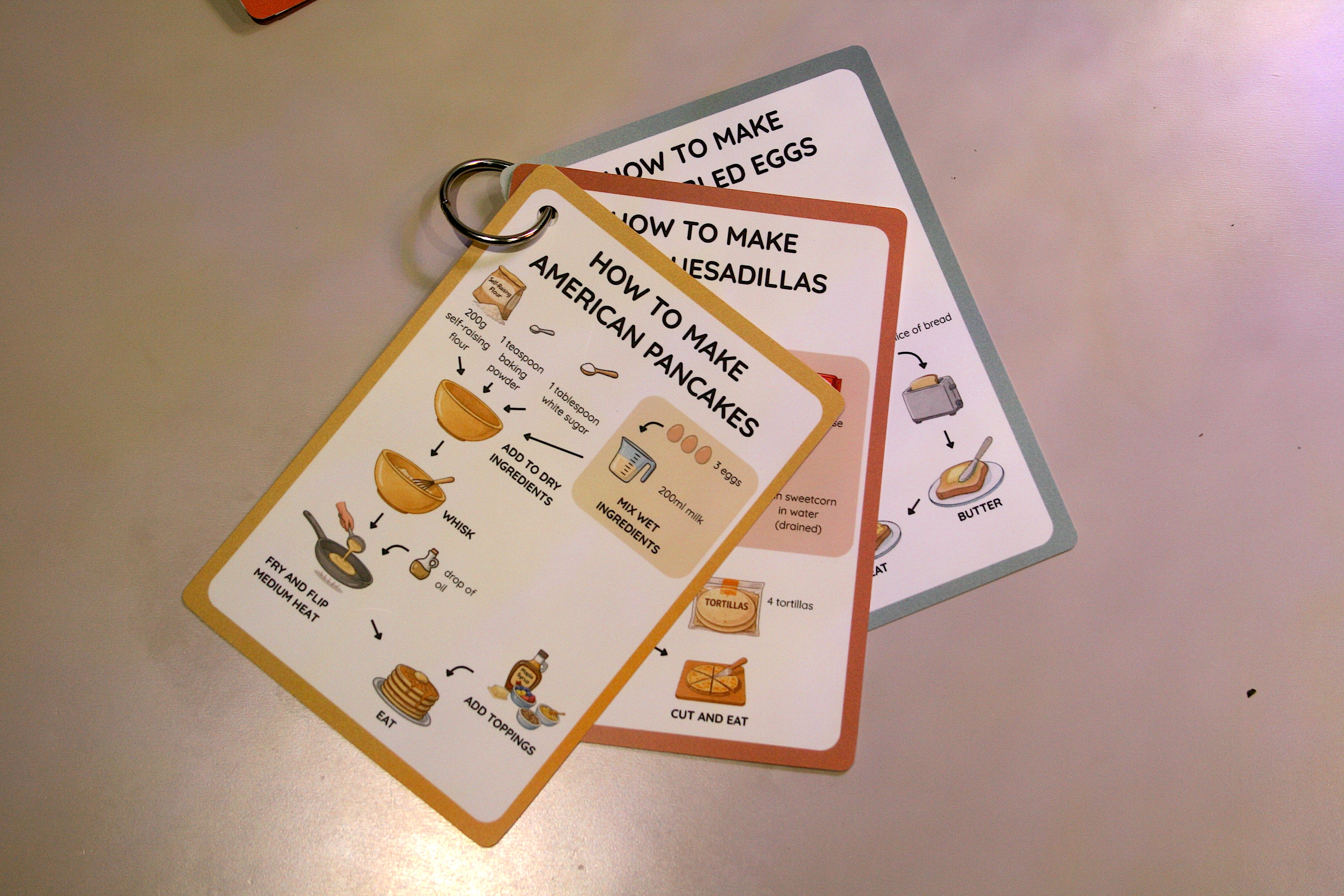
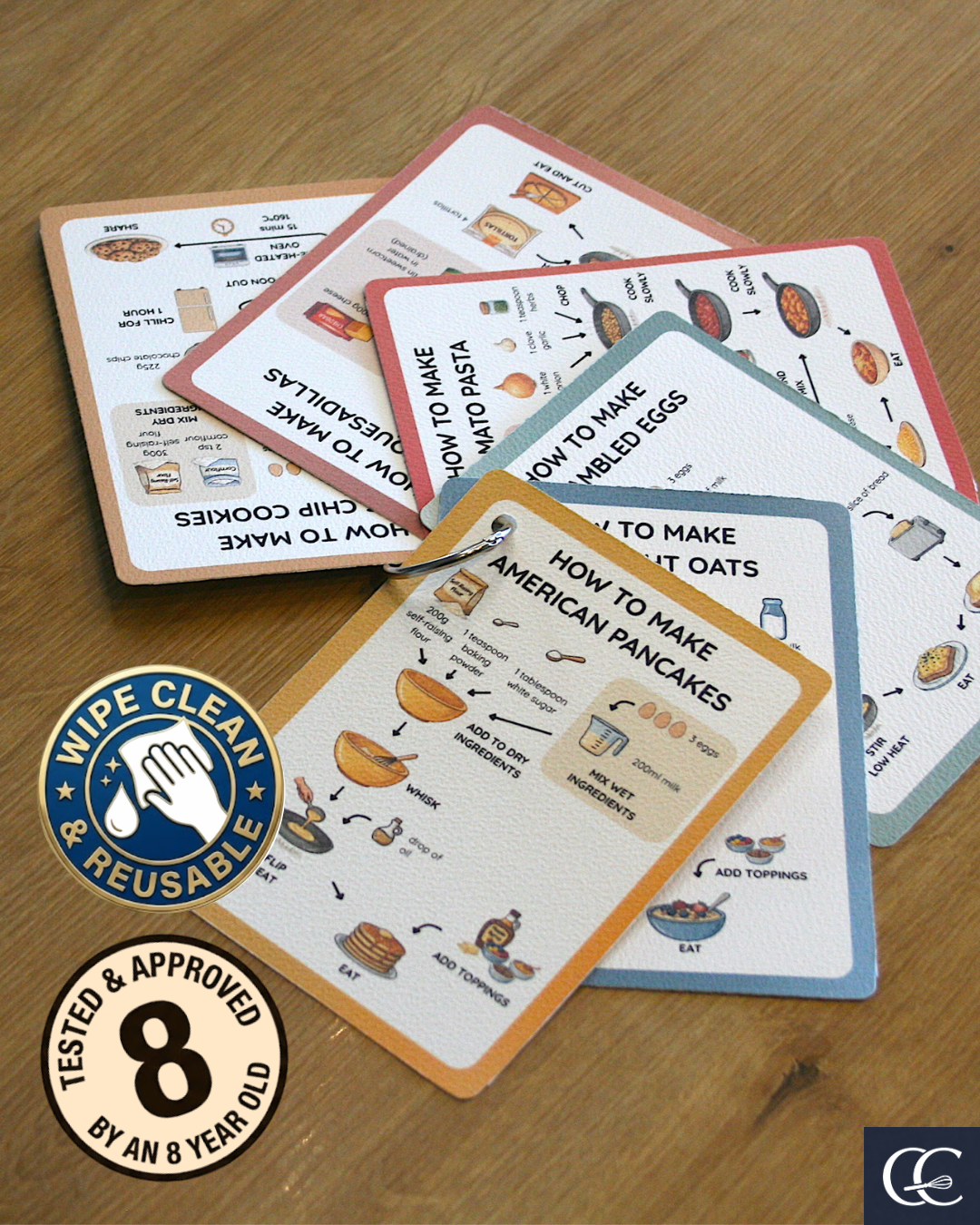
Offer help for the hob, hot pan, oil and flipping. Flipping looks simple on a picture card, but in real life the pan is hot, the pancake can fold, and children often move quickly when they are excited. Keep the first few pancakes small and treat them as practice.

How smooth should pancake batter be?

Aim for a batter that pours easily and has no obvious floury lumps. If it sits for a while and thickens, whisk in a splash more milk. This is a nice moment to teach children that recipes sometimes need tiny adjustments rather than panic.

Why make smaller pancakes?

Small pancakes are easier to pour, easier to flip and less disappointing if one goes wonky. They also give children more chances to practise timing: wait for bubbles, check the edge, then turn.

What about allergens and toppings?

Adult help needed is recommended. Check labels for eggs, dairy, gluten and any toppings. Toppings are fun, but nuts, chocolate spreads, syrups and fruit can all bring different allergen or choking considerations depending on the child.

ClearCook Cooking Passport

Cooked it?

Mark this recipe as done and add it to your ClearCook Passport — a private record of every meal cooked.

View passport