ClearCook parent guide

How Children Actually Build Confidence Through Cooking

Quick answer: Cooking builds confidence when a child completes real work and can see what they managed. Start with one recipe, repeat it, reduce prompting slowly and allow safe mistakes to survive. The adult should still take responsibility for heat, sharp tools, allergens and food safety.

One of our children was making a cake when the mixture began to curdle. James knew how to fix it, so he took over and started fixing it. The cake was heading towards being better and the lesson was heading towards being useless. We had to decide what we were making: a perfect cake, or a child who could eventually make one without us.

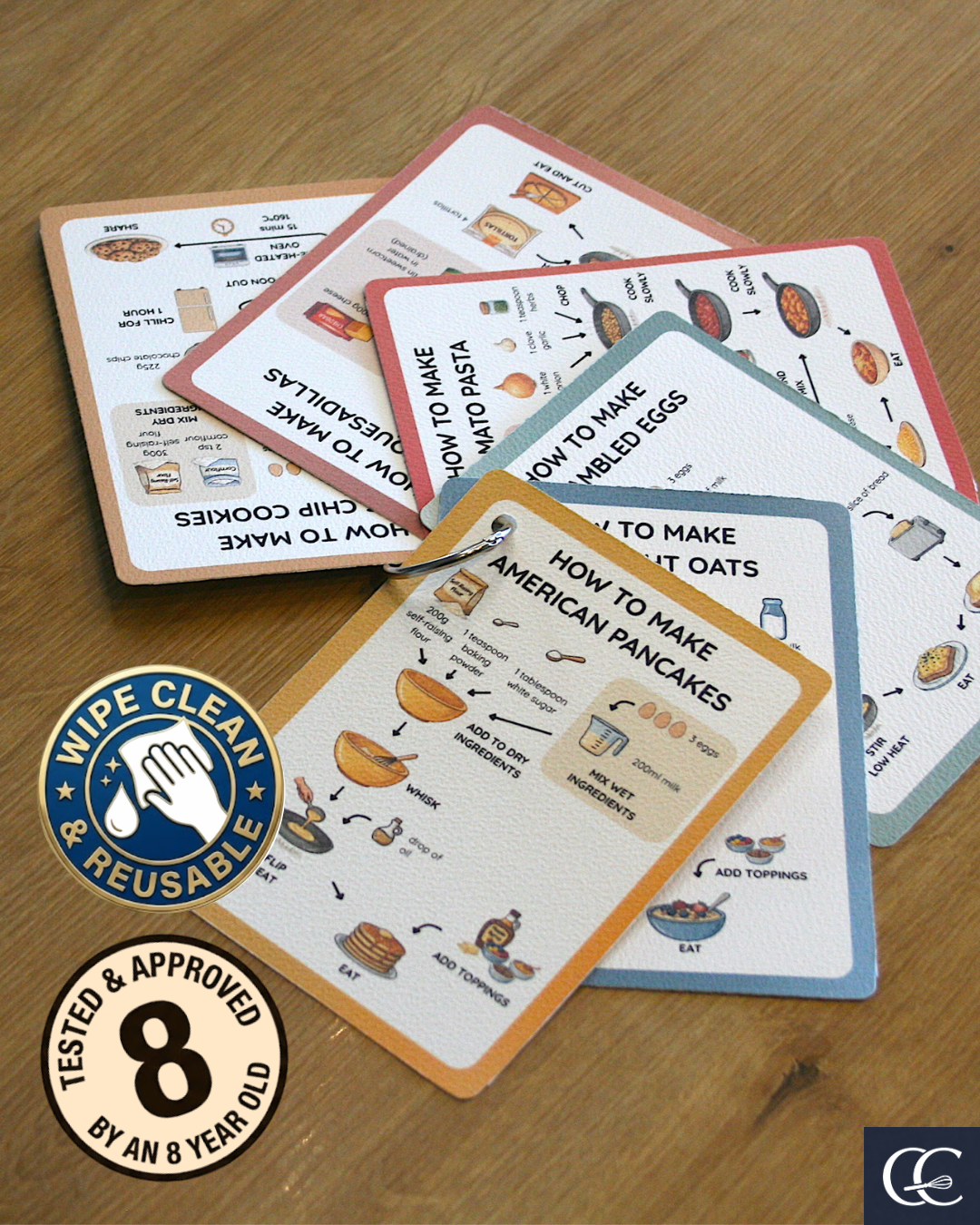
ClearCook visual recipe cards used for child-friendly cooking activities
How Children Actually Build Confidence Through Cooking guide illustrated with ClearCook visual recipe card imagery.

One of our children was making a cake when the mixture began to curdle. James knew how to fix it, so he took over and started fixing it. The cake was heading towards being better and the lesson was heading towards being useless. We had to decide what we were making: a perfect cake, or a child who could eventually make one without us.

The goal was never the perfect cake

When James took over, the batter improved, the mess stopped spreading and the cake was probably heading towards a more even rise. It also taught our child that the difficult bit belonged to somebody else.

So James stepped back. Our child carried on with a mixture that looked imperfect. This was harder than it sounds because James knew exactly how he would fix it.

Confidence does not come from an adult saying 'well done' over work the adult quietly completed. It comes from being able to point at something and know which parts were yours.

Before intervening

Ask whether the result is unsafe, genuinely unrecoverable, or merely less tidy than the version you would make.

Progress is usually repetition with less help

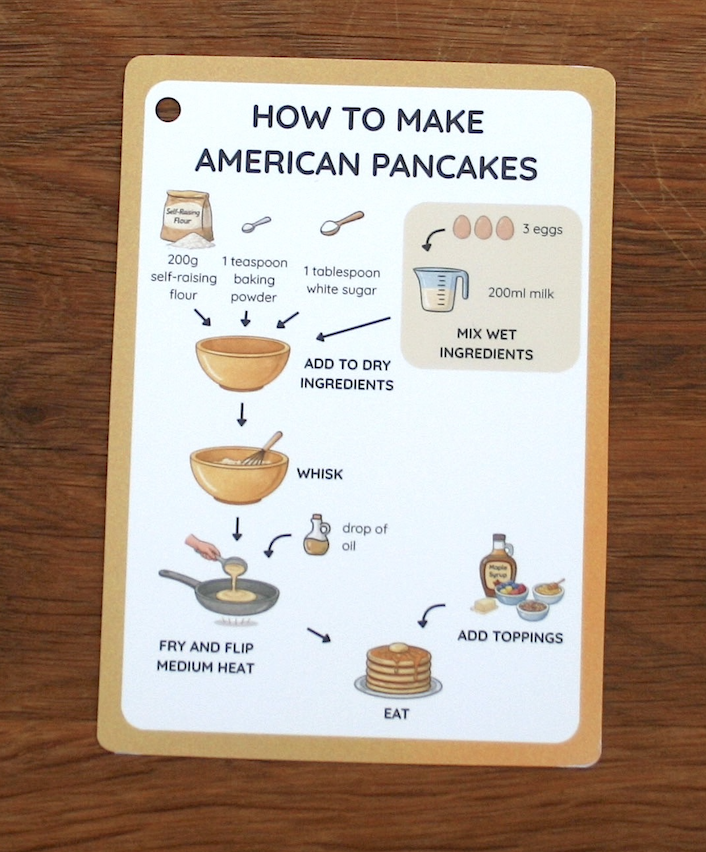
The first rough pancake card James drew worked because Edith could use it again. Saturday pancakes stopped being a special supervised project in our house and became something familiar enough for her to lead.

A new recipe every week can look like progress, but familiarity gives a child room to notice quantities, textures and timing. Make the same thing until the repeated questions begin to disappear.

Stage
What the child does
What the adult changes
First attempt
Follows a short sequence and completes a few safe jobs.
Sets up carefully, explains boundaries and prompts when needed.
Second attempt
Recognises ingredients and remembers parts of the order.
Points back to the recipe before supplying the answer.
Familiar recipe
Collects ingredients, follows the visible steps and spots adult-help moments.
Watches more, talks less and remains responsible for risk.
Child-led routine
Leads the safe sequence and asks for help at the agreed points.
Handles heat, knives, allergens and final checks without taking the recipe back.

A failed lunch can still be useful evidence

James got the quantities wrong on the first quesadilla card. There was nowhere near enough cheese and far too many beans. Our children were furious. They were also right. We added more cheese, rescued lunch and changed the card.

That failure did not show that the children lacked confidence. It showed that the recipe had not been tested properly. Before asking a child to try harder, check whether the quantities, sequence and visible end state are actually clear.

When something goes wrong

  • Make it safe first.
  • Ask what the child thought the instruction meant.
  • Rescue the food if there is a simple rescue.
  • Change the instruction or quantity if the recipe caused the problem.
  • Repeat a familiar success before adding more difficulty.

Give the child the right amount of danger

Removing every risk also removes the opportunity to learn judgement. Children can practise with suitable tools, soft stable ingredients and an adult close enough to stop the task.

A child-safe knife on a sausage or another soft ingredient with a flat side is very different from a sharp knife on a hard, rolling onion. The useful boundary is specific. Blanket rules teach less.

Adults still own the final decision. Confidence grows inside a boundary, not in the absence of one.

Pick a recipe with a clear child job and repeat it with slightly less help next time.

Choose one recipe to repeat

Make progress visible

The Cooking Passport gives children a simple way to mark recipes cooked, skills practised and confidence gained.

Open the Cooking Passport

New cards

Hear first about new cards

Get a short note when new ClearCook wipe-clean cards and useful family cooking resources are released.

We'll send a ClearCook magic link so you can open the site logged in. Extra ClearCook emails are only sent if you tick the box below.

FAQs

Common questions

What if my child makes a mistake?

Intervene when it becomes unsafe. Otherwise help them understand what changed, rescue the food if practical and improve unclear instructions before the next attempt.

Should children repeat the same recipe?

Yes. Repetition reduces the effort needed to remember the sequence and lets the child take more responsibility each time.

How do I stop myself taking over?

Agree the child jobs and adult jobs before starting. Prompt from the recipe before touching their work, and tolerate results that are safe but imperfect.

Does cooking make every child more confident?

No single activity works for every child. Cooking can provide a concrete success when the recipe, support and level of risk suit that child.

What are visual recipes?

Visual recipes use pictures, short prompts and clear sequencing so children can follow cooking steps without relying on long written instructions.

What age are ClearCook cards for?

ClearCook is mainly designed for children aged around 4 to 11, with adult support adjusted to the recipe, child and safety risks.

Do children still need adult supervision?

Yes. Children can lead safe jobs, but adults should supervise heat, knives, graters, allergens, heavy equipment and hygiene checks.

Why use wipe-clean cards instead of a phone?

Wipe-clean cards stay visible, do not lock or scroll, and can handle flour, sauce and sticky hands better than a phone in the middle of cooking.